
Advanced Certificate in Implementing Data Interoperability Solutions
Earn an Advanced Certificate in implementing seamless data interoperability solutions, enhancing data integration and accessibility for organizations.
Advanced Certificate in Implementing Data Interoperability Solutions
Programme Overview
The Advanced Certificate in Implementing Data Interoperability Solutions is designed for professionals in the fields of data management, information technology, and healthcare who seek to enhance their expertise in integrating and managing data across different systems and platforms. This program delves into the latest methodologies and technologies for achieving seamless data exchange and interoperability, equipping learners with the knowledge to design, implement, and manage interoperable data solutions effectively. Key skills and knowledge developed include an understanding of data standards such as FHIR, HL7, and DICOM, proficiency in data integration tools and platforms, and the ability to assess and mitigate risks associated with data interoperability.
Career impact is significant for graduates of this program. They will be well-prepared to lead data integration projects, design robust data governance frameworks, and ensure compliance with regulatory standards. The program’s focus on practical applications and real-world case studies ensures that learners are adept at addressing complex scenarios they may encounter in their professional roles. Graduates can advance their careers into leadership positions in data management, healthcare IT, and business intelligence, where they can drive innovation and improve operational efficiency through effective data interoperability.
What You'll Learn
The Advanced Certificate in Implementing Data Interoperability Solutions is a comprehensive program designed for professionals seeking to master the art of seamless data sharing and integration across diverse systems and platforms. This program equips participants with the knowledge and skills necessary to design, implement, and manage interoperable data systems that enhance organizational efficiency and decision-making processes.
Key topics include data standards and protocols, data governance, and secure data exchange mechanisms. Through hands-on workshops and real-world case studies, learners will explore how to leverage advanced technologies and methodologies to overcome common interoperability challenges. Graduates will be adept at integrating data from various sources, ensuring data quality, and maintaining compliance with regulatory requirements.
Upon completion, participants will have the expertise to drive data interoperability initiatives within their organizations, facilitating better collaboration and innovation. This program opens doors to a range of career opportunities in data management, IT consulting, healthcare, finance, and government sectors. Graduates can pursue roles such as Data Interoperability Analyst, Data Integration Specialist, or Chief Data Officer, contributing to the digital transformation of businesses and public services.
Programme Highlights
Industry-Aligned Curriculum
Developed with industry leaders for job-ready skills valued by employers worldwide.
Globally Recognised Certificate
Recognised by employers across 180+ countries as a mark of professional excellence.
Flexible Online Learning
Study at your own pace with lifetime access to all course materials and updates.
Instant Access
Start learning immediately — no application process or waiting period required.
Constantly Updated Content
Stay ahead with the latest industry trends, best practices, and emerging insights.
Career Advancement
87% of graduates report measurable career progression within 6 months of completion.
Topics Covered
- 1. Data Integration Fundamentals: Learners will study the basic principles of data integration and interoperability, including data models and standards. They will gain foundational skills in understanding and evaluating data sources and their compatibility.
- 2. Data Mapping and Transformation Techniques: Learners will explore methods for mapping and transforming data between different systems to ensure consistent and accurate data representation. Practical skills in using data mapping tools and writing transformation scripts will be developed.
- 3. Interoperability Standards and Protocols: This module covers key interoperability standards and protocols such as HL7 and FHIR, focusing on their application in healthcare data exchange. Learners will learn to implement these standards in real-world scenarios.
- 4. Cloud Data Integration Solutions: Learners will delve into cloud-based data integration solutions, including architectures and best practices for implementing data interoperability in cloud environments. Practical experience with cloud services like AWS Glue and Azure Data Factory will be provided.
- 5. Data Quality and Validation: This module addresses the importance of data quality in interoperability. Learners will study techniques for validating and cleaning data to ensure it meets integration requirements. Practical exercises will include using data quality tools.
- 6. Real-Time Data Interoperability: Focusing on real-time data integration, learners will learn how to implement solutions that support near-instantaneous data exchanges. Skills in setting up real-time data pipelines and addressing latency issues will be developed.
- 7. Security and Privacy in Data Interoperability: This module covers the security and privacy considerations in data interoperability, including compliance with regulations like GDPR and HIPAA. Learners will learn to design secure data integration solutions.
- 8. Advanced Data Model Design: Advanced techniques for designing data models to support interoperability will be explored. Learners will gain skills in creating flexible and scalable data models that can be easily integrated across systems.
- 9. Interoperability Testing and Validation: This module covers the methodologies and tools for testing and validating interoperability solutions. Learners will learn how to ensure that integrated data systems function correctly and meet business requirements.
- 10. Case Studies and Best Practices: Real-world case studies of data interoperability projects will be analyzed, providing learners with insights into best practices and common pitfalls. They will gain experience in applying their skills to complex interoperability challenges.
What You Get When You Enroll
Secure checkout • Instant access • Certificate included
Key Facts
Audience: IT professionals, data engineers
Prerequisites: Basic IT skills, some programming knowledge
Outcomes: Understand data interoperability, implement APIs, integrate systems effectively
Ready to get started?
Join thousands of professionals who already took the next step. Enroll now and get instant access.
Enroll Now — $149Why This Course
Enhance Technical Expertise: The Advanced Certificate in Implementing Data Interoperability Solutions provides professionals with in-depth knowledge of data integration technologies, methodologies, and best practices. This deepens their understanding of how to efficiently merge data from various sources, which is crucial for modern data-driven businesses. For instance, it equips them with skills in using APIs, EDI, and middleware, enabling seamless data exchange and improved operational efficiency.
Boost Career Opportunities: By obtaining this certificate, professionals can open doors to specialized roles such as Data Interoperability Architect or Data Integration Specialist. The demand for skilled professionals in data interoperability is increasing as businesses increasingly rely on integrated data to drive strategic decisions. This certification can distinguish them in the job market, making them more competitive for high-demand positions.
Drive Business Value: Professionals with this certification can play a pivotal role in solving complex business challenges through data integration. They can help organizations achieve better data quality, enhanced decision-making processes, and improved customer experiences. For example, they can implement solutions that integrate customer data from multiple systems to provide a unified view, improving service and boosting customer satisfaction.
Your Path to Certification
Trusted by Professionals Worldwide
Course Brochure
Download our comprehensive course brochure with all details
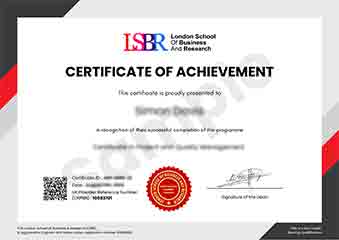
Sample Certificate
Preview the certificate you'll receive upon successful completion of this program.
Get Free Course Info
Enter your details and we'll send you a comprehensive course information pack straight to your inbox.
Employer Sponsored Training
Let your employer invest in your professional development. Request a corporate invoice and get your training funded.
Request Corporate InvoiceWhat People Say About Us
Hear from our students about their experience with the Advanced Certificate in Implementing Data Interoperability Solutions at LSBRX - Executive Education.
Sophie Brown
United Kingdom"The course content was incredibly detailed and well-structured, providing a solid foundation in data interoperability solutions that have directly enhanced my ability to tackle real-world problems. Gaining hands-on experience with various tools and techniques has been invaluable, and I feel much more confident in my ability to implement effective data solutions in my career."
Kai Wen Ng
Singapore"This course has significantly enhanced my ability to design and implement data interoperability solutions, making my skills highly relevant in the job market. It has opened up new career opportunities and allowed me to tackle complex projects with confidence."
Charlotte Williams
United Kingdom"The course structure is well-organized, providing a clear path from foundational concepts to advanced data interoperability solutions, which has significantly enhanced my understanding and practical skills in this area. The comprehensive content and real-world applications have been invaluable for my professional growth, equipping me with the knowledge to tackle complex data integration challenges."