
Advanced Certificate in Reverse Engineering: Understanding Legacy Code
Gain expertise in reverse engineering to understand and maintain legacy code, enhancing system security and functionality.
Advanced Certificate in Reverse Engineering: Understanding Legacy Code
Programme Overview
The Advanced Certificate in Reverse Engineering: Understanding Legacy Code is a comprehensive programme designed for software developers, architects, and IT professionals who are tasked with maintaining, updating, or integrating legacy systems. This programme equips learners with the skills necessary to reverse-engineer complex software applications, understand their underlying architecture, and effectively manage the challenges associated with legacy code migration and modernization. Through a combination of theoretical instruction and practical exercises, participants will delve into topics such as decompilation tools, source code analysis, and the principles of legacy system refactoring.
Participants will develop key skills in reverse engineering techniques, including the use of reverse engineering tools and methodologies for uncovering the structure and functionality of legacy systems. They will also gain expertise in identifying and mitigating security and performance issues, and learn how to document and communicate these findings to stakeholders. This programme not only enhances the learners' technical proficiency but also improves their ability to work collaboratively and manage projects that involve integrating new technologies with existing legacy systems.
This programme has a significant impact on learners' career trajectories, particularly for those in roles that require proficiency in software maintenance, system modernization, and IT project management. Graduates will be well-prepared to lead initiatives that involve the assessment and transformation of legacy systems, ensuring that they meet current and future business needs. The skills gained are highly valued in the industry, providing a competitive edge in the job market and opening up opportunities for advancement in roles that require a deep understanding of software architecture and the ability to work effectively
What You'll Learn
The Advanced Certificate in Reverse Engineering: Understanding Legacy Code is an intensive, practical course designed for software developers, IT professionals, and cybersecurity experts seeking to unravel and modernize complex legacy systems. This program equips learners with advanced skills in reverse engineering, enabling them to analyze, interpret, and modify existing software without access to the original source code. Key topics include decompilation techniques, disassembly, debugging, static and dynamic analysis, and code obfuscation deconstruction. Students learn to identify and resolve issues in legacy code, optimize performance, and enhance security and maintainability.
Graduates apply these skills in various sectors, from financial institutions to healthcare organizations, where maintaining and updating legacy systems is critical. They can lead projects to migrate old applications to modern architectures, ensuring that these systems remain secure and compliant with current standards. This program opens doors to specialized roles such as legacy system analysts, reverse engineering consultants, and software security auditors. With the increasing demand for skilled professionals capable of handling complex legacy systems, this certificate is a valuable asset for advancing one's career in software development and cybersecurity.
Programme Highlights
Industry-Aligned Curriculum
Developed with industry leaders for job-ready skills valued by employers worldwide.
Globally Recognised Certificate
Recognised by employers across 180+ countries as a mark of professional excellence.
Flexible Online Learning
Study at your own pace with lifetime access to all course materials and updates.
Instant Access
Start learning immediately — no application process or waiting period required.
Constantly Updated Content
Stay ahead with the latest industry trends, best practices, and emerging insights.
Career Advancement
87% of graduates report measurable career progression within 6 months of completion.
Topics Covered
- 1. Introduction to Reverse Engineering: Learners will explore the basics of reverse engineering, understanding what it is, its importance, and the ethical considerations. They will gain foundational skills in analyzing software binaries and disassembling executable files.
- 2. Assembly Language and Disassembly Techniques: Students will delve into assembly language, learning how to read and interpret disassembled code. They will practice using disassemblers and debuggers to understand the low-level operations of software.
- 3. Static Code Analysis: This module covers techniques for analyzing code without executing the program. Learners will learn to use static analysis tools to identify security vulnerabilities, bugs, and code smells in legacy applications.
- 4. Dynamic Code Analysis and Instrumentation: Students will study how to analyze program behavior during runtime using dynamic analysis tools. They will learn to instrument code for tracing, profiling, and debugging purposes.
- 5. Reverse Engineering of Obfuscated Code: This module focuses on dealing with obfuscated binaries and techniques to deobfuscate code. Learners will practice reversing and understanding code that has been intentionally made difficult to analyze.
- 6. Reverse Engineering for Security Audits: Students will learn how to perform security audits on legacy systems, identifying potential risks and vulnerabilities. They will gain skills in using reverse engineering to enhance the security of software applications.
- 7. Reverse Engineering Databases: This module teaches learners how to reverse engineer databases, including extracting data, understanding database schemas, and identifying data structures. Practical exercises will include working with various database types.
- 8. Advanced Reverse Engineering Techniques: In this module, students will explore advanced techniques such as decompilation, IL analysis, and reverse engineering of compiled languages. They will gain proficiency in using advanced tools and methodologies.
- 9. Reverse Engineering Mobile Applications: Students will study the specific challenges of reversing mobile applications, including APK files, native code, and obfuscation techniques. Practical exercises will involve decompiling and analyzing APKs.
- 10. Reverse Engineering and Legal Considerations: This module covers the legal and ethical aspects of reverse engineering. Learners will understand the implications of reverse engineering in different contexts and learn how to conduct reverse engineering activities responsibly.
What You Get When You Enroll
Secure checkout • Instant access • Certificate included
Key Facts
Ideal for developers, IT professionals
No specific prerequisites required
Understand legacy code structures
Identify and fix common bugs
Enhance code readability and maintainability
Ready to get started?
Join thousands of professionals who already took the next step. Enroll now and get instant access.
Enroll Now — $149Why This Course
Enhance Problem-Solving Skills: The Advanced Certificate in Reverse Engineering equips professionals with advanced techniques to understand and analyze legacy code. This skill is crucial in modern software development, where many projects rely on older, often undocumented codebases. By mastering reverse engineering, professionals can effectively tackle complex issues and improve existing systems, leading to more maintainable and efficient software.
Boost Career Opportunities: With the increasing demand for professionals who can work with legacy systems, obtaining this certificate can significantly enhance career prospects. It opens doors to roles in software maintenance, system analysis, and technical consulting. Employers value candidates who can effectively manage and evolve outdated code, making this certificate a competitive advantage.
Improve Debugging and Maintenance: The course provides in-depth knowledge of debugging techniques and maintenance strategies tailored to legacy code. This specialization allows professionals to identify and rectify issues more effectively, reducing downtime and improving system reliability. This skill set is highly valuable in industries where maintaining existing systems is critical, such as finance, healthcare, and automotive.
Your Path to Certification
Trusted by Professionals Worldwide
Course Brochure
Download our comprehensive course brochure with all details
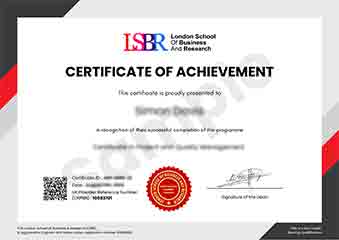
Sample Certificate
Preview the certificate you'll receive upon successful completion of this program.
Get Free Course Info
Enter your details and we'll send you a comprehensive course information pack straight to your inbox.
Employer Sponsored Training
Let your employer invest in your professional development. Request a corporate invoice and get your training funded.
Request Corporate InvoiceWhat People Say About Us
Hear from our students about their experience with the Advanced Certificate in Reverse Engineering: Understanding Legacy Code at LSBRX - Executive Education.
James Thompson
United Kingdom"The course content is incredibly thorough, providing deep insights into legacy code that have significantly enhanced my ability to tackle complex software projects. Gaining these practical skills has been invaluable for my career, enabling me to approach reverse engineering with confidence and precision."
Liam O'Connor
Australia"This course has been instrumental in bridging the gap between theory and practical application, equipping me with the skills to tackle complex legacy code more effectively. It has significantly enhanced my career prospects by making me more competitive in the job market, especially in roles that require deep understanding and manipulation of existing software systems."
James Thompson
United Kingdom"The course structure is meticulously organized, providing a clear path from understanding the basics to tackling complex legacy code scenarios, which has significantly enhanced my ability to analyze and refactor old systems effectively. The comprehensive content and real-world applications have not only deepened my theoretical knowledge but also equipped me with practical skills that are invaluable in my professional growth."