
Advanced Certificate in Secure Coding Practices for Beginners
Earn an Advanced Certificate in Secure Coding Practices for Beginners to enhance coding security, prevent vulnerabilities, and build robust applications.
Advanced Certificate in Secure Coding Practices for Beginners
Programme Overview
The Advanced Certificate in Secure Coding Practices for Beginners is a comprehensive programme designed to equip individuals with the foundational knowledge and skills necessary to write secure code. This programme is ideal for aspiring software developers, IT professionals, and cybersecurity enthusiasts who wish to understand the critical importance of secure coding practices and learn how to implement them effectively. The curriculum covers essential topics such as secure coding principles, common security vulnerabilities, and best practices for developing secure applications.
Learners will develop key skills in identifying and mitigating security risks, implementing secure coding standards, and using tools and techniques to enhance code security. They will also gain hands-on experience through practical exercises and real-world case studies, enabling them to apply secure coding practices in various programming environments. Additionally, the programme includes training on ethical hacking and secure software architecture, preparing participants to address security challenges from multiple perspectives.
The programme has a significant impact on career advancement, as it opens up opportunities in cybersecurity, software development, and IT management roles. Graduates can pursue careers as secure coders, software security engineers, or security analysts, contributing to the development of more resilient and secure software solutions. The knowledge and skills acquired are highly valued by employers, making this programme a strategic investment for personal and professional development.
What You'll Learn
Embark on a journey to become a secure coding practitioner with our Advanced Certificate in Secure Coding Practices for Beginners. This comprehensive program equips you with the foundational knowledge and practical skills necessary to craft secure software, protecting against modern cybersecurity threats. You'll delve into essential topics such as secure software development life cycle, secure coding standards, and practical techniques to prevent vulnerabilities. Real-world scenarios and hands-on projects will help you apply these skills effectively, enhancing the security of applications from the ground up.
Graduates of this program will be well-prepared to tackle real-world security challenges, ensuring that software developed is not only functional but also robust against attacks. This certificate opens doors to a variety of career opportunities, including positions as a Junior Security Engineer, Junior Software Developer, or a DevSecOps Specialist. Whether you are transitioning into a tech career or seeking to enhance your existing skills, this program provides the knowledge and credentials needed to stand out in the competitive job market. Join us and take the first step towards becoming a vital part of the cybersecurity landscape.
Programme Highlights
Industry-Aligned Curriculum
Developed with industry leaders for job-ready skills valued by employers worldwide.
Globally Recognised Certificate
Recognised by employers across 180+ countries as a mark of professional excellence.
Flexible Online Learning
Study at your own pace with lifetime access to all course materials and updates.
Instant Access
Start learning immediately — no application process or waiting period required.
Constantly Updated Content
Stay ahead with the latest industry trends, best practices, and emerging insights.
Career Advancement
87% of graduates report measurable career progression within 6 months of completion.
Topics Covered
- 1. Introduction to Secure Coding: Learners will understand the importance of secure coding practices and the basic principles of secure software development. They will gain foundational knowledge on how to identify common security risks and implement basic security measures.
- 2. Secure Coding Fundamentals: This module covers essential secure coding practices such as input validation, error handling, and secure configuration. Learners will learn how to write secure code that can withstand common attacks and vulnerabilities.
- 3. Understanding Web Application Security: Learners will study key web application security concepts, including cross-site scripting (XSS), cross-site request forgery (CSRF), and SQL injection. They will develop practical skills to prevent these attacks and ensure that web applications are secure.
- 4. Secure Programming with Structured Query Language (SQL): In this module, learners will learn secure coding practices specific to SQL, including parameterized queries and stored procedures. They will gain the skills to write secure database queries that prevent SQL injection attacks.
- 5. Introduction to Cryptography: This module introduces learners to the basics of cryptography, including encryption, hashing, and digital signatures. They will understand how to use cryptographic functions to protect data and ensure the integrity and confidentiality of information.
- 6. Secure Coding in the Cloud: Learners will explore secure coding practices for cloud environments, including access control, secure communication, and data protection. They will learn how to design and implement secure cloud-based applications.
- 7. Secure Software Development Lifecycle (SDLC): This module covers the integration of secure coding practices throughout the entire software development lifecycle. Learners will learn how to apply security best practices at each phase of the SDLC to ensure secure software development.
- 8. Advanced Secure Coding Techniques: In this advanced module, learners will delve into more complex secure coding topics such as secure API design, secure mobile application development, and secure software testing. They will gain the skills to address advanced security challenges and vulnerabilities.
- 9. Secure Coding for IoT Devices: This module focuses on secure coding practices specific to Internet of Things (IoT) devices. Learners will learn how to design and implement secure IoT applications and devices that can withstand common security threats.
- 10. Secure Coding in DevOps Environments: In this final module, learners will explore secure coding practices in DevOps environments, including continuous integration/continuous deployment (CI/CD) pipeline security and secure containerization. They will learn how to integrate security into DevOps workflows to ensure secure and reliable software delivery.
What You Get When You Enroll
Secure checkout • Instant access • Certificate included
Key Facts
Audience: Beginners in secure coding
Prerequisites: Basic programming knowledge
Outcomes: Understand secure coding principles, implement secure practices
Ready to get started?
Join thousands of professionals who already took the next step. Enroll now and get instant access.
Enroll Now — $149Why This Course
Enhanced Security Knowledge: The Advanced Certificate in Secure Coding Practices for Beginners equips professionals with a deep understanding of security principles and best practices specific to software development. This knowledge is crucial in today’s digital landscape, where cybersecurity threats are increasing. By mastering secure coding techniques, professionals can significantly reduce vulnerabilities in their applications, enhancing overall system security.
Competitive Edge in Hiring: As the demand for cybersecurity professionals grows, certifications can set professionals apart from their peers. Employers increasingly seek candidates with a proven track record of understanding and implementing secure coding practices. Obtaining this certificate can demonstrate to potential employers that you have the necessary skills and knowledge to contribute effectively to their security initiatives.
Skill Development and Career Advancement: The course not only provides theoretical knowledge but also practical skills that can be immediately applied in the workplace. This hands-on experience can lead to more responsibilities and opportunities for career growth. Professionals who receive this certification often find themselves in positions where they can influence security policies and contribute to more secure software development practices within their organizations.
Your Path to Certification
Trusted by Professionals Worldwide
Course Brochure
Download our comprehensive course brochure with all details
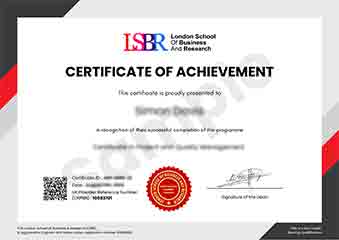
Sample Certificate
Preview the certificate you'll receive upon successful completion of this program.
Get Free Course Info
Enter your details and we'll send you a comprehensive course information pack straight to your inbox.
Employer Sponsored Training
Let your employer invest in your professional development. Request a corporate invoice and get your training funded.
Request Corporate InvoiceWhat People Say About Us
Hear from our students about their experience with the Advanced Certificate in Secure Coding Practices for Beginners at LSBRX - Executive Education.
James Thompson
United Kingdom"The course content is comprehensive and well-structured, providing a solid foundation in secure coding practices that I can directly apply to improve the security of my projects. Gaining these practical skills has been incredibly beneficial for my career, as I feel more confident in developing secure applications."
Ahmad Rahman
Malaysia"This course has significantly enhanced my understanding of secure coding practices, making my code more robust and secure. It has opened up new career opportunities in cybersecurity, allowing me to apply these skills in real-world scenarios to protect sensitive data effectively."
Madison Davis
United States"The course structure is well-organized, providing a clear path from basic concepts to advanced secure coding practices, which has significantly enhanced my understanding and ability to apply these principles in real-world scenarios."