
Certificate in Biodiversity Data Analysis with R and Python
Gain skills in analyzing biodiversity data using R and Python, enhancing data analysis and interpretation for conservation efforts.
Certificate in Biodiversity Data Analysis with R and Python
Programme Overview
The Certificate in Biodiversity Data Analysis with R and Python is designed for biologists, data analysts, environmental scientists, and researchers who wish to enhance their skills in analyzing and interpreting complex biodiversity data. This comprehensive programme equips learners with the ability to use R and Python, two of the most powerful and flexible programming languages for data analysis, to tackle challenges in biodiversity research. Through hands-on workshops and practical projects, participants will learn to collect, process, visualize, and model biodiversity data, ensuring they are well-versed in modern computational techniques.
Upon completion, learners will have developed key skills in statistical analysis, data visualization, machine learning, and spatial analysis, all crucial for understanding biodiversity trends and ecosystem health. They will be proficient in using R for statistical inference and Python for data manipulation and automation tasks. The programme also emphasizes the importance of reproducible research practices and ethical considerations in data analysis. These skills are essential for advancing research in conservation biology, ecology, and environmental management.
This programme has significant career impact, preparing graduates for roles in scientific research, environmental consultancy, government agencies, and non-profit organizations. Graduates will be well-positioned to contribute to biodiversity conservation efforts by leveraging their analytical skills to inform policy and practice. The ability to perform sophisticated data analysis will enable them to address critical challenges in biodiversity loss and ecosystem services, making a tangible difference in environmental stewardship.
What You'll Learn
Embark on a transformative journey with the 'Certificate in Biodiversity Data Analysis with R and Python,' a comprehensive month program designed to equip you with cutting-edge skills in analyzing biodiversity data through computational tools. This program is ideal for researchers, conservationists, and data analysts seeking to harness the power of R and Python for biodiversity studies. You will delve into essential topics such as data management, statistical analysis, machine learning, and spatial analysis, all tailored to the unique challenges faced in biodiversity research.
Upon completion, you will be adept at processing, interpreting, and visualizing complex biodiversity datasets, enabling you to contribute to critical projects such as species distribution modeling, habitat suitability assessments, and biodiversity monitoring. This program provides hands-on experience with real-world data, enhancing your ability to translate raw data into actionable insights.
Career opportunities abound for graduates of this program. You can pursue roles in environmental consulting firms, governmental agencies, non-profit organizations, and academic institutions. Potential positions include Biodiversity Data Analyst, Conservation Scientist, or Environmental Consultant. The program also lays a solid foundation for further academic pursuits or specialized training in advanced computational biology or data science.
Join us to become a pivotal player in the field of biodiversity conservation through data-driven decision-making.
Programme Highlights
Industry-Aligned Curriculum
Developed with industry leaders for job-ready skills valued by employers worldwide.
Globally Recognised Certificate
Recognised by employers across 180+ countries as a mark of professional excellence.
Flexible Online Learning
Study at your own pace with lifetime access to all course materials and updates.
Instant Access
Start learning immediately — no application process or waiting period required.
Constantly Updated Content
Stay ahead with the latest industry trends, best practices, and emerging insights.
Career Advancement
87% of graduates report measurable career progression within 6 months of completion.
Topics Covered
- 1. Introduction to Biodiversity Data: Learners will explore the importance of biodiversity data in conservation and research. They will gain foundational knowledge in data types, sources, and basic data handling techniques.
- 2. Data Cleaning and Preparation: This module focuses on preparing raw biodiversity data for analysis. Learners will learn to clean, standardize, and organize data using R and Python, essential for accurate and reliable analysis.
- 3. Descriptive Statistics and Visualization in R and Python: Learners will study descriptive statistics and graphical representations of biodiversity data. They will master the use of R and Python packages for data visualization, enabling them to effectively communicate findings.
- 4. Introduction to Python for Data Analysis: In this module, learners will learn the basics of Python programming, including data structures and basic data analysis tasks, laying the groundwork for advanced data manipulation and analysis.
- 5. Introduction to R for Data Analysis: Focusing on R programming, learners will learn how to perform basic data analysis tasks, understand R’s data structures, and utilize R for statistical analysis of biodiversity datasets.
- 6. Advanced Data Analysis Techniques in R and Python: Learners will delve into complex statistical methods and machine learning techniques for biodiversity data analysis. They will apply these techniques using both R and Python.
- 7. Spatial Data Analysis in Biodiversity: This module covers spatial data analysis techniques, including the use of Geographic Information Systems (GIS) and spatial statistics. Learners will analyze and interpret spatial patterns in biodiversity data.
- 8. Time Series Analysis for Biodiversity Data: Learners will learn to analyze time series data in biodiversity studies, including trend analysis and forecasting. They will apply these skills using R and Python.
- 9. Case Studies in Biodiversity Data Analysis: Through real-world case studies, learners will apply their knowledge to analyze and interpret biodiversity data, addressing practical challenges faced in conservation and research.
- 10. Reporting and Presenting Biodiversity Data Analysis: The final module focuses on effective communication of biodiversity data analysis results. Learners will learn to write clear reports and present findings using R Markdown and Python documentation tools.
What You Get When You Enroll
Secure checkout • Instant access • Certificate included
Key Facts
Audience: Data analysts, biologists, researchers
Prerequisites: Basic programming knowledge
Outcomes: Master R, Python for biodiversity analysis
Ready to get started?
Join thousands of professionals who already took the next step. Enroll now and get instant access.
Enroll Now — $79Why This Course
Professionals seeking to enhance their analytical skills can benefit significantly from the 'Certificate in Biodiversity Data Analysis with R and Python.' The course equips learners with proficiency in using R and Python, two of the most powerful programming languages for data analysis. These skills are highly sought after in the field, particularly for roles involving ecological research, environmental planning, and conservation projects.
The certificate also focuses on biodiversity data analysis, which is crucial for addressing global environmental challenges. By mastering techniques for analyzing biodiversity data, professionals can contribute to important research and policy-making processes. For example, they can use these skills to assess the impacts of climate change on species populations or to develop effective conservation strategies.
Career advancement is another compelling reason to pursue this certificate. Employers in the environmental sector often require candidates with expertise in data analysis. A certificate in biodiversity data analysis with R and Python demonstrates a commitment to staying current with technological tools and methodologies, making professionals more competitive in their job markets and more capable of handling complex data-driven tasks.
Your Path to Certification
Trusted by Professionals Worldwide
Course Brochure
Download our comprehensive course brochure with all details
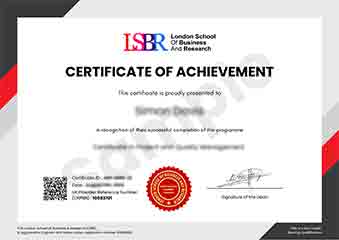
Sample Certificate
Preview the certificate you'll receive upon successful completion of this program.
Get Free Course Info
Enter your details and we'll send you a comprehensive course information pack straight to your inbox.
Employer Sponsored Training
Let your employer invest in your professional development. Request a corporate invoice and get your training funded.
Request Corporate InvoiceWhat People Say About Us
Hear from our students about their experience with the Certificate in Biodiversity Data Analysis with R and Python at LSBRX - Executive Education.
Oliver Davies
United Kingdom"This course provided an excellent blend of theoretical concepts and practical applications, equipping me with robust skills in analyzing biodiversity data using R and Python. It has significantly enhanced my ability to handle real-world data and has opened up new career opportunities in environmental research."
Priya Sharma
India"This certificate program has been incredibly valuable, equipping me with robust data analysis skills that are directly applicable in the field of biodiversity research. It has opened up new career opportunities and allowed me to contribute more effectively to conservation projects by leveraging R and Python for data analysis."
Fatimah Ibrahim
Malaysia"The course structure is meticulously organized, making it easy to follow and understand the complex concepts of biodiversity data analysis. The comprehensive content, combined with real-world applications, has significantly enhanced my ability to analyze and interpret data, which is invaluable for my professional growth in the field."