
Certificate in Developing Effective Clinical Indicator Protocols
This certificate equips healthcare professionals with skills to develop and implement effective clinical indicator protocols, enhancing patient care and outcomes.
Certificate in Developing Effective Clinical Indicator Protocols
Programme Overview
The Certificate in Developing Effective Clinical Indicator Protocols is a comprehensive program designed for healthcare professionals seeking to enhance their skills in creating and implementing clinical indicator protocols. This program caters to a diverse audience, including clinical researchers, healthcare administrators, nurses, and medical practitioners who aim to improve patient care through evidence-based practices and standardized protocols. The curriculum is meticulously crafted to equip learners with the necessary skills to develop, validate, and apply clinical indicators that can drive quality improvement initiatives, ensure compliance with regulatory standards, and facilitate the use of data for continuous quality assessment.
Learners will develop a robust set of skills and knowledge, including the ability to identify relevant clinical indicators, understand statistical methods for data analysis, and apply these indicators to assess patient outcomes and treatment effectiveness. The program also covers the development of meaningful data collection tools, the establishment of reliable data collection processes, and the interpretation of data to inform clinical decision-making. Additionally, participants will learn about the ethical considerations in clinical indicator development and the importance of stakeholder engagement in the implementation of these protocols.
This program significantly impacts career advancement by providing healthcare professionals with the credentials and practical experience needed to lead quality improvement projects, manage clinical data effectively, and contribute to evidence-based practice. Graduates will be well-prepared to assume leadership roles in clinical research, quality assurance, and healthcare management, where they can drive meaningful improvements in patient care and health outcomes.
What You'll Learn
The Certificate in Developing Effective Clinical Indicator Protocols is a comprehensive, hands-on program designed to equip healthcare professionals with the skills needed to create, implement, and refine clinical indicator protocols. These protocols are crucial for enhancing patient care, improving clinical outcomes, and streamlining healthcare delivery processes.
Key topics covered include the foundational concepts of clinical indicators, methodologies for data collection and analysis, and best practices for protocol development and dissemination. Participants learn to design, test, and refine indicators to ensure they are accurate, reliable, and actionable. The curriculum also emphasizes the importance of stakeholder engagement, ensuring protocols are aligned with the needs of patients, clinicians, and administrators.
Graduates of this program apply their skills in real-world settings, contributing to the creation of evidence-based protocols that improve patient safety, enhance treatment efficacy, and support population health initiatives. They are well-prepared to lead interprofessional teams, manage data, and implement quality improvement projects within healthcare organizations.
Career opportunities for program graduates are diverse and include roles such as clinical performance improvement specialists, quality assurance officers, and data analysts. Whether working in acute care, public health, or research settings, graduates are equipped to drive meaningful changes in clinical practice, ultimately contributing to better health outcomes for patients.
Programme Highlights
Industry-Aligned Curriculum
Developed with industry leaders for job-ready skills valued by employers worldwide.
Globally Recognised Certificate
Recognised by employers across 180+ countries as a mark of professional excellence.
Flexible Online Learning
Study at your own pace with lifetime access to all course materials and updates.
Instant Access
Start learning immediately — no application process or waiting period required.
Constantly Updated Content
Stay ahead with the latest industry trends, best practices, and emerging insights.
Career Advancement
87% of graduates report measurable career progression within 6 months of completion.
Topics Covered
- 1. Introduction to Clinical Indicators and Protocols: Learners will study the foundational concepts of clinical indicators and protocols, including their importance in healthcare quality improvement. They will gain practical skills in defining and selecting relevant clinical indicators.
- 2. Data Collection and Management: Learners will explore methods for collecting and managing data for clinical indicators. They will learn to use appropriate tools and techniques to ensure data accuracy and integrity.
- 3. Developing Effective Clinical Protocols: This module covers the process of developing and refining clinical protocols based on identified clinical indicators. Learners will learn to create protocols that are evidence-based and tailored to specific clinical settings.
- 4. Statistical Methods for Analyzing Clinical Data: Learners will study various statistical methods for analyzing clinical data, including descriptive statistics, inferential statistics, and regression analysis. They will gain skills in interpreting statistical results to inform clinical practice.
- 5. Implementing and Monitoring Clinical Protocols: This module focuses on the implementation and ongoing monitoring of clinical protocols. Learners will learn to design and execute implementation strategies and develop monitoring tools and processes.
- 6. Quality Improvement and Lean Six Sigma Techniques: Learners will study quality improvement methodologies and Lean Six Sigma techniques for optimizing clinical processes. They will learn to apply these methods to enhance the effectiveness and efficiency of clinical protocols.
- 7. Team Collaboration and Communication in Clinical Protocols: This module covers the importance of team collaboration and effective communication in the development and implementation of clinical protocols. Learners will develop skills in fostering a collaborative team environment and communicating effectively with stakeholders.
- 8. Ethical Considerations in Clinical Indicator Protocols: Learners will explore the ethical considerations involved in the development and use of clinical indicator protocols. They will gain an understanding of the ethical principles that guide clinical practice and learn to apply these principles in their work.
- 9. Case Studies in Clinical Indicator Protocols: This module provides learners with the opportunity to analyze real-world case studies of clinical indicator protocols. They will apply their knowledge and skills to evaluate the effectiveness of these protocols and identify areas for improvement.
- 10. Certificate Project and Final Assessment: In this final module, learners will complete a project that involves developing a new or enhancing an existing clinical indicator protocol. They will present their project and undergo a final assessment to demonstrate their mastery of the course content.
What You Get When You Enroll
Secure checkout • Instant access • Certificate included
Key Facts
Healthcare professionals, researchers
No specific prerequisites
Develops skills in clinical indicator design
Enhances knowledge of evidence-based practices
Creates effective, measurable protocols
Ready to get started?
Join thousands of professionals who already took the next step. Enroll now and get instant access.
Enroll Now — $79Why This Course
Enhance Professional Competence: Acquiring a Certificate in Developing Effective Clinical Indicator Protocols can significantly boost a professional’s understanding of clinical metrics and their application in healthcare settings. This certification equips individuals with the knowledge to develop, implement, and evaluate clinical indicators, which are crucial for improving patient care and operational efficiency.
Promote Career Advancement: Professionals who hold this certification are better positioned to lead clinical improvement initiatives and contribute to research. It can open doors to leadership roles in quality improvement, data analysis, and patient safety, enhancing career prospects and potential for higher earnings.
Improve Patient Outcomes: By mastering the skills to develop effective clinical indicators, professionals can play a pivotal role in monitoring and improving patient outcomes. This certification helps in setting benchmarks and tracking progress, ensuring that clinical practices are evidence-based and patient-centered.
Strengthen Interdisciplinary Collaboration: The certificate emphasizes the importance of interdisciplinary teamwork. Healthcare professionals who understand how to develop and use clinical indicators effectively can foster better communication and collaboration among different healthcare disciplines, leading to more cohesive and effective care delivery.
Your Path to Certification
Trusted by Professionals Worldwide
Course Brochure
Download our comprehensive course brochure with all details
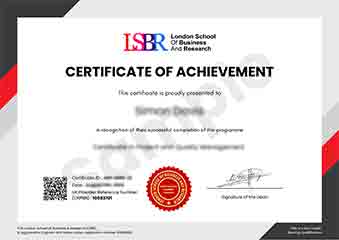
Sample Certificate
Preview the certificate you'll receive upon successful completion of this program.
Get Free Course Info
Enter your details and we'll send you a comprehensive course information pack straight to your inbox.
Employer Sponsored Training
Let your employer invest in your professional development. Request a corporate invoice and get your training funded.
Request Corporate InvoiceWhat People Say About Us
Hear from our students about their experience with the Certificate in Developing Effective Clinical Indicator Protocols at LSBRX - Executive Education.
James Thompson
United Kingdom"The course content was incredibly thorough and well-organized, providing a solid foundation in developing effective clinical indicator protocols. Gaining hands-on experience in creating and implementing these protocols has been invaluable for my career, offering practical skills that I can directly apply in my work."
Charlotte Williams
United Kingdom"This certificate course has been incredibly practical, equipping me with the skills to develop and implement effective clinical indicator protocols that are directly applicable in my role. It has not only enhanced my ability to improve patient outcomes but also opened up new opportunities for career advancement in healthcare management."
Charlotte Williams
United Kingdom"The course structure is well-organized, providing a clear path from foundational concepts to advanced applications in clinical settings, which has greatly enhanced my ability to develop effective protocols. The comprehensive content not only covers theoretical aspects but also includes numerous real-world examples that have significantly broadened my understanding and practical skills."