
Certificate in Dynamic System Simulation for Control Engineering
This certificate equips engineers with advanced skills in simulating dynamic systems, enhancing control engineering design and analysis capabilities.
Certificate in Dynamic System Simulation for Control Engineering
Programme Overview
The Certificate in Dynamic System Simulation for Control Engineering is a comprehensive program designed for professionals and students with a background in engineering, particularly those interested in control systems, robotics, and automation. It aims to equip participants with advanced skills in modeling, simulation, and analysis of dynamic systems, enabling them to design and optimize control strategies for complex engineering applications.
Participants will develop key skills in using simulation software tools such as MATLAB and Simulink, understanding mathematical models of physical systems, and applying control theory to simulate and analyze system behavior. They will learn to integrate feedback and feedforward control strategies, design robust control systems, and assess system performance. Additionally, the program covers advanced topics like adaptive control, model predictive control, and state estimation, providing a robust foundation for addressing real-world engineering challenges.
Upon completion, learners will be well-prepared for careers in industries such as aerospace, automotive, manufacturing, and energy, where the ability to simulate and control dynamic systems is crucial. They will be capable of developing innovative control solutions, enhancing system efficiency, and contributing to the advancement of automation technologies. The program also prepares graduates for further academic pursuits or specialized certifications in control engineering.
What You'll Learn
The Certificate in Dynamic System Simulation for Control Engineering is a comprehensive program designed to equip participants with advanced skills in simulating complex systems and applying control strategies. This program leverages cutting-edge software tools and theoretical frameworks to explore the dynamics of physical, biological, and economic systems. Participants will delve into topics such as system modeling, simulation techniques, control theory, and optimization methods, all of which are essential for designing robust and efficient control systems.
By mastering these skills, graduates can apply their knowledge to a variety of industries, including automotive, aerospace, manufacturing, and robotics. They will be well-prepared to develop and optimize control systems that enhance performance, reduce costs, and improve safety in real-world applications. This certificate is particularly valuable for engineers looking to advance their careers by integrating sophisticated simulation techniques into their design and analysis processes.
Upon completion, participants will have the expertise to pursue roles such as control systems engineer, simulation specialist, or research analyst. The program’s practical approach ensures that learners are not only theoretically knowledgeable but also capable of translating their insights into actionable solutions. Whether aiming to innovate within existing industries or explore emerging fields, this certificate provides a solid foundation for a dynamic and rewarding career.
Programme Highlights
Industry-Aligned Curriculum
Developed with industry leaders for job-ready skills valued by employers worldwide.
Globally Recognised Certificate
Recognised by employers across 180+ countries as a mark of professional excellence.
Flexible Online Learning
Study at your own pace with lifetime access to all course materials and updates.
Instant Access
Start learning immediately — no application process or waiting period required.
Constantly Updated Content
Stay ahead with the latest industry trends, best practices, and emerging insights.
Career Advancement
87% of graduates report measurable career progression within 6 months of completion.
Topics Covered
- 1. Introduction to Dynamic Systems: Learners will study the basic concepts of dynamic systems, including system modeling, stability, and response types. They will gain foundational skills in analyzing and representing dynamic systems mathematically.
- 2. State-Space Representation: This module covers the state-space formulation of dynamic systems, enabling learners to model complex systems with multiple inputs and outputs. Practical skills include constructing state-space models and transforming between different representations.
- 3. Linear Systems Analysis: Learners will delve into the analysis of linear time-invariant systems, focusing on frequency response and Laplace transform techniques. Practical skills include using these tools to analyze system behavior and stability.
- 4. Nonlinear System Dynamics: This module explores the behavior of nonlinear systems and the challenges they present. Learners will study methods for analyzing and simulating nonlinear dynamics and gain skills in identifying and mitigating system instabilities.
- 5. Control System Design: Learners will learn how to design control systems for dynamic systems, focusing on feedback control and PID controllers. Practical skills include designing, tuning, and simulating control systems to achieve desired performance.
- 6. Advanced Control Techniques: This module covers advanced control strategies, including model predictive control and adaptive control. Learners will gain skills in implementing and analyzing these techniques for complex control problems.
- 7. Simulation Tools and Software: Learners will be introduced to simulation software tools commonly used in control engineering, such as MATLAB/Simulink. Practical skills include using these tools to simulate dynamic systems and control strategies.
- 8. Real-Time Simulation and Implementation: This module focuses on simulating and implementing control systems in real-time environments. Learners will gain skills in configuring and testing control systems on real hardware.
- 9. Case Studies in Dynamic System Simulation: Through case studies, learners will apply their knowledge to real-world scenarios. Practical skills include analyzing and solving complex control engineering problems using dynamic system simulation techniques.
- 10. Final Project: Learners will work on a comprehensive project that integrates the knowledge and skills acquired throughout the program. This project will require the design, implementation, and simulation of a dynamic system control solution.
What You Get When You Enroll
Secure checkout • Instant access • Certificate included
Key Facts
Audience: Control engineering professionals, students
Prerequisites: Basic calculus, linear algebra
Outcomes: Simulate complex systems, design control algorithms
Ready to get started?
Join thousands of professionals who already took the next step. Enroll now and get instant access.
Enroll Now — $79Why This Course
Career Advancement: The Certificate in Dynamic System Simulation for Control Engineering equips professionals with advanced simulation techniques, enabling them to model and analyze complex systems more effectively. This skill is crucial for developing sophisticated control systems in industries such as aerospace, automotive, and manufacturing, where precision and reliability are paramount.
Skill Enhancement: By mastering simulation tools like MATLAB and Simulink, participants can enhance their technical capabilities. These tools are widely used in industry for system design, testing, and optimization, making professionals more versatile and competitive in the job market.
Problem Solving: The program focuses on applying simulation to solve real-world control engineering problems. This hands-on approach not only improves analytical skills but also prepares professionals to tackle intricate challenges in their projects, leading to more innovative and efficient solutions.
Networking Opportunities: The certificate program often includes interactions with industry experts and peers, fostering a network that can be invaluable for career development. These connections can lead to mentorship, collaborations, and potential job opportunities in cutting-edge research and development projects.
Your Path to Certification
Trusted by Professionals Worldwide
Course Brochure
Download our comprehensive course brochure with all details
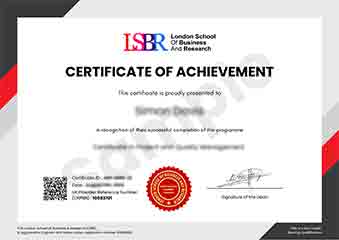
Sample Certificate
Preview the certificate you'll receive upon successful completion of this program.
Get Free Course Info
Enter your details and we'll send you a comprehensive course information pack straight to your inbox.
Employer Sponsored Training
Let your employer invest in your professional development. Request a corporate invoice and get your training funded.
Request Corporate InvoiceWhat People Say About Us
Hear from our students about their experience with the Certificate in Dynamic System Simulation for Control Engineering at LSBRX - Executive Education.
Oliver Davies
United Kingdom"The course provided in-depth material on dynamic system simulation, equipping me with essential skills for modeling and analyzing complex systems. I gained practical knowledge that directly enhances my ability to solve real-world control engineering problems."
Isabella Dubois
Canada"This course has been incredibly valuable, equipping me with advanced simulation techniques that are directly applicable in the control engineering industry. It has not only enhanced my technical skills but also opened up new career opportunities in dynamic system simulation."
Charlotte Williams
United Kingdom"The course structure is well-organized, providing a comprehensive understanding of dynamic system simulation that directly translates to real-world control engineering challenges, significantly enhancing my professional skills."