
Certificate in Exploratory Testing Techniques
Develop in-demand exploratory testing techniques skills with our comprehensive curriculum. Prepare for tomorrow's opportunities today.
Certificate in Exploratory Testing Techniques
Programme Overview
The Certificate in Exploratory Testing Techniques is a comprehensive programme designed to equip professionals with the skills necessary to conduct effective exploratory testing in software development environments. This programme is ideal for software engineers, QA professionals, and test automation specialists who are looking to enhance their testing methodologies and contribute more effectively to project outcomes. It is also beneficial for those transitioning into testing roles or seeking to transition to a more agile and dynamic testing approach.
Participants in this programme will develop key skills such as the ability to design and execute test cases dynamically, think critically and creatively to uncover defects, and effectively communicate test results and findings. They will learn how to use exploratory testing to iteratively improve software quality and ensure that the testing process is flexible and responsive to changes in requirements. The programme also covers the integration of exploratory testing with automation and other testing techniques to create a robust and comprehensive testing strategy.
The career impact of this programme is significant, as it will prepare learners to take on more advanced roles in software testing, where they can apply exploratory testing techniques to enhance software quality and project efficiency. Graduates will be well-prepared to work in dynamic, fast-paced environments, where the ability to adapt and innovate is crucial. The programme also enhances employability by providing a deeper understanding of how to integrate exploratory testing into agile methodologies, making participants valuable assets to any software development team.
What You'll Learn
Embark on a transformative journey with the 'Certificate in Exploratory Testing Techniques,' designed to equip you with the skills and knowledge needed to excel in software quality assurance. This comprehensive program is tailored for professionals looking to enhance their testing capabilities and adopt a dynamic approach to uncover software defects efficiently.
Key topics include foundational exploratory testing methodologies, scenario-based testing, and heuristic techniques. Participants will learn to design and execute test cases on the fly, leveraging tools and frameworks to facilitate robust testing processes. Through hands-on workshops and real-world case studies, you will gain practical experience in identifying and resolving complex issues.
Upon completion, graduates will be well-prepared to tackle the challenges of modern software development environments. They will be adept at contributing to agile teams, driving continuous improvement in testing practices, and ensuring high-quality software products. Career opportunities abound, including roles such as exploratory tester, QA specialist, and quality assurance engineer, where the ability to think creatively and respond quickly to evolving software needs is highly valued.
Join us in revolutionizing your testing strategy and elevating your career to new heights. The 'Certificate in Exploratory Testing Techniques' is your gateway to excellence in software quality assurance.
Programme Highlights
Industry-Aligned Curriculum
Developed with industry leaders for job-ready skills valued by employers worldwide.
Globally Recognised Certificate
Recognised by employers across 180+ countries as a mark of professional excellence.
Flexible Online Learning
Study at your own pace with lifetime access to all course materials and updates.
Instant Access
Start learning immediately — no application process or waiting period required.
Constantly Updated Content
Stay ahead with the latest industry trends, best practices, and emerging insights.
Career Advancement
87% of graduates report measurable career progression within 6 months of completion.
Topics Covered
- 1. Introduction to Exploratory Testing: Learners will study the fundamental concepts of exploratory testing, its philosophy, and how it differs from traditional testing approaches. They will gain skills in identifying test ideas, executing tests, and documenting findings.
- 2. Test Planning and Session Management: This module covers the planning aspects of exploratory testing, including setting objectives, defining scope, and managing test sessions. Learners will learn how to effectively plan and conduct exploratory testing sessions to achieve maximum coverage and efficiency.
- 3. Techniques for Exploratory Testing: In this module, learners will explore various techniques used in exploratory testing, such as data-driven testing, boundary value analysis, and heuristic testing. They will practice applying these techniques to real-world scenarios to enhance their testing effectiveness.
- 4. Exploring User Interfaces: The focus of this module is on testing graphical user interfaces (GUIs) through exploratory methods. Learners will learn how to discover and test UI elements, evaluate user interaction flows, and ensure seamless user experiences.
- 5. Exploratory Testing with APIs: This module introduces learners to the concept of exploratory testing for APIs, covering the testing of RESTful services, SOAP services, and other web services. They will gain skills in crafting and executing API test cases through exploratory means.
- 6. Exploratory Testing in Agile Environments: In this module, learners will explore how exploratory testing fits into agile development methodologies. They will learn about continuous testing, test-driven development, and the role of exploratory testing in agile software development lifecycles.
- 7. Exploring Mobile Applications: This module focuses on testing mobile applications through exploratory methods. Learners will learn about the unique challenges of mobile testing and how to effectively use exploratory testing to uncover issues specific to mobile environments.
- 8. Exploratory Testing with Big Data: The final module covers exploratory testing techniques for big data systems. Learners will explore how to test large-scale data processing systems, real-time data streams, and data warehousing environments through exploratory methods.
- 9. Reporting and Communication in Exploratory Testing: This module teaches learners how to document and communicate findings from exploratory testing sessions effectively. They will learn about creating actionable test reports, presenting test results to stakeholders, and facilitating productive discussions.
- 10. Advanced Topics in Exploratory Testing: In this final module, learners will delve into advanced topics in exploratory testing, such as exploratory testing in DevOps, the integration of exploratory testing with automated testing, and the use of exploratory testing in security and performance testing.
What You Get When You Enroll
Secure checkout • Instant access • Certificate included
Key Facts
Audience: Testers, developers, quality assurance professionals
Prerequisites: Basic testing knowledge
Outcomes: Master exploratory testing, improve debugging skills, enhance test coverage
Ready to get started?
Join thousands of professionals who already took the next step. Enroll now and get instant access.
Enroll Now — $79Why This Course
Enhanced Skill Set: Obtaining a Certificate in Exploratory Testing Techniques equips professionals with advanced skills in identifying and addressing software bugs and issues more effectively. This includes understanding the nuances of exploratory testing, which involves dynamic and flexible test planning and execution, enabling testers to adapt their approach based on real-time feedback and observations.
Improved Career Prospects: This certification can significantly boost a tester's career by making them more competitive in the job market. Many organizations prioritize candidates with specialized skills in exploratory testing, as it enhances the overall quality assurance process. The certificate can lead to higher-paying positions or promotions within the field, especially for those in quality assurance roles.
Adaptability and Innovation: The certificate helps professionals develop innovative problem-solving skills, essential for tackling complex and dynamic testing environments. This adaptability is crucial in the rapidly evolving tech industry, where software requirements and testing methodologies frequently change. By mastering exploratory testing techniques, professionals can stay ahead of the curve, ensuring that their work remains relevant and effective.
Your Path to Certification
Trusted by Professionals Worldwide
Course Brochure
Download our comprehensive course brochure with all details
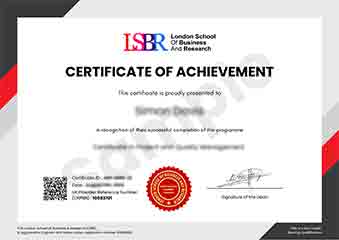
Sample Certificate
Preview the certificate you'll receive upon successful completion of this program.
Get Free Course Info
Enter your details and we'll send you a comprehensive course information pack straight to your inbox.
Employer Sponsored Training
Let your employer invest in your professional development. Request a corporate invoice and get your training funded.
Request Corporate InvoiceWhat People Say About Us
Hear from our students about their experience with the Certificate in Exploratory Testing Techniques at LSBRX - Executive Education.
Sophie Brown
United Kingdom"The course content was incredibly thorough and well-structured, providing a solid foundation in exploratory testing techniques that have directly enhanced my problem-solving skills and approach to testing software. I've gained practical skills that have already proven invaluable in my current role, allowing me to handle complex testing scenarios more effectively."
Wei Ming Tan
Singapore"This certificate course has been incredibly practical, equipping me with advanced exploratory testing techniques that are directly applicable in my role. It has not only enhanced my problem-solving skills but also opened up new career opportunities in testing that I hadn't considered before."
Isabella Dubois
Canada"The course structure is well-organized, providing a clear progression from foundational concepts to advanced techniques, which greatly enhances understanding and retention. The comprehensive content not only covers theoretical aspects but also includes practical examples that have significantly improved my ability to apply exploratory testing in real-world scenarios."