
Certificate in Geophysical Data Processing for Beginners
This certificate equips beginners with essential skills in geophysical data processing, enhancing data analysis and interpretation capabilities.
Certificate in Geophysical Data Processing for Beginners
Programme Overview
The Certificate in Geophysical Data Processing for Beginners is a comprehensive educational programme designed for individuals who are new to the field of geophysics and wish to gain foundational skills in data processing. This programme is ideal for geology and earth science students, researchers, and professionals from related fields who aim to enhance their understanding of geophysical data analysis techniques. It provides a solid introduction to the fundamental concepts and methods used in processing seismic, magnetic, and gravity data, ensuring participants are well-prepared to tackle real-world geophysical challenges.
Through this programme, learners will develop key skills including the use of industry-standard software for data acquisition, filtering, and interpretation, as well as an understanding of the principles behind geophysical surveys and data acquisition methods. They will learn to handle and process large datasets, interpret geological structures, and apply statistical methods to enhance data quality. Additionally, participants will gain proficiency in creating and analyzing geophysical maps and cross-sections, which are essential for understanding subsurface environments.
The career impact of this programme is significant, as it equips graduates with the necessary skills to pursue roles in geophysical data analysis, exploration geophysics, and environmental surveying. It also lays a strong foundation for those looking to advance in academic research, consultancy, and industry positions, providing them with the expertise to contribute effectively to projects involving geophysical data interpretation and management.
What You'll Learn
Embark on a journey to unlock the secrets of the Earth's subsurface with our Certificate in Geophysical Data Processing for Beginners. This comprehensive program is designed to equip you with foundational skills in geophysical data acquisition, processing, and interpretation. Through hands-on workshops and theoretical lectures, you will learn to use advanced software tools to process seismic, gravity, and magnetic data, enhancing your ability to interpret geological structures and reservoirs.
Key topics include seismic data analysis, gravity and magnetic data inversion, and the use of geophysical software. You will gain practical experience in processing and interpreting real-world geophysical datasets, acquiring the skills necessary to support exploration and resource management projects.
Graduates of this program are well-prepared for entry-level positions in the energy sector, environmental consulting, and geological surveying. Opportunities range from seismic data processing positions in oil and gas companies to roles in environmental geophysics, where you can contribute to projects such as groundwater mapping and mineral exploration.
Join us to explore the fascinating world of geophysics and open doors to a career where you can make a tangible impact on our understanding of the Earth's subsurface.
Programme Highlights
Industry-Aligned Curriculum
Developed with industry leaders for job-ready skills valued by employers worldwide.
Globally Recognised Certificate
Recognised by employers across 180+ countries as a mark of professional excellence.
Flexible Online Learning
Study at your own pace with lifetime access to all course materials and updates.
Instant Access
Start learning immediately — no application process or waiting period required.
Constantly Updated Content
Stay ahead with the latest industry trends, best practices, and emerging insights.
Career Advancement
87% of graduates report measurable career progression within 6 months of completion.
Topics Covered
- 1. Introduction to Geophysical Data: Learners will study the basics of geophysics and types of geophysical data, understanding the importance of data in exploration and environmental studies. They will gain foundational knowledge in data acquisition and basic data analysis techniques.
- 2. Data Acquisition Techniques: This module introduces various methods of data collection, including seismic, magnetic, and gravitational surveys. Learners will understand how to select appropriate methods for different geological scenarios and practice using software to simulate data acquisition.
- 3. Data Processing Fundamentals: Learners will explore basic processing techniques to clean and prepare raw data for interpretation. They will learn about filtering, deconvolution, and other essential processing steps, gaining hands-on experience with processing software.
- 4. Structural Interpretation of Seismic Data: This module focuses on interpreting seismic data to understand subsurface structures. Learners will study reflection seismology, velocity analysis, and techniques for interpreting seismic horizons and faults.
- 5. Geophysical Data Visualization: Learners will learn how to visualize geophysical data using various tools and methods to enhance their interpretation. They will practice creating cross-sections, maps, and 3D visualizations of geophysical data.
- 6. Advanced Data Processing Techniques: Building on foundational skills, learners will delve into more advanced processing methods such as seismic inversion, coherence analysis, and migration. They will gain experience in applying these techniques to real-world datasets.
- 7. Data Integration and Interpretation: This module covers the integration of multiple geophysical datasets to provide a comprehensive understanding of subsurface conditions. Learners will practice integrating seismic, gravity, and magnetic data to enhance interpretation accuracy.
- 8. Case Studies in Geophysical Data Processing: Through case studies, learners will apply their knowledge to real-world scenarios, including exploration for oil and gas, mineral resources, and environmental monitoring. They will work on projects that simulate professional tasks in the field.
- 9. Geophysical Data Processing Software: This module focuses on the use of industry-standard software for geophysical data processing. Learners will gain hands-on experience with popular tools such as SeisLab, SeisUnix, and interactive geophysical software.
- 10. Quality Control and Assurance: Learners will learn how to ensure the quality of geophysical data and processing results through rigorous quality control and assurance protocols. They will practice implementing these procedures in their own data processing workflows.
What You Get When You Enroll
Secure checkout • Instant access • Certificate included
Key Facts
Audience: Geophysics beginners, data analysts
Prerequisites: Basic math and computer skills
Outcomes: Process seismic data, interpret results
Ready to get started?
Join thousands of professionals who already took the next step. Enroll now and get instant access.
Enroll Now — $79Why This Course
Enhances Career Prospects: The Certificate in Geophysical Data Processing for Beginners equips professionals with foundational skills in geophysics, including data acquisition, processing, and interpretation. These skills are in high demand in the energy sector, where geophysical data analysis plays a critical role in oil and gas exploration. By obtaining this certificate, professionals can stand out in the job market, particularly in roles that require basic geophysical data processing skills.
Develops Practical Skills: The course includes hands-on training in using industry-standard software tools for geophysical data processing. Participants learn to interpret seismic data, analyze geological structures, and use advanced algorithms to enhance data quality. These practical skills are directly applicable in real-world projects, allowing professionals to contribute effectively to geophysical surveys and studies.
Improves Data Analysis Proficiency: Geophysical data processing involves complex mathematical and computational techniques. The certificate program covers essential statistical and mathematical methods, enabling professionals to perform rigorous data analysis. This proficiency is crucial for making accurate geological interpretations and supporting informed decision-making in exploration and resource management.
Facilitates Collaborative Work: Geophysical projects often require interdisciplinary collaboration. The certificate enhances communication and teamwork skills by exposing participants to diverse professional perspectives and methodologies. This prepares professionals to effectively collaborate with geologists, engineers, and other specialists, fostering a more integrated approach to geophysical research and development.
Your Path to Certification
Trusted by Professionals Worldwide
Course Brochure
Download our comprehensive course brochure with all details
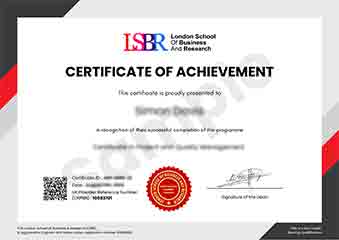
Sample Certificate
Preview the certificate you'll receive upon successful completion of this program.
Get Free Course Info
Enter your details and we'll send you a comprehensive course information pack straight to your inbox.
Employer Sponsored Training
Let your employer invest in your professional development. Request a corporate invoice and get your training funded.
Request Corporate InvoiceWhat People Say About Us
Hear from our students about their experience with the Certificate in Geophysical Data Processing for Beginners at LSBRX - Executive Education.
Sophie Brown
United Kingdom"The course content is comprehensive and well-structured, providing a solid foundation in geophysical data processing that has significantly enhanced my analytical skills. I've gained practical knowledge that I can directly apply in real-world scenarios, which is incredibly beneficial for my career in geophysics."
Arjun Patel
India"This course has been incredibly valuable, equipping me with essential skills in geophysical data processing that are directly applicable in the industry. It has opened up new career opportunities and enhanced my ability to analyze and interpret complex data sets, making me more competitive in the job market."
Muhammad Hassan
Malaysia"The course structure is well-organized, providing a solid foundation in geophysical data processing that bridges theoretical knowledge with practical applications, enhancing my understanding and preparing me for real-world challenges in the field."