
Certificate in Microservices-Based System Development
Elevate skills in microservices architecture, enabling efficient system development, deployment, and management.
Certificate in Microservices-Based System Development
Programme Overview
The Certificate in Microservices-Based System Development is designed for software engineers, system architects, and IT professionals who seek to enhance their capabilities in building scalable and resilient software systems. This program focuses on the principles and practices of microservices architecture, including service-oriented design, API development, and containerization technologies. Learners will gain hands-on experience with popular tools and frameworks such as Docker, Kubernetes, and various programming languages commonly used in microservices environments, such as Java, Python, and Go.
Key skills and knowledge developed through this program include the ability to design and implement microservices, manage service dependencies, and optimize service performance. Participants will learn how to leverage container orchestration tools to automate the deployment and scaling of microservices, ensuring high availability and fault tolerance. The curriculum also covers security best practices, data management strategies, and continuous integration/continuous deployment (CI/CD) pipelines, empowering learners to build robust and secure microservices-based systems.
The career impact of this certificate is significant, as it equips graduates with the expertise needed to lead or contribute to microservices projects in a variety of industries. Graduates can pursue roles such as microservices architect, cloud engineer, DevOps specialist, or senior software developer, where they can apply their knowledge to design, develop, and maintain modern, efficient, and scalable software systems. The demand for professionals skilled in microservices architecture is growing rapidly, making this certificate a valuable asset in the competitive job market.
What You'll Learn
The Certificate in Microservices-Based System Development is designed to equip professionals with the skills necessary to design, develop, and deploy scalable, resilient, and efficient microservices-based systems. This program is ideal for software developers, IT professionals, and system architects looking to enhance their expertise in modern software architecture practices.
Key topics covered include the principles of microservices architecture, service-oriented design patterns, containerization with Docker, orchestration with Kubernetes, and continuous integration/continuous deployment (CI/CD) pipelines. Students will also gain hands-on experience with popular microservices frameworks and tools, such as Spring Boot, Istio, and Prometheus.
Through real-world projects and case studies, participants will learn to implement microservices in various contexts, such as cloud environments and hybrid architectures. They will understand how to manage service discovery, implement service-to-service communication, and design fault-tolerant systems. The program emphasizes practical skills and best practices in microservices development, enabling graduates to lead or contribute to complex, distributed system projects.
Graduates of this program are well-prepared for roles such as microservices architect, cloud engineer, DevOps engineer, and senior software developer. They can work in a variety of industries, including fintech, healthcare, e-commerce, and telecommunications, where microservices architectures are critical for building and maintaining robust, scalable applications. The program also provides a solid foundation for those aspiring to further their education or certifications in advanced microservices and cloud technologies.
Programme Highlights
Industry-Aligned Curriculum
Developed with industry leaders for job-ready skills valued by employers worldwide.
Globally Recognised Certificate
Recognised by employers across 180+ countries as a mark of professional excellence.
Flexible Online Learning
Study at your own pace with lifetime access to all course materials and updates.
Instant Access
Start learning immediately — no application process or waiting period required.
Constantly Updated Content
Stay ahead with the latest industry trends, best practices, and emerging insights.
Career Advancement
87% of graduates report measurable career progression within 6 months of completion.
Topics Covered
- 1. Introduction to Microservices Architecture: Learners will explore the fundamental principles of microservices architecture, including its benefits, challenges, and design patterns. Practical skills include understanding service-oriented architectures and designing simple microservices.
- 2. Microservices Design Patterns: This module delves into common design patterns used in microservices, such as service discovery, circuit breaker, and API gateway. Learners will gain hands-on experience applying these patterns to real-world scenarios.
- 3. Containerization with Docker: Learners will learn how to containerize applications using Docker, covering Dockerfile creation, image building, and container orchestration. Practical skills include deploying microservices in a containerized environment.
- 4. Service Communication and Messaging: This module focuses on communication between microservices, including RESTful APIs, gRPC, and message queues. Learners will implement various communication strategies and understand their implications.
- 5. Database Design for Microservices: Learners will study database strategies for microservices, including database sharding, microservices and databases, and event sourcing. Practical skills include designing a relational database schema for microservices.
- 6. Microservices Testing and Monitoring: This module covers testing strategies for microservices, including unit testing, integration testing, and end-to-end testing. Learners will also learn monitoring tools and practices to ensure microservices are reliable and performant.
- 7. Security in Microservices: Learners will explore security challenges in microservices, including authentication, authorization, and secure communication. Practical skills include implementing security measures in a microservices architecture.
- 8. DevOps for Microservices: This module focuses on automating the deployment and maintenance of microservices through CI/CD pipelines. Learners will use tools like Jenkins, GitLab, and Kubernetes to set up and manage microservices deployments.
- 9. Advanced Microservices Patterns: Learners will delve into advanced microservices patterns, such as batch processing, streaming, and serverless architectures. Practical skills include designing and implementing complex microservices systems.
- 10. Microservices Deployment and Scaling: This module covers strategies for deploying and scaling microservices, including cloud-native deployment, auto-scaling, and load balancing. Practical skills include deploying microservices to cloud platforms like AWS and Azure.
What You Get When You Enroll
Secure checkout • Instant access • Certificate included
Key Facts
Audience: Professionals, Developers
Prerequisites: Basic programming knowledge
Outcomes: Microservices architecture, DevOps skills
Ready to get started?
Join thousands of professionals who already took the next step. Enroll now and get instant access.
Enroll Now — $79Why This Course
Enhanced Career Prospects: The Certificate in Microservices-Based System Development equips professionals with in-demand skills that are crucial in today’s rapidly evolving tech landscape. Microservices architecture allows for more scalable, maintainable, and resilient software systems, making this knowledge highly valuable in both startup and enterprise settings.
Improved Problem-Solving Skills: Studying microservices-based systems enhances logical thinking and problem-solving abilities. Professionals learn to break down complex systems into manageable components, which not only improves their technical proficiency but also boosts their overall critical thinking skills.
Increased Demand for Microservices Expertise: As organizations increasingly adopt microservices to improve agility and scalability, the demand for professionals with expertise in this domain is surging. Obtaining this certificate can position individuals as valuable assets to companies seeking to innovate and optimize their software development processes.
Better Team Collaboration: Microservices-based systems often require a team with diverse skills and expertise. This certificate prepares professionals to work effectively in such teams, fostering a collaborative environment where different aspects of a project can be managed and developed simultaneously.
Your Path to Certification
Trusted by Professionals Worldwide
Course Brochure
Download our comprehensive course brochure with all details
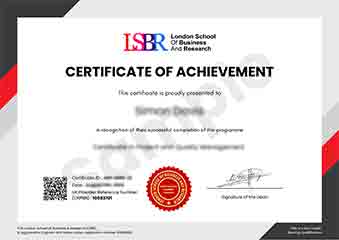
Sample Certificate
Preview the certificate you'll receive upon successful completion of this program.
Get Free Course Info
Enter your details and we'll send you a comprehensive course information pack straight to your inbox.
Employer Sponsored Training
Let your employer invest in your professional development. Request a corporate invoice and get your training funded.
Request Corporate InvoiceWhat People Say About Us
Hear from our students about their experience with the Certificate in Microservices-Based System Development at LSBRX - Executive Education.
Charlotte Williams
United Kingdom"The course content is comprehensive and well-structured, providing a solid foundation in microservices architecture that has significantly enhanced my ability to design and develop scalable systems. I've gained practical skills that are directly applicable to real-world projects, which I believe will be invaluable for my career in software development."
Sophie Brown
United Kingdom"This certificate program has been instrumental in enhancing my understanding of microservices architecture, making my skills highly relevant in today's tech industry. It has not only deepened my technical knowledge but also provided practical insights that have significantly boosted my career prospects."
Fatimah Ibrahim
Malaysia"The course structure is well-organized, providing a clear path from understanding microservices fundamentals to building complex systems, which has significantly enhanced my ability to apply these concepts in real-world scenarios."