
Certificate in RNA-Seq Data Analysis and Visualization
Gain expertise in RNA-Seq data analysis and visualization techniques for transcriptome profiling and biological discovery.
Certificate in RNA-Seq Data Analysis and Visualization
Programme Overview
The Certificate in RNA-Seq Data Analysis and Visualization is designed for biologists, bioinformaticians, and researchers seeking to enhance their ability to analyze and interpret large-scale RNA sequencing data. This program provides a comprehensive understanding of RNA sequencing technologies, data preprocessing, and advanced analytical techniques. Through hands-on training, learners will gain expertise in using state-of-the-art software and tools for data normalization, differential expression analysis, pathway enrichment, and visualization of gene expression patterns.
Key skills and knowledge developed include a deep understanding of RNA sequencing workflows, proficiency in using bioinformatics software such as Salmon, DESeq2, and ggplot2, and the ability to interpret and visualize complex data sets effectively. Learners will also acquire hands-on experience in handling large data sets, performing quality control, and selecting appropriate statistical methods for RNA-Seq data analysis. This curriculum ensures that participants are well-equipped to tackle real-world challenges in the field of genomics and transcriptomics.
The career impact of this certificate is significant, as it equips professionals with the necessary skills to contribute effectively in academia, pharmaceutical research, biotechnology, and medical diagnostics. Graduates are well-prepared to take on roles such as RNA-Seq data analysts, bioinformaticians, or research scientists, where they can apply their knowledge to drive innovation and advance scientific understanding in genomics.
What You'll Learn
The Certificate in RNA-Seq Data Analysis and Visualization equips you with advanced skills in analyzing and visualizing RNA sequencing data, a critical tool in genomics research. This program is ideal for biologists, bioinformaticians, and researchers looking to enhance their capabilities in handling complex genomic data. You will delve into the fundamentals of RNA-Seq technology, bioinformatics tools, and statistical methods to process, annotate, and interpret large-scale gene expression data.
Key topics include data preprocessing, alignment, differential expression analysis, and the use of advanced visualization techniques such as heatmaps, PCA plots, and network analysis. Through hands-on exercises and real-world case studies, you will gain practical experience using leading software like R, Python, and tools from the Bioconductor package.
Graduates of this program are well-prepared to contribute to cutting-edge research in genomics, molecular biology, and personalized medicine. They can apply their skills in diverse settings, from academic institutions to pharmaceutical companies, where RNA-Seq data analysis is crucial. Potential career paths include bioinformatician, genomics analyst, research associate, or data scientist in genomics.
By the end of the program, you will have a robust skill set to drive innovation in genomics and contribute to advancements in understanding and treating diseases at the molecular level.
Programme Highlights
Industry-Aligned Curriculum
Developed with industry leaders for job-ready skills valued by employers worldwide.
Globally Recognised Certificate
Recognised by employers across 180+ countries as a mark of professional excellence.
Flexible Online Learning
Study at your own pace with lifetime access to all course materials and updates.
Instant Access
Start learning immediately — no application process or waiting period required.
Constantly Updated Content
Stay ahead with the latest industry trends, best practices, and emerging insights.
Career Advancement
87% of graduates report measurable career progression within 6 months of completion.
Topics Covered
- 1. Introduction to RNA-Seq: Learners will study the basics of RNA sequencing, including its principles, types, and applications. They will gain foundational knowledge on how RNA-Seq works and its importance in biological research.
- 2. Data Preprocessing in RNA-Seq: This module covers the essential steps in preparing RNA-Seq data for analysis, including quality control, adapter trimming, and read alignment. Learners will become proficient in using tools like FastQC and Bowtie2.
- 3. Transcriptome Assembly and Quantification: Learners will explore methods for transcriptome assembly and quantification of gene expression levels. They will learn to use software such as Trinity and DESeq2 to analyze RNA-Seq data.
- 4. Differential Expression Analysis: This module delves into identifying differentially expressed genes between experimental conditions. Learners will apply statistical methods and machine learning techniques to analyze RNA-Seq data and interpret results.
- 5. Gene Ontology and Pathway Analysis: Learners will study how to use Gene Ontology (GO) and pathway analysis tools to understand the biological functions and pathways associated with differentially expressed genes. They will gain experience with tools like DAVID and Reactome.
- 6. Visualization Techniques for RNA-Seq Data: This module focuses on visualizing RNA-Seq data and results using various software tools. Learners will learn to create high-quality plots and heatmaps using R packages like ggplot2 and ComplexHeatmap.
- 7. Long Non-Coding RNA (lncRNA) Analysis: Learners will investigate the analysis of long non-coding RNAs, including their identification and functional characterization. They will use software specifically designed for lncRNA analysis, such as LncRNAco.
- 8. RNA-Seq Data Integration: This advanced module covers integrating multiple RNA-Seq datasets to gain a comprehensive understanding of gene expression changes. Learners will apply statistical and computational methods to integrate and analyze data from different experiments.
- 9. RNA-Seq Data Quality Control and Reproducibility: Learners will learn how to ensure the quality and reproducibility of RNA-Seq experiments. They will apply best practices in experimental design, data handling, and analysis to produce reliable results.
- 10. Reporting and Communicating RNA-Seq Analysis Results: This final module teaches learners how to effectively report and communicate their RNA-Seq analysis results. They will learn to create professional-quality reports and presentations, and will practice presenting their findings to both technical and non-technical audiences.
What You Get When You Enroll
Secure checkout • Instant access • Certificate included
Key Facts
Audience: Bioinformatics analysts, researchers
Prerequisites: Basic bioinformatics knowledge
Outcomes: Proficient in RNA-Seq analysis, data visualization
Ready to get started?
Join thousands of professionals who already took the next step. Enroll now and get instant access.
Enroll Now — $79Why This Course
Enhanced Career Opportunities: Acquiring a Certificate in RNA-Seq Data Analysis and Visualization can significantly expand career prospects in genomics, bioinformatics, and biotechnology. This certification equips professionals with advanced analytical skills, enabling them to interpret complex RNA-Seq data, a critical skill in modern biomedical research.
Specialized Skill Set: The certificate program focuses on developing a deep understanding of RNA-Seq data analysis techniques, including data preprocessing, alignment, quantification, and differential expression analysis. These specialized skills are highly sought after in industries that rely on cutting-edge genomic data analysis, such as pharmaceuticals and personalized medicine.
Improved Visualization Expertise: Proficiency in data visualization is crucial for communicating complex biological data effectively. The course includes training in tools and software like R, Python, and specialized bioinformatics packages, which enhance the ability to create clear, informative visual representations of RNA-Seq data. This not only aids in scientific presentations but also in the development of user-friendly reports for non-specialist stakeholders.
Competitive Edge: With the increasing demand for sophisticated data analysis in genomics, professionals with a certificate in RNA-Seq data analysis and visualization stand out in the job market. Employers value candidates who can handle large datasets and provide actionable insights through data-driven analyses, making this certification a valuable addition to any resume in the biotech and healthcare sectors.
Your Path to Certification
Trusted by Professionals Worldwide
Course Brochure
Download our comprehensive course brochure with all details
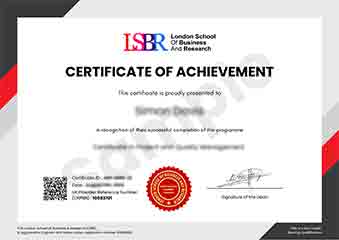
Sample Certificate
Preview the certificate you'll receive upon successful completion of this program.
Get Free Course Info
Enter your details and we'll send you a comprehensive course information pack straight to your inbox.
Employer Sponsored Training
Let your employer invest in your professional development. Request a corporate invoice and get your training funded.
Request Corporate InvoiceWhat People Say About Us
Hear from our students about their experience with the Certificate in RNA-Seq Data Analysis and Visualization at LSBRX - Executive Education.
Charlotte Williams
United Kingdom"The course provided an in-depth understanding of RNA-Seq data analysis and visualization, equipping me with practical skills to handle real-world biological data effectively. Gaining this knowledge has significantly enhanced my ability to contribute to genomic research projects."
Ryan MacLeod
Canada"This course has been incredibly valuable, equipping me with the skills to analyze and visualize RNA-Seq data effectively. It has significantly enhanced my ability to contribute to genomic research projects, making me a more competitive candidate in the biotech industry."
Fatimah Ibrahim
Malaysia"The course is meticulously organized, providing a seamless journey from foundational concepts to advanced techniques in RNA-Seq data analysis and visualization, which has significantly enhanced my ability to handle complex biological data in a professional setting."