
Certificate in Robotics Control Systems and Programming
This certificate equips learners with advanced skills in robotics control systems and programming, enhancing career prospects in automation and robotics.
Certificate in Robotics Control Systems and Programming
Programme Overview
The Certificate in Robotics Control Systems and Programming is a comprehensive program designed for engineers, technicians, and professionals seeking to enhance their skills in the design, implementation, and control of robotic systems. This program covers a wide range of topics, including the fundamentals of robotics, control theory, programming languages relevant to robotics, and practical applications in various industries such as manufacturing, healthcare, and logistics. Ideal candidates for this program include those with a background in engineering, computer science, or a related field who wish to specialize in robotics or pursue roles in automation and robotics development.
Throughout the program, learners will develop a robust set of skills and knowledge essential for modern robotics. They will master programming languages such as Python and C++, learn to implement control algorithms for autonomous robots, and understand the integration of sensors and actuators in robotic systems. Additionally, learners will gain hands-on experience through laboratory exercises and projects, enabling them to apply theoretical knowledge to real-world scenarios. This practical exposure will prepare them to design, simulate, and test complex robotic systems.
The career impact of this certificate is significant, as it equips graduates with the expertise to work in emerging fields such as robotics engineering, automation, and mechatronics. Graduates are well-prepared to take on roles in research and development, system integration, and quality assurance within companies that leverage robotics technology. The skills acquired in this program are also highly sought after in sectors like manufacturing, where there is a growing demand for sophisticated automation solutions.
What You'll Learn
Embark on an electrifying journey into the world of robotics with our 'Certificate in Robotics Control Systems and Programming.' This intensive, hands-on programme equips you with the skills to design, program, and control robotic systems, making it a vital asset in the rapidly evolving tech landscape. You'll delve into core topics such as microcontroller programming, sensor interfacing, motor control, and automation theory, all underpinned by practical, project-based learning that bridges theory and real-world application.
Upon completion, you'll be well-prepared to tackle complex robotic challenges, from industrial automation to service robotics. Our graduates find success in roles like robotics engineers, embedded systems developers, and automation technicians, driving innovation in sectors like manufacturing, healthcare, and research. With a certificate from our programme, you'll not only master the technical skills required but also build a robust professional network, opening doors to diverse career paths and entrepreneurial ventures.
Join a community of innovators and shape the future of robotics. This programme is your gateway to a cutting-edge career in a field where creativity meets technology.
Programme Highlights
Industry-Aligned Curriculum
Developed with industry leaders for job-ready skills valued by employers worldwide.
Globally Recognised Certificate
Recognised by employers across 180+ countries as a mark of professional excellence.
Flexible Online Learning
Study at your own pace with lifetime access to all course materials and updates.
Instant Access
Start learning immediately — no application process or waiting period required.
Constantly Updated Content
Stay ahead with the latest industry trends, best practices, and emerging insights.
Career Advancement
87% of graduates report measurable career progression within 6 months of completion.
Topics Covered
- 1. Fundamentals of Robotics Control Systems: Learners will study the basic principles of robotics control systems, including types of robots and their applications. This module will enable learners to understand the foundational concepts necessary for programming and controlling robotic systems.
- 2. Programming Fundamentals for Robotics: Learners will explore essential programming languages and tools used in robotics, such as Python and ROS (Robot Operating System). By the end of this module, learners will be able to write basic programs for robotic tasks and manipulate robotic components.
- 3. Sensors and Actuators in Robotics: This module focuses on understanding various sensors and actuators used in robotics, their functions, and practical applications. Learners will gain hands-on experience with different types of sensors and actuators, preparing them for more complex robotic systems.
- 4. Control Theory for Robotics: Learners will delve into control theory fundamentals and their application in robotics. This module covers topics such as PID controllers, state-space models, and feedback control systems, which are crucial for designing effective robotic control algorithms.
- 5. Robot Kinematics and Dynamics: This module introduces learners to the principles of robot kinematics and dynamics, essential for understanding the movement and manipulation capabilities of robots. Through practical exercises, learners will learn to model and simulate robotic movements.
- 6. Advanced Robotics Programming Techniques: Building on previous modules, this module explores advanced programming techniques specific to robotics, including real-time programming, multi-robot systems, and distributed control. Learners will develop skills in writing efficient and robust robotic programs.
- 7. Machine Learning in Robotics: Learners will study the application of machine learning in robotics, focusing on supervised, unsupervised, and reinforcement learning techniques. This module will enable learners to develop robotic systems that can adapt and learn from their environment.
- 8. Robotics Software Development: This module covers best practices for developing software for robotic systems, including version control, testing, and debugging. Learners will learn to create maintainable and scalable robotic software solutions.
- 9. Human-Robot Interaction: Learners will explore the design and implementation of human-robot interaction in various contexts, including safety, usability, and ethical considerations. This module will prepare learners to develop robotic systems that can interact effectively with human users.
- 10. Capstone Project in Robotics Control Systems: In this final module, learners will apply their knowledge and skills to design, implement, and present a capstone project that addresses a real-world robotics control system challenge. This project will integrate all aspects of the program, from fundamental concepts to advanced programming and control techniques.
What You Get When You Enroll
Secure checkout • Instant access • Certificate included
Key Facts
Audience: Professionals in robotics
Prerequisites: Basic programming knowledge
Outcomes: Master control systems, programming skills
Ready to get started?
Join thousands of professionals who already took the next step. Enroll now and get instant access.
Enroll Now — $79Why This Course
Enhance Technical Expertise: The Certificate in Robotics Control Systems and Programming equips professionals with a deep understanding of control systems, programming languages such as Python and C++, and robotics principles. This knowledge is crucial in the rapidly evolving field of robotics, where automation and intelligent machines are key to industries like manufacturing, healthcare, and service robotics.
Expand Career Opportunities: With the increasing demand for robotics experts, professionals who earn this certificate can broaden their career horizons. It not only qualifies them for roles in robotics engineering but also opens doors to interdisciplinary fields such as artificial intelligence, data science, and mechatronics. This certificate can elevate career trajectories, especially for those in engineering, manufacturing, and research.
Develop Practical Skills: The program focuses on hands-on learning through projects and simulations, allowing participants to apply theoretical knowledge to real-world scenarios. This practical experience is invaluable for developing critical skills in system integration, algorithm design, and software development, which are highly sought after in the robotics industry.
Your Path to Certification
Trusted by Professionals Worldwide
Course Brochure
Download our comprehensive course brochure with all details
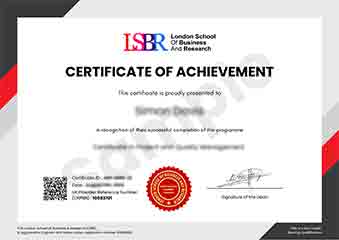
Sample Certificate
Preview the certificate you'll receive upon successful completion of this program.
Get Free Course Info
Enter your details and we'll send you a comprehensive course information pack straight to your inbox.
Employer Sponsored Training
Let your employer invest in your professional development. Request a corporate invoice and get your training funded.
Request Corporate InvoiceWhat People Say About Us
Hear from our students about their experience with the Certificate in Robotics Control Systems and Programming at LSBRX - Executive Education.
Sophie Brown
United Kingdom"The course content is incredibly thorough and well-structured, providing a solid foundation in robotics control systems and programming that has significantly enhanced my practical skills. I've gained valuable knowledge that is directly applicable to real-world scenarios, which I believe will be incredibly beneficial for my career in robotics."
Priya Sharma
India"This certificate program has been instrumental in enhancing my understanding of robotics control systems and programming, making me more competitive in the job market. The practical applications and real-world case studies have directly contributed to my career advancement by equipping me with the skills needed to tackle complex robotic systems in industry."
Ryan MacLeod
Canada"The course structure is well-organized, providing a comprehensive overview of robotics control systems and programming that seamlessly bridges theoretical concepts with practical applications, significantly enhancing my understanding and preparing me for real-world challenges."