
Executive Development Programme in Advanced Pediatric Emergency Simulation Techniques
This program enhances leaders' skills in pediatric emergency care through advanced simulation techniques, improving patient outcomes and clinical decision-making.
Executive Development Programme in Advanced Pediatric Emergency Simulation Techniques
Programme Overview
The Executive Development Programme in Advanced Pediatric Emergency Simulation Techniques is designed for healthcare professionals, including pediatricians, emergency medicine specialists, and critical care nurses, who are seeking to enhance their expertise in managing complex pediatric emergencies. The program leverages state-of-the-art simulation technologies to provide an immersive and realistic training environment, focusing on the latest advancements in pediatric critical care, trauma management, and acute illness response.
Participants will develop advanced skills in clinical assessment, decision-making, and collaborative care through intensive simulation scenarios. Key knowledge areas include the pathophysiology of pediatric emergencies, the use of technology in patient monitoring, and the application of evidence-based practices in pediatric emergency care. The program also emphasizes leadership development, team communication, and ethical considerations in emergency care, ensuring that learners are well-prepared to lead and innovate in their clinical settings.
The programme has a profound impact on career progression, equipping participants with the knowledge and skills to take on leadership roles in pediatric emergency care. Graduates will be better prepared to implement best practices, improve patient outcomes, and contribute to the advancement of pediatric emergency medicine in their institutions and communities.
What You'll Learn
The Executive Development Programme in Advanced Pediatric Emergency Simulation Techniques is designed for healthcare professionals seeking to enhance their expertise in critical pediatric emergency care. This comprehensive program combines the latest in simulation technology with advanced clinical practices to prepare participants for high-stakes emergency scenarios. Key topics include pediatric airway management, advanced life support, trauma care, and infection control protocols. Participants engage in hands-on simulations, debrief sessions, and expert-led discussions to refine their skills and deepen their understanding of pediatric emergency medicine.
Upon completion, graduates are well-equipped to lead emergency response teams, develop and implement training programs, and improve patient outcomes in pediatric care settings. The program fosters a network of experienced professionals who share insights and best practices, ensuring that participants remain at the forefront of pediatric emergency care. This program opens doors to various career opportunities, including roles in pediatric emergency departments, pediatric intensive care units, and simulation centers. Graduates are ideally suited to advance in leadership positions within healthcare institutions, contributing to the development and oversight of emergency protocols and training programs.
Programme Highlights
Industry-Aligned Curriculum
Developed with industry leaders for job-ready skills valued by employers worldwide.
Globally Recognised Certificate
Recognised by employers across 180+ countries as a mark of professional excellence.
Flexible Online Learning
Study at your own pace with lifetime access to all course materials and updates.
Instant Access
Start learning immediately — no application process or waiting period required.
Constantly Updated Content
Stay ahead with the latest industry trends, best practices, and emerging insights.
Career Advancement
87% of graduates report measurable career progression within 6 months of completion.
Topics Covered
- 1. Fundamentals of Pediatric Emergency Care: Learners will study the basic principles of pediatric emergency care, including the physiology of children, common pediatric emergencies, and the psychological aspects of caring for pediatric patients. They will gain practical skills in performing a pediatric assessment and recognizing immediate life-threatening conditions.
- 2. Advanced Airway Management in Pediatrics: This module covers advanced techniques for airway management in pediatric patients, including the use of video laryngoscopy and advanced airway devices. Learners will practice intubation techniques and understand the selection of appropriate airway equipment for different patient scenarios.
- 3. Pediatric Trauma Care: Learners will explore the evaluation and management of pediatric trauma patients, focusing on the principles of trauma care and the application of the Pediatric Advanced Life Support (PALS) protocol. Practical skills include performing a trauma assessment and initiating resuscitation in pediatric trauma cases.
- 4. Critical Care for Pediatric Patients: This module delves into the management of critically ill pediatric patients, including the use of mechanical ventilation, monitoring, and hemodynamic support. Learners will gain hands-on experience in managing complex cases and understanding the role of the critical care team.
- 5. Pediatric Emergency Pharmacology: Learners will study the pharmacology of drugs commonly used in pediatric emergencies, including dosing, pharmacokinetics, and drug interactions. Practical skills include calculating pediatric drug dosages and understanding the administration of emergency medications.
- 6. Emergency Simulation Techniques for Pediatric Cases: This module focuses on the use of simulation techniques to enhance the emergency care of pediatric patients. Learners will practice managing simulated pediatric emergencies, with a focus on critical thinking and decision-making in a high-stress environment.
- 7. Pediatric Psychosocial and Ethical Considerations: Learners will explore the psychosocial and ethical issues surrounding the emergency care of pediatric patients, including communication with families, informed consent, and end-of-life care. Practical skills include effective communication with children and their families and understanding ethical dilemmas in pediatric emergency care.
- 8. Advanced Cardiac Life Support (ACLS) for Pediatrics: This module covers advanced life support techniques specifically tailored for pediatric patients, including advanced cardiac resuscitation and the use of advanced monitoring equipment. Learners will practice resuscitation techniques and understand the management of pediatric cardiac emergencies.
- 9. Emergency Pediatric Transport: Learners will study the principles of emergency transport for pediatric patients, including the use of specialized transport equipment and the coordination of care between different emergency departments. Practical skills include performing a transport assessment and managing the emergency care of pediatric patients during transport.
- 10. Leadership and Team Dynamics in Pediatric Emergency Care: This module focuses on the role of leadership and team dynamics in the emergency care of pediatric patients. Learners will explore the importance of teamwork, communication, and leadership in critical situations, and will practice leading a team through a simulated pediatric emergency.
What You Get When You Enroll
Secure checkout • Instant access • Certificate included
Key Facts
Audience: Healthcare professionals, educators, pediatricians
Prerequisites: Basic medical training, experience in pediatric care
Outcomes: Enhanced simulation skills, improved patient management, certified
Ready to get started?
Join thousands of professionals who already took the next step. Enroll now and get instant access.
Enroll Now — $199Why This Course
Enhanced Clinical Skills: Participating in an Executive Development Programme in Advanced Pediatric Emergency Simulation Techniques equips professionals with advanced clinical skills and the ability to manage complex pediatric emergencies effectively. This training includes hands-on simulations, which allow participants to practice and refine their techniques in a safe, controlled environment, thereby improving patient outcomes.
Leadership and Teamwork: The programme focuses on developing leadership and teamwork skills, crucial for managing high-pressure situations in pediatric emergency settings. Through collaborative exercises and case studies, participants learn to lead effectively, communicate clearly, and work collaboratively with multidisciplinary teams to provide comprehensive care.
Evidence-Based Practice: Emphasis is placed on evidence-based practices and the latest research in pediatric emergency care. This ensures that professionals are up-to-date with the most effective treatment methods and protocols, enabling them to make informed decisions and stay ahead in their field. The programme also encourages critical thinking and continuous learning, fostering a culture of innovation and improvement.
Career Advancement: Completing this programme can significantly enhance career prospects, as it demonstrates a commitment to ongoing professional development and a dedication to excellence in pediatric emergency care. It can lead to advanced roles such as pediatric emergency department directors, clinical educators, or researchers, and may also open doors to international opportunities in healthcare leadership.
Your Path to Certification
Trusted by Professionals Worldwide
Course Brochure
Download our comprehensive course brochure with all details
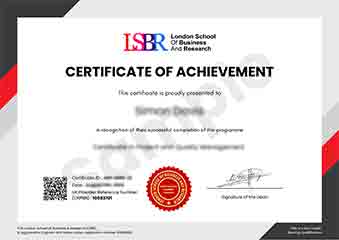
Sample Certificate
Preview the certificate you'll receive upon successful completion of this program.
Get Free Course Info
Enter your details and we'll send you a comprehensive course information pack straight to your inbox.
Employer Sponsored Training
Let your employer invest in your professional development. Request a corporate invoice and get your training funded.
Request Corporate InvoiceWhat People Say About Us
Hear from our students about their experience with the Executive Development Programme in Advanced Pediatric Emergency Simulation Techniques at LSBRX - Executive Education.
Sophie Brown
United Kingdom"The course content was incredibly comprehensive, covering the latest in pediatric emergency care with real-life simulation scenarios that significantly enhanced my practical skills. Gaining hands-on experience in critical situations has been invaluable for my career in emergency medicine."
Mei Ling Wong
Singapore"This program has significantly enhanced my ability to handle complex pediatric emergencies, making me a more valuable asset in my hospital's emergency department. The hands-on simulation techniques have directly translated into improved patient outcomes and have opened up new opportunities for leadership roles within the pediatric ICU."
Klaus Mueller
Germany"The course structure was meticulously organized, providing a seamless transition from theoretical knowledge to practical application in pediatric emergency scenarios, which significantly enhanced my understanding and preparedness for real-world challenges."