
Executive Development Programme in Advanced Statistical Analysis for Educational Data
This program equips educators with advanced statistical skills for analyzing educational data, enhancing decision-making and student outcomes.
Executive Development Programme in Advanced Statistical Analysis for Educational Data
Programme Overview
The Executive Development Programme in Advanced Statistical Analysis for Educational Data is designed for educational leaders, researchers, and data analysts seeking to enhance their ability to leverage complex data sets to drive educational improvement and innovation. This program equips participants with advanced statistical techniques and tools to analyze and interpret educational data, enabling them to make data-driven decisions and implement evidence-based strategies.
Participants will develop a robust set of skills in advanced statistical methods, including regression analysis, multivariate analysis, and machine learning algorithms tailored for educational contexts. They will also learn how to use specialized software and programming languages such as R and Python for data analysis, and how to effectively communicate statistical findings to stakeholders. By gaining proficiency in these areas, learners will be able to design and execute sophisticated studies, evaluate educational interventions, and contribute to the development of more effective educational policies and practices.
The career impact of this program is significant, as participants will be well-equipped to lead data-driven initiatives in educational settings, whether in public schools, educational research institutions, or private educational consultancies. They will be able to transform raw data into actionable insights, foster a culture of data literacy, and contribute to the evidence base for educational excellence, thereby improving student outcomes and driving systemic change in educational institutions.
What You'll Learn
The Executive Development Programme in Advanced Statistical Analysis for Educational Data is a comprehensive, cutting-edge initiative designed to equip professionals with the sophisticated analytical skills needed to drive educational innovation. This program delves into advanced statistical methodologies, including predictive modeling, machine learning, and data visualization, tailored to the unique challenges of educational data. Participants will learn to harness big data to inform policy decisions, improve student outcomes, and enhance educational practices.
Key topics include data ethics, data privacy, causal inference, and the use of advanced statistical tools in educational research. Through hands-on workshops and real-world case studies, participants will gain practical experience in applying these techniques to improve educational programs and policies.
Upon completion, graduates will be well-prepared to lead data-driven initiatives, analyze complex educational datasets, and contribute to evidence-based decision-making in educational settings. This program opens doors to diverse career opportunities in educational research, policy analysis, data science, and leadership roles within educational institutions and organizations.
Join us at the forefront of educational data analytics to shape the future of learning through advanced statistical analysis.
Programme Highlights
Industry-Aligned Curriculum
Developed with industry leaders for job-ready skills valued by employers worldwide.
Globally Recognised Certificate
Recognised by employers across 180+ countries as a mark of professional excellence.
Flexible Online Learning
Study at your own pace with lifetime access to all course materials and updates.
Instant Access
Start learning immediately — no application process or waiting period required.
Constantly Updated Content
Stay ahead with the latest industry trends, best practices, and emerging insights.
Career Advancement
87% of graduates report measurable career progression within 6 months of completion.
Topics Covered
- 1. Introduction to Advanced Statistical Analysis: Learners will be introduced to fundamental statistical concepts and techniques essential for analyzing educational data. They will gain skills in data collection, descriptive statistics, and basic data visualization.
- 2. Probability Theory and Distributions: This module covers probability theory, including distributions such as normal, binomial, and Poisson. Learners will understand how these concepts apply to educational datasets and learn to calculate probabilities and make predictions.
- 3. Inferential Statistics for Educational Research: Focusing on inferential statistics, learners will learn to use techniques like hypothesis testing, confidence intervals, and ANOVA to draw meaningful conclusions from educational data.
- 4. Advanced Regression Analysis: This module delves into advanced regression models, including multiple regression, logistic regression, and interaction effects. Learners will learn to apply these models to real-world educational datasets and interpret the results.
- 5. Multivariate Data Analysis: Learners will explore techniques such as factor analysis, principal component analysis, and cluster analysis to understand complex educational datasets and uncover hidden patterns.
- 6. Time Series Analysis and Forecasting: This module covers time series analysis methods to analyze and forecast trends in educational data over time. Learners will learn to work with time series data and use forecasting models to predict future trends.
- 7. Machine Learning for Educational Data: Introducing machine learning algorithms, this module covers topics such as decision trees, random forests, and neural networks. Learners will gain skills in predictive modeling and understand how machine learning can be applied to educational data.
- 8. Data Visualization Techniques: Focusing on effective data visualization, learners will learn to use tools like Tableau and R for creating insightful visualizations of educational data, enhancing their ability to communicate findings clearly.
- 9. Ethical Considerations in Data Analysis: This module addresses ethical issues in data analysis, including data privacy, bias, and confidentiality. Learners will learn to conduct analyses while considering these important ethical aspects.
- 10. Advanced Topics in Statistical Analysis: In this capstone module, learners will engage with cutting-edge statistical methods and techniques. They will work on a project applying advanced statistical methods to a real-world educational dataset, synthesizing skills learned throughout the programme.
What You Get When You Enroll
Secure checkout • Instant access • Certificate included
Key Facts
Audience: Educators, Data Analysts, Researchers
Prerequisites: Basic statistics, Excel proficiency
Outcomes: Master advanced statistical techniques, Improve data-driven decision-making
Ready to get started?
Join thousands of professionals who already took the next step. Enroll now and get instant access.
Enroll Now — $199Why This Course
Enhance Analytical Skills: The programme equips professionals with advanced statistical techniques, enabling them to analyze complex educational data more accurately. These skills are crucial for identifying trends, evaluating the effectiveness of educational interventions, and making evidence-based decisions that can significantly impact student outcomes and institutional performance.
Career Advancement: By mastering advanced statistical analysis, participants can take on more complex roles within their organizations. The programme prepares individuals to lead data-driven projects, manage data teams, or pursue senior leadership positions in educational administration or research. This not only enhances their professional profile but also offers higher earning potential.
Improved Decision-Making: The programme teaches professionals how to interpret and communicate statistical findings effectively. This skill is vital for crafting compelling reports and presentations that influence stakeholders, from educators and policymakers to parents and students. Strong analytical and communication skills can inspire confidence and lead to more impactful educational reforms.
Stay Current with Research: The programme incorporates the latest methodologies and tools in statistical analysis. Keeping up with these advancements is crucial as the field of educational data analysis evolves rapidly. Professionals who participate in such programmes remain at the forefront of educational research and practice, ensuring they can contribute meaningfully to ongoing and future initiatives.
Your Path to Certification
Trusted by Professionals Worldwide
Course Brochure
Download our comprehensive course brochure with all details
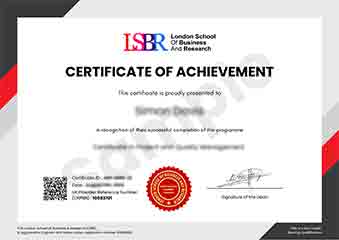
Sample Certificate
Preview the certificate you'll receive upon successful completion of this program.
Get Free Course Info
Enter your details and we'll send you a comprehensive course information pack straight to your inbox.
Employer Sponsored Training
Let your employer invest in your professional development. Request a corporate invoice and get your training funded.
Request Corporate InvoiceWhat People Say About Us
Hear from our students about their experience with the Executive Development Programme in Advanced Statistical Analysis for Educational Data at LSBRX - Executive Education.
Oliver Davies
United Kingdom"The course provided comprehensive and well-structured content that significantly enhanced my ability to analyze educational data effectively. I gained practical skills in applying advanced statistical methods, which I believe will greatly benefit my career in educational research."
Jia Li Lim
Singapore"The Executive Development Programme in Advanced Statistical Analysis for Educational Data has significantly enhanced my ability to analyze complex educational datasets, making my insights more valuable to stakeholders. This skill has opened up new opportunities for me in my current role, allowing me to drive more informed decision-making processes within my organization."
Brandon Wilson
United States"The course structure was meticulously organized, providing a seamless transition from theoretical concepts to practical applications, which significantly enhanced my understanding and ability to analyze educational data effectively. The comprehensive content and real-world examples were particularly beneficial, offering valuable insights that have already improved my professional skills in statistical analysis."