
Executive Development Programme in AI-Driven Navigation for Deep Space Exploration
This programme develops executives to lead AI-driven navigation innovations for deep space exploration, enhancing mission success and efficiency.
Executive Development Programme in AI-Driven Navigation for Deep Space Exploration
Programme Overview
The Executive Development Programme in AI-Driven Navigation for Deep Space Exploration is designed for high-potential leaders in space agencies, private aerospace companies, and technology firms seeking to integrate advanced AI technologies into their deep space mission planning and execution. This program equips participants with the strategic understanding and technical skills necessary to develop, implement, and manage AI-driven navigation systems for complex space missions.
Participants will gain in-depth knowledge in artificial intelligence algorithms, machine learning techniques, and data-driven decision-making processes tailored for space exploration. They will also learn to integrate AI with existing spacecraft systems, analyze large-scale astronomical data, and develop robust navigation strategies that enhance mission efficiency and safety. The curriculum includes hands-on workshops, case studies, and collaborative projects that simulate real-world challenges in deep space navigation.
This program significantly impacts participants' careers by positioning them as leaders in AI and space exploration. Graduates will be well-prepared to lead innovative projects, foster interdisciplinary collaboration, and drive technological advancements in AI-driven navigation, essential for future deep space endeavors.
What You'll Learn
The Executive Development Programme in AI-Driven Navigation for Deep Space Exploration is a transformative initiative designed to equip professionals with the advanced skills necessary for navigating the complexities of deep space missions. This program, a collaboration between leading aerospace institutions and industry innovators, delves into the cutting-edge technologies and methodologies that drive AI in space navigation. Participants will explore topics such as machine learning algorithms, AI-assisted trajectory planning, and real-time data processing in extreme environments. The curriculum is enriched with hands-on workshops and case studies, ensuring a practical understanding of how AI can enhance mission efficiency and safety.
Graduates of this program will be well-prepared to lead or contribute to groundbreaking projects in space exploration. They will apply their knowledge to develop intelligent navigation systems, optimize mission logistics, and ensure the successful execution of complex space missions. The program’s emphasis on both technical proficiency and strategic thinking positions participants for leadership roles in space agencies, private space ventures, and research institutions.
With a growing demand for dedicated professionals in the space industry, this program opens doors to a diverse range of career opportunities, from mission planning and spacecraft operation to space policy and technology innovation. Graduates will be at the forefront of shaping the future of deep space exploration, leveraging AI to push the boundaries of human knowledge and capability.
Programme Highlights
Industry-Aligned Curriculum
Developed with industry leaders for job-ready skills valued by employers worldwide.
Globally Recognised Certificate
Recognised by employers across 180+ countries as a mark of professional excellence.
Flexible Online Learning
Study at your own pace with lifetime access to all course materials and updates.
Instant Access
Start learning immediately — no application process or waiting period required.
Constantly Updated Content
Stay ahead with the latest industry trends, best practices, and emerging insights.
Career Advancement
87% of graduates report measurable career progression within 6 months of completion.
Topics Covered
- 1. Introduction to AI-Driven Navigation: Learners will explore the basics of AI-driven navigation, including fundamental principles and key algorithms. They will gain an understanding of the role of AI in space exploration and develop foundational skills in navigation concepts.
- 2. Deep Space Environment and Challenges: This module delves into the unique challenges of navigating in deep space, covering topics like cosmic radiation, solar flares, and communication delays. Learners will learn how these factors impact navigation systems and strategies to mitigate risks.
- 3. AI Algorithms for Navigation: Focusing on advanced AI algorithms, learners will study machine learning techniques and neural networks used in navigation. Practical skills include designing and implementing AI models for real-world navigation scenarios.
- 4. Sensor Fusion for Enhanced Navigation: Learners will study the integration of multiple sensors to improve navigation accuracy and reliability. They will gain hands-on experience with sensor fusion techniques and understand how different types of sensors complement each other.
- 5. Path Planning and Trajectory Optimization: This module covers the principles of path planning and trajectory optimization. Learners will learn to create efficient and safe trajectories for spacecraft, considering constraints like fuel consumption and mission objectives.
- 6. Autonomous Decision Making in Space Navigation: Focusing on autonomy, learners will explore systems that make decisions in real-time without human intervention. They will gain skills in developing autonomous navigation systems and understand the ethical considerations involved.
- 7. Deep Learning for Space Navigation: This module introduces deep learning techniques and their application in space navigation. Learners will work on projects that involve training deep learning models for navigation tasks and understand the implications of using complex models in space.
- 8. Simulation and Testing of Navigation Systems: Learners will learn how to simulate and test navigation systems under various conditions. Practical skills include creating and using simulations to validate navigation algorithms and prepare for real-world deployment.
- 9. Mission Planning and Operations: This module covers the broader context of space missions, including mission planning and operations. Learners will understand how navigation fits into the overall mission and practice planning and executing complex space missions.
- 10. Future Trends in AI-Driven Navigation: The final module explores emerging trends and future directions in AI-driven navigation. Learners will discuss and debate potential advancements and their impact on deep space exploration, fostering innovation and critical thinking.
What You Get When You Enroll
Secure checkout • Instant access • Certificate included
Key Facts
Audience: Space agency executives, AI specialists
Prerequisites: Basic knowledge of AI, navigation experience
Outcomes: Enhanced AI navigation strategies, improved mission success rates
Ready to get started?
Join thousands of professionals who already took the next step. Enroll now and get instant access.
Enroll Now — $199Why This Course
Enhanced Expertise in AI-Driven Navigation: This program equips professionals with advanced knowledge in AI-driven navigation techniques, crucial for deep space missions. Graduates gain proficiency in algorithms, machine learning models, and simulation tools that are essential for planning and executing complex space missions.
Career Advancement and Specialization: The program offers unique opportunities for career growth, particularly for those seeking leadership roles in space agencies, aerospace companies, and research institutions. It allows professionals to specialize in cutting-edge technologies, enhancing their marketability and opening doors to high-demand positions.
Interdisciplinary Skill Development: Beyond technical knowledge, the program fosters interdisciplinary skills, including project management, team collaboration, and strategic thinking. These skills are invaluable in collaborative environments where cross-functional teams work on innovative projects.
Networking with Industry Leaders: Participants have the chance to connect with industry experts, researchers, and peers through workshops, seminars, and industry partnerships. This network can lead to collaborative opportunities, mentorship, and access to cutting-edge research and development projects.
Your Path to Certification
Trusted by Professionals Worldwide
Course Brochure
Download our comprehensive course brochure with all details
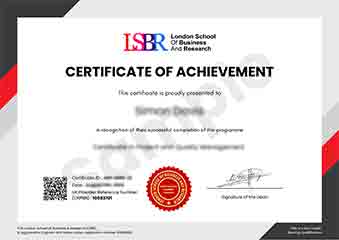
Sample Certificate
Preview the certificate you'll receive upon successful completion of this program.
Get Free Course Info
Enter your details and we'll send you a comprehensive course information pack straight to your inbox.
Employer Sponsored Training
Let your employer invest in your professional development. Request a corporate invoice and get your training funded.
Request Corporate InvoiceWhat People Say About Us
Hear from our students about their experience with the Executive Development Programme in AI-Driven Navigation for Deep Space Exploration at LSBRX - Executive Education.
Oliver Davies
United Kingdom"The course content was exceptionally well-researched and up-to-date, providing a deep dive into AI-driven navigation techniques for deep space exploration. Gained invaluable practical skills that will undoubtedly enhance my career in aerospace engineering by bridging theoretical knowledge with real-world applications."
Sophie Brown
United Kingdom"This course has been instrumental in bridging the gap between theoretical AI concepts and practical applications in deep space exploration. It has not only enhanced my technical skills but also provided me with a competitive edge in the job market, opening up new opportunities in the aerospace industry."
Priya Sharma
India"The course structure was meticulously organized, providing a seamless progression from foundational concepts to advanced topics in AI-driven navigation, which greatly enhanced my understanding and prepared me for real-world challenges in deep space exploration. The comprehensive content not only deepened my technical knowledge but also offered valuable insights into the professional growth required for this field."