
Executive Development Programme in Applied Research Methods in Social Sciences
Strengthen your applied research methods in social sciences foundation with best practices and proven frameworks. Excel in complex business environments.
Executive Development Programme in Applied Research Methods in Social Sciences
Programme Overview
The Executive Development Programme in Applied Research Methods in Social Sciences is designed for mid-to-senior level professionals in academia, government, and the private sector who seek to enhance their research capabilities and contribute to evidence-based decision-making. The programme equips participants with advanced skills in qualitative, quantitative, and mixed-methods research design, data analysis, and interpretation, enabling them to address complex social science problems with rigor and relevance.
Key skills and knowledge developed through this programme include the ability to design and implement robust research studies, select appropriate statistical tools and software for data analysis, and critically evaluate research findings. Participants will also learn to integrate theoretical frameworks with empirical data, ensuring their research is both conceptually sound and practically applicable. By mastering these competencies, learners will be able to contribute significantly to their organizations and the broader academic community.
This programme has a profound impact on participants' careers, fostering leadership in research and innovation. Graduates will be well-prepared to lead research projects, mentor junior researchers, and develop policy recommendations based on sound social science research. Whether advancing to senior research roles, spearheading organizational research initiatives, or conducting cutting-edge studies, programme alumni will be equipped with the expertise to drive meaningful social change and contribute to evidence-based practices in their respective fields.
What You'll Learn
The Executive Development Programme in Applied Research Methods in Social Sciences is a comprehensive, advanced learning experience designed for professionals seeking to enhance their analytical and research capabilities in the social sciences. This program equips participants with a robust toolkit of research methodologies, including qualitative and quantitative techniques, data analysis, and statistical tools, all tailored to address real-world challenges in diverse social contexts.
Key topics include experimental design, survey methodology, statistical software application, and ethical considerations in research. Through hands-on workshops and case studies, participants gain practical experience in applying these methods to address complex social issues. The program also emphasizes the development of critical thinking and problem-solving skills, enabling graduates to contribute effectively to research and policy-making.
Upon completion, participants are well-prepared to lead research initiatives, design and implement studies, and interpret findings to inform strategic decisions in their organizations. Graduates are suited for roles in academia, government, non-profits, and private sector research and development departments. The program’s focus on applied research ensures that graduates can apply their skills to drive innovation and social impact in their respective fields.
Programme Highlights
Industry-Aligned Curriculum
Developed with industry leaders for job-ready skills valued by employers worldwide.
Globally Recognised Certificate
Recognised by employers across 180+ countries as a mark of professional excellence.
Flexible Online Learning
Study at your own pace with lifetime access to all course materials and updates.
Instant Access
Start learning immediately — no application process or waiting period required.
Constantly Updated Content
Stay ahead with the latest industry trends, best practices, and emerging insights.
Career Advancement
87% of graduates report measurable career progression within 6 months of completion.
Topics Covered
- 1. Research Design Fundamentals: Learners will study the basics of research design, including types of research, research questions, and hypotheses. They will gain practical skills in formulating clear research questions and selecting appropriate research designs.
- 2. Quantitative Data Collection Methods: This module covers methods for collecting quantitative data, such as surveys, experiments, and secondary data analysis. Learners will learn how to design and implement effective surveys and understand statistical techniques for data collection.
- 3. Qualitative Data Collection Methods: Focusing on qualitative methods, learners will explore techniques such as interviews, focus groups, and ethnography. They will develop skills in data collection, transcription, and coding qualitative data.
- 4. Data Analysis in Social Sciences: This module introduces learners to both quantitative and qualitative data analysis techniques. They will learn to use statistical software for quantitative data analysis and software tools for qualitative data analysis.
- 5. Research Ethics and Compliance: Learners will study ethical considerations in social science research, including informed consent, confidentiality, and data protection. They will gain practical skills in ensuring compliance with ethical guidelines and regulations.
- 6. Advanced Statistical Techniques: This module delves into advanced statistical methods such as regression analysis, factor analysis, and structural equation modeling. Learners will apply these techniques to real-world data sets.
- 7. Mixed Methods Research: Focusing on the integration of quantitative and qualitative methods, learners will explore how to combine these approaches to enhance research validity and reliability. They will develop skills in designing and conducting mixed-methods studies.
- 8. Literature Review and Meta-Analysis: This module teaches learners how to conduct comprehensive literature reviews and perform meta-analyses to synthesize existing research. They will gain skills in critically evaluating and synthesizing research findings.
- 9. Advanced Qualitative Data Analysis: Building on foundational skills, this module provides in-depth training in advanced qualitative data analysis techniques, such as thematic analysis, discourse analysis, and content analysis.
- 10. Publishing Research in Social Sciences: Learners will learn the process of writing and submitting research papers for publication. They will gain skills in structuring research articles, adhering to publication guidelines, and navigating the peer review process.
What You Get When You Enroll
Secure checkout • Instant access • Certificate included
Key Facts
For professionals in social sciences
No specific prerequisites required
Enhances research methodology skills
Develops critical thinking and analysis
Prepares for advanced research roles
Ready to get started?
Join thousands of professionals who already took the next step. Enroll now and get instant access.
Enroll Now — $199Why This Course
Enhanced Research Capabilities: Participating in an Executive Development Programme in Applied Research Methods in Social Sciences equips professionals with advanced research methodologies. This deepens their analytical skills, enabling them to conduct rigorous and credible research, which is crucial for evidence-based decision-making in their organizations.
Career Advancement Opportunities: The programme provides a competitive edge in the job market. Professionals can take on more complex roles that require a strong research background, such as research director or senior analyst. These positions often come with higher salaries and greater responsibilities.
Interdisciplinary Collaboration Skills: The programme fosters collaboration among participants from diverse fields, enhancing interpersonal and intercultural skills. This ability to work across disciplines is highly valued in today’s interconnected global workplace, particularly in roles that involve policy development or social impact analysis.
Innovative Problem-Solving: By mastering advanced research methods, professionals can approach problems from a fresh perspective. This skill is essential for developing innovative solutions to complex social issues, whether in public policy, non-profit organizations, or corporate social responsibility initiatives.
Your Path to Certification
Trusted by Professionals Worldwide
Course Brochure
Download our comprehensive course brochure with all details
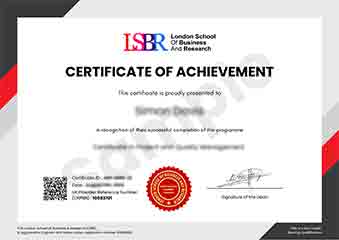
Sample Certificate
Preview the certificate you'll receive upon successful completion of this program.
Get Free Course Info
Enter your details and we'll send you a comprehensive course information pack straight to your inbox.
Employer Sponsored Training
Let your employer invest in your professional development. Request a corporate invoice and get your training funded.
Request Corporate InvoiceWhat People Say About Us
Hear from our students about their experience with the Executive Development Programme in Applied Research Methods in Social Sciences at LSBRX - Executive Education.
Sophie Brown
United Kingdom"The course provided high-quality, comprehensive material that significantly enhanced my understanding of research methods in social sciences, equipping me with practical skills that are directly applicable in my field. It has undoubtedly opened up new avenues for my career by improving my ability to conduct rigorous research and analyze data effectively."
Tyler Johnson
United States"The Executive Development Programme in Applied Research Methods in Social Sciences has significantly enhanced my analytical skills and ability to apply research methods in real-world scenarios, making me more competitive in my field and opening up new opportunities for career advancement."
Ruby McKenzie
Australia"The course structure was meticulously organized, providing a seamless transition from theoretical concepts to practical applications, which significantly enhanced my understanding and appreciation of research methods in social sciences. It offered a wealth of knowledge that has proven invaluable for my professional growth and career advancement."