
Executive Development Programme in Authentication in DevOps: Continuous Security
Optimize performance through advanced authentication in devops: continuous security techniques. Discover strategies that leading organizations use.
Executive Development Programme in Authentication in DevOps: Continuous Security
Programme Overview
The Executive Development Programme in Authentication in DevOps: Continuous Security is designed to equip senior executives and leaders with the knowledge and skills necessary to integrate robust authentication practices into their DevOps workflows, ensuring continuous security in digital environments. This program is ideal for C-suite executives, DevOps leaders, security managers, and IT directors who are responsible for the security and compliance of their organizations’ digital infrastructure.
During the program, learners will develop key competencies in secure authentication strategies, including multi-factor authentication, adaptive authentication, and token-based systems. They will gain in-depth understanding of the latest security protocols and frameworks, such as OAuth and OpenID Connect, and learn how to implement them effectively. Additionally, participants will explore the integration of authentication with CI/CD pipelines, continuous monitoring tools, and automation systems to enhance overall security posture.
Upon completion, participants will be well-equipped to lead initiatives that enhance the security of their organizations’ digital assets. They will be able to make informed decisions on security investments, advocate for robust authentication practices, and drive the continuous improvement of security processes. This program not only aligns with industry standards but also prepares leaders to address emerging security challenges, ensuring that their organizations remain resilient against cyber threats.
What You'll Learn
The Executive Development Programme in Authentication in DevOps: Continuous Security is designed for leaders and professionals aiming to enhance their expertise in securing digital transformations. This comprehensive program equips participants with the latest strategies and technologies to integrate authentication and security into DevOps pipelines, ensuring robust and continuous security measures are in place. Key topics include understanding DevOps best practices, implementing secure authentication protocols, and leveraging automation tools for continuous security monitoring.
Participants will learn to design and implement secure authentication systems, perform security audits, and manage risk in dynamic environments. By the end of the program, graduates will be proficient in integrating security into the software development lifecycle, enhancing their ability to protect sensitive data and maintain compliance with industry standards.
This program opens doors to advanced career opportunities in security engineering, DevOps security, and cybersecurity leadership. Graduates will be well-prepared to lead security initiatives, manage security teams, and drive organizational security strategies, positioning them as essential leaders in the evolving landscape of digital security. Join us to become a visionary in the field of DevOps and authentication security.
Programme Highlights
Industry-Aligned Curriculum
Developed with industry leaders for job-ready skills valued by employers worldwide.
Globally Recognised Certificate
Recognised by employers across 180+ countries as a mark of professional excellence.
Flexible Online Learning
Study at your own pace with lifetime access to all course materials and updates.
Instant Access
Start learning immediately — no application process or waiting period required.
Constantly Updated Content
Stay ahead with the latest industry trends, best practices, and emerging insights.
Career Advancement
87% of graduates report measurable career progression within 6 months of completion.
Topics Covered
- 1. Introduction to Authentication in DevOps: Learners will understand the importance of authentication in DevOps and explore foundational concepts. They will gain practical skills in identifying common authentication methods and their roles in the DevOps pipeline.
- 2. Fundamentals of Continuous Authentication: This module covers the basics of implementing continuous authentication practices. Learners will study the principles of continuous authentication and develop skills in setting up initial configurations.
- 3. Authentication Protocols and Standards: Learners will delve into various authentication protocols and standards, such as OAuth, OpenID Connect, and SAML. They will learn to implement these protocols in a DevOps environment, enhancing security and compliance.
- 4. Advanced Authentication Techniques: This module focuses on advanced authentication techniques including multi-factor authentication (MFA), biometrics, and behavioral analysis. Learners will gain the skills to integrate these techniques into continuous security practices.
- 5. Integration of Authentication with CI/CD Pipelines: Learners will understand how to seamlessly integrate authentication mechanisms into CI/CD pipelines, ensuring secure and automated deployment processes. They will practice setting up and managing secure pipelines.
- 6. Continuous Monitoring and Auditing of Authentication: This module teaches the importance of continuous monitoring and auditing of authentication processes. Learners will learn to set up monitoring tools and perform security audits to maintain authentication standards.
- 7. Threat Modeling and Risk Assessment: Learners will study threat modeling techniques and risk assessment methods specific to authentication in DevOps. They will gain the skills to identify and mitigate potential security threats.
- 8. Practical Security Scenarios and Case Studies: Through real-world scenarios and case studies, learners will apply their knowledge to practical security situations. They will work on solving complex security challenges and enhancing their problem-solving skills.
- 9. Emerging Trends and Future Directions: This module explores emerging trends in authentication and continuous security practices. Learners will gain insights into future developments and best practices in the field.
- 10. Capstone Project: Implementing a Comprehensive Authentication Strategy: Learners will design and implement a comprehensive authentication strategy for a real-world DevOps environment. They will apply all the knowledge and skills gained throughout the programme to a final project.
What You Get When You Enroll
Secure checkout • Instant access • Certificate included
Key Facts
Audience: IT professionals, security experts
Prerequisites: Basic DevOps knowledge, security fundamentals
Outcomes: Enhanced security skills, DevOps best practices
Ready to get started?
Join thousands of professionals who already took the next step. Enroll now and get instant access.
Enroll Now — $199Why This Course
Enhanced Security Expertise: The Executive Development Programme in Authentication in DevOps: Continuous Security equips professionals with advanced knowledge in security practices tailored for DevOps environments. This includes understanding and implementing robust authentication mechanisms, which are crucial for maintaining the integrity and confidentiality of data. By focusing on continuous security, participants can better protect against evolving cyber threats, enhancing their career by positioning them as key security leaders.
Skill in Continuous Integration and Deployment (CI/CD): The programme integrates security practices with CI/CD processes, enabling professionals to secure applications and infrastructure throughout the development lifecycle. This hands-on experience in integrating security into every phase of development can significantly improve the overall security posture of organizations, making professionals invaluable in ensuring that security is not an afterthought but a core part of the development process.
Leadership in Security Culture: By participating in this programme, professionals can develop a strong understanding of creating and fostering a security culture within their organizations. This includes educating and empowering teams to adopt secure coding practices and stay informed about the latest security trends. This leadership role is critical for driving security initiatives and ensuring that all team members are aligned with security objectives, thereby enhancing career prospects by making them key stakeholders in organizational security strategies.
Your Path to Certification
Trusted by Professionals Worldwide
Course Brochure
Download our comprehensive course brochure with all details
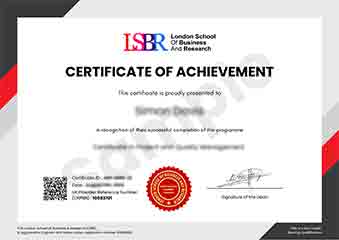
Sample Certificate
Preview the certificate you'll receive upon successful completion of this program.
Get Free Course Info
Enter your details and we'll send you a comprehensive course information pack straight to your inbox.
Employer Sponsored Training
Let your employer invest in your professional development. Request a corporate invoice and get your training funded.
Request Corporate InvoiceWhat People Say About Us
Hear from our students about their experience with the Executive Development Programme in Authentication in DevOps: Continuous Security at LSBRX - Executive Education.
Charlotte Williams
United Kingdom"The course content was incredibly detailed and well-structured, providing a solid foundation in authentication practices within DevOps. I gained practical skills that have already enhanced my ability to implement continuous security measures in real-world projects, significantly boosting my confidence and career prospects."
Priya Sharma
India"This course has significantly enhanced my understanding of authentication practices in DevOps, making my skills highly relevant in the current tech landscape. It has not only deepened my technical knowledge but also provided practical insights that have directly contributed to my career advancement."
Jack Thompson
Australia"The course structure was meticulously organized, providing a seamless progression from foundational concepts to advanced topics in continuous security, which significantly enhanced my understanding and practical application of DevOps principles. It offered a wealth of real-world examples that bridged the gap between theory and practice, fostering professional growth and confidence in implementing secure DevOps practices."