
Executive Development Programme in Behavior Management Techniques for Autism
This program equips executives with advanced behavior management techniques to effectively support individuals with autism, enhancing communication and fostering inclusive environments.
Executive Development Programme in Behavior Management Techniques for Autism
Programme Overview
The Executive Development Programme in Behavior Management Techniques for Autism is designed for senior professionals and executives from various sectors who are committed to enhancing their ability to support individuals with autism and their families. This program focuses on advanced strategies and methodologies tailored to manage behaviors associated with autism, including communication, social skills, and adaptive behavior. Participants will gain a deep understanding of the latest research and best practices in behavior management, enabling them to implement effective interventions in diverse settings.
Throughout the program, learners will develop key skills in conducting comprehensive assessments, creating individualized behavior plans, and fostering positive behavioral outcomes. They will also learn to collaborate effectively with multidisciplinary teams, including educators, therapists, and families, and will be equipped with the ability to advocate for evidence-based practices in policy and practice. The program emphasizes the importance of empathy, cultural competence, and ethical considerations in behavior management.
The career impact of this program is significant, as participants will be better positioned to lead initiatives that support individuals with autism and their families, create inclusive environments, and drive systemic change within their organizations. Graduates of this program will be regarded as experts in the field, capable of making meaningful contributions to the professional development of colleagues and the broader community.
What You'll Learn
The Executive Development Programme in Behavior Management Techniques for Autism is a comprehensive, month initiative designed to equip professionals with the skills and knowledge necessary to effectively manage and support individuals with autism. This program is invaluable for those aiming to improve the quality of life for individuals with autism, their families, and their communities.
Key topics include the latest research on autism, evidence-based behavior management strategies, and practical applications in both clinical and educational settings. Participants will learn how to develop individualized behavior support plans, enhance communication skills, and foster social interactions. The curriculum is enriched with hands-on training, case studies, and expert-led workshops, ensuring a robust learning experience.
Graduates of this program will be well-prepared to apply their knowledge in various roles, such as behavior analysts, special educators, and healthcare professionals. They can take on leadership positions in schools, autism clinics, or research institutions, driving positive change and innovation in the field of autism support.
By the end of the program, participants will have a deep understanding of autism and the ability to implement effective behavior management techniques, ultimately contributing to the well-being and success of individuals with autism.
Programme Highlights
Industry-Aligned Curriculum
Developed with industry leaders for job-ready skills valued by employers worldwide.
Globally Recognised Certificate
Recognised by employers across 180+ countries as a mark of professional excellence.
Flexible Online Learning
Study at your own pace with lifetime access to all course materials and updates.
Instant Access
Start learning immediately — no application process or waiting period required.
Constantly Updated Content
Stay ahead with the latest industry trends, best practices, and emerging insights.
Career Advancement
87% of graduates report measurable career progression within 6 months of completion.
Topics Covered
- 1. Introduction to Autism Spectrum Disorder (ASD): Learners will study the foundational concepts of ASD, its prevalence, and the diverse characteristics associated with it. They will gain an understanding of how to effectively communicate and interact with individuals with ASD.
- 2. Core Features of ASD: This module will delve into the core features of ASD, including social communication challenges and repetitive behaviors. Learners will identify these features and understand their impact on behavior.
- 3. Behavior Assessment: Learners will learn how to conduct comprehensive behavior assessments and set up effective data collection systems. They will gain skills in observing and recording behaviors accurately.
- 4. Positive Behavior Support (PBS): This module covers the principles of PBS and how to implement strategies to support positive behaviors in individuals with ASD. Learners will practice creating behavior intervention plans.
- 5. Communication Strategies: Focusing on alternative and augmentative communication (AAC) methods, this module teaches learners how to support individuals with ASD in developing effective communication skills. Practical skills include using picture exchanges and sign language.
- 6. Sensory Integration: Learners will explore the role of sensory processing in ASD and how to create sensory-friendly environments. They will learn to design and implement sensory diets and interventions.
- 7. Behavioral Intervention Techniques: This module provides an in-depth look at various behavioral intervention techniques such as Applied Behavior Analysis (ABA) and Discrete Trial Training (DTT). Learners will practice applying these techniques in simulated scenarios.
- 8. Advanced Topics in Autism: Covering advanced topics like co-occurring conditions, mental health, and challenges in school settings, this module expands learners' knowledge to more complex areas of ASD.
- 9. Family and Community Involvement: Focusing on the importance of involving families and communities in the management of ASD, learners will learn how to collaborate effectively and build supportive networks.
- 10. Legal and Ethical Considerations: This final module addresses legal and ethical issues in working with individuals with ASD, including confidentiality, informed consent, and the use of restraint and seclusion. Learners will develop a strong ethical framework for their practice.
What You Get When You Enroll
Secure checkout • Instant access • Certificate included
Key Facts
Audience: Executives, managers in autism services
Prerequisites: Basic understanding of autism
Outcomes: Enhanced behavior management skills, improved leadership in autism settings
Ready to get started?
Join thousands of professionals who already took the next step. Enroll now and get instant access.
Enroll Now — $199Why This Course
Enhance Professional Competence: The programme equips professionals with advanced behavior management techniques tailored for individuals with autism, significantly enhancing their ability to support and educate these individuals effectively. This skill set is highly valued in a variety of roles, from special education teachers to behavior analysts, making professionals more competitive in the job market.
Improve Interpersonal Skills: By focusing on communication, empathy, and effective interaction strategies, the programme not only aids in managing challenging behaviors but also fosters stronger interpersonal relationships with clients. This comprehensive approach helps professionals build trust and rapport, leading to more positive outcomes in their work with autistic individuals.
Stay Updated with Best Practices: The programme keeps professionals up-to-date with the latest research and best practices in behavior management for autism. Continuous learning and the application of evidence-based methods ensure that professionals can provide the most effective and supportive care, aligning with the evolving needs of the autistic community.
Expand Career Opportunities: Acquiring specialized knowledge through this programme opens doors to various career paths, including roles in autism advocacy, research, and policy development. The expertise gained can also lead to leadership positions within organizations, where professionals can influence broader strategies and initiatives related to autism support.
Your Path to Certification
Trusted by Professionals Worldwide
Course Brochure
Download our comprehensive course brochure with all details
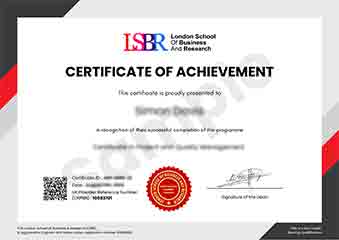
Sample Certificate
Preview the certificate you'll receive upon successful completion of this program.
Get Free Course Info
Enter your details and we'll send you a comprehensive course information pack straight to your inbox.
Employer Sponsored Training
Let your employer invest in your professional development. Request a corporate invoice and get your training funded.
Request Corporate InvoiceWhat People Say About Us
Hear from our students about their experience with the Executive Development Programme in Behavior Management Techniques for Autism at LSBRX - Executive Education.
James Thompson
United Kingdom"The course content was incredibly comprehensive, covering a wide range of behavior management techniques that are both evidence-based and practical. Gaining these skills has been invaluable, as I feel better equipped to support individuals with autism in various settings."
Ahmad Rahman
Malaysia"The Executive Development Programme in Behavior Management Techniques for Autism has significantly enhanced my ability to implement evidence-based strategies in the workplace, making me more effective in managing diverse behaviors and improving outcomes for individuals with autism. This program has not only deepened my professional skills but also opened up new career opportunities in specialized roles that require a strong understanding of behavior management techniques."
Madison Davis
United States"The course structure was meticulously organized, making it easy to navigate through various behavior management techniques, which significantly enhanced my understanding and application in real-world scenarios. The comprehensive content provided a solid foundation for professional growth in managing autism-related behaviors effectively."