
Executive Development Programme in Biochemical Systems Modelling and Simulation
Develop in-demand biochemical systems modelling and simulation skills with our comprehensive curriculum. Prepare for tomorrow's opportunities today.
Executive Development Programme in Biochemical Systems Modelling and Simulation
Programme Overview
The Executive Development Programme in Biochemical Systems Modelling and Simulation is designed for senior executives, research scientists, and industry leaders who are keen to enhance their expertise in the application of computational methods to model and simulate complex biochemical systems. This programme offers a comprehensive curriculum that includes advanced courses on systems biology, computational chemistry, and data analytics, alongside hands-on workshops and case studies that provide practical insights into the latest modeling techniques and their applications in drug discovery, metabolic engineering, and personalized medicine.
Learners will develop key skills in developing and validating computational models, integrating diverse biological data, and utilizing machine learning algorithms to predict system behaviors. The programme emphasizes the integration of theoretical knowledge with practical applications, ensuring participants can apply these tools to solve real-world problems in their respective fields. By the end of the programme, participants will be equipped to lead innovation in their organizations, drive strategic decisions, and contribute to cutting-edge research in biochemical systems.
The programme has a significant impact on career trajectories, providing participants with a competitive edge in the biotech and pharmaceutical industries. Graduates can take on roles as leaders in research and development, directors of bioinformatics, or heads of innovation. They will be well-prepared to navigate the complexities of integrating computational models into drug discovery pipelines, optimize metabolic pathways for industrial processes, and develop personalized treatment strategies based on individual patient data. Effective participation in this programme will not only enhance their technical expertise but also expand their professional networks, opening up new opportunities for collaboration and leadership in the field of
What You'll Learn
The Executive Development Programme in Biochemical Systems Modelling and Simulation is a transformative initiative designed for professionals aiming to advance their expertise in the cutting-edge field of biochemical systems. This program equips participants with a robust foundation in advanced biochemical modeling techniques, simulation methodologies, and computational tools, which are essential for driving innovation in pharmaceuticals, biotechnology, and healthcare. Key topics include metabolic pathway analysis, molecular dynamics simulations, and predictive modeling of biological systems, providing a comprehensive understanding of biochemical processes at the molecular level.
Upon completion, graduates are well-prepared to lead projects involving complex biochemical systems, optimize drug discovery processes, and develop new therapeutic strategies. The program’s practical approach ensures that learners can immediately apply their knowledge in real-world scenarios, making them valuable assets in research and development departments. Graduates can pursue careers as lead scientists, system modelers, or simulation specialists in pharmaceutical companies, biotech firms, and academia, contributing to groundbreaking research and development initiatives. This program not only enhances professional competencies but also fosters a network of interdisciplinary professionals, setting the stage for collaborative breakthroughs in the biochemical sciences.
Programme Highlights
Industry-Aligned Curriculum
Developed with industry leaders for job-ready skills valued by employers worldwide.
Globally Recognised Certificate
Recognised by employers across 180+ countries as a mark of professional excellence.
Flexible Online Learning
Study at your own pace with lifetime access to all course materials and updates.
Instant Access
Start learning immediately — no application process or waiting period required.
Constantly Updated Content
Stay ahead with the latest industry trends, best practices, and emerging insights.
Career Advancement
87% of graduates report measurable career progression within 6 months of completion.
Topics Covered
- 1. Fundamentals of Biochemical Systems: Learners will study basic biochemical principles and systems, including enzymatic reactions and metabolic pathways. They will gain foundational knowledge in modeling these systems using basic mathematical techniques.
- 2. Computational Tools for Biochemical Modelling: This module introduces learners to software tools and programming languages commonly used in biochemical systems modeling, such as Python and MATLAB. Practical skills include setting up and running simulations.
- 3. Stoichiometry and Kinetics in Biochemical Reactions: Learners will explore stoichiometric relationships and kinetic parameters in biochemical reactions. They will learn to use these concepts to build and analyze simple biochemical models.
- 4. Systems Biology and Network Analysis: This module delves into the principles of systems biology and network analysis techniques. Learners will gain skills in integrating and analyzing large-scale biochemical data sets.
- 5. Advanced Modelling Techniques: Advanced topics such as stochastic models, spatial models, and multi-scale modeling will be covered. Learners will develop the ability to choose and apply appropriate modeling techniques for complex biochemical systems.
- 6. Model Calibration and Validation: This module focuses on methods for calibrating and validating models against experimental data. Learners will learn statistical methods and techniques to assess model accuracy.
- 7. Optimal Control and Optimization in Biochemical Systems: Learners will study how to use optimization techniques to improve the performance of biochemical systems. Practical skills include formulating and solving optimization problems in biochemical contexts.
- 8. Case Studies in Biochemical Systems Modelling: Real-world case studies will be analyzed to provide learners with practical experience in applying modeling techniques to solve real-world problems in biochemistry.
- 9. Advanced Simulation Techniques: This module covers advanced simulation techniques, including parallel computing and high-performance computing methods. Learners will learn how to optimize simulations for large-scale systems.
- 10. Leadership and Communication in Biochemical Research: The final module focuses on developing leadership and communication skills essential for leading and collaborating in biochemical research projects. Learners will learn how to effectively present and discuss their research findings.
What You Get When You Enroll
Secure checkout • Instant access • Certificate included
Key Facts
Audience: Senior scientists, engineers, and managers
Prerequisites: Basic knowledge of biochemical systems
Outcomes: Advanced modeling, simulation skills, project leadership
Ready to get started?
Join thousands of professionals who already took the next step. Enroll now and get instant access.
Enroll Now — $199Why This Course
Enhance Career Advancement: The Executive Development Programme in Biochemical Systems Modelling and Simulation equips professionals with advanced skills in computational biology, enabling them to model and simulate complex biochemical systems. This enhances their ability to contribute to cutting-edge research and development, particularly in pharmaceuticals and biotechnology, where computational models are crucial for drug discovery and process optimization.
Expand Industry Knowledge: The programme covers a broad spectrum of topics, from molecular dynamics to metabolic pathways, providing participants with a deep understanding of biochemical processes. This knowledge is invaluable in roles requiring strategic planning, such as project management and regulatory affairs, where a comprehensive grasp of biochemical systems can lead to better decision-making and project outcomes.
Develop Practical Skills: The hands-on approach of the programme includes practical sessions and case studies that simulate real-world scenarios. Participants learn to use advanced simulation software and tools, which are essential in modern biochemical research and industry. These skills are directly transferable to roles that require the analysis and interpretation of large-scale biochemical data, enhancing their professional toolkit and making them more competitive in the job market.
Network with Industry Leaders: The programme fosters a collaborative environment where professionals can interact with industry experts and peers. These networks are crucial for career growth, as they facilitate knowledge sharing, mentorship opportunities, and potential job or project collaborations. Such connections can open doors to new opportunities and accelerate career progression in the highly dynamic field of biochemical systems modelling and simulation.
Your Path to Certification
Trusted by Professionals Worldwide
Course Brochure
Download our comprehensive course brochure with all details
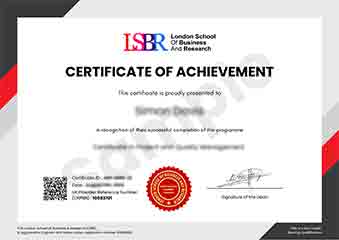
Sample Certificate
Preview the certificate you'll receive upon successful completion of this program.
Get Free Course Info
Enter your details and we'll send you a comprehensive course information pack straight to your inbox.
Employer Sponsored Training
Let your employer invest in your professional development. Request a corporate invoice and get your training funded.
Request Corporate InvoiceWhat People Say About Us
Hear from our students about their experience with the Executive Development Programme in Biochemical Systems Modelling and Simulation at LSBRX - Executive Education.
Sophie Brown
United Kingdom"The course content was incredibly detailed and well-structured, providing a solid foundation in biochemical systems modeling and simulation that has significantly enhanced my analytical skills. I've gained practical skills that are directly applicable to my work, making me more efficient and capable in my role."
Ahmad Rahman
Malaysia"This course has been instrumental in enhancing my understanding of biochemical systems, making my skills highly relevant in the pharmaceutical industry. It has not only deepened my technical expertise but also opened up new career opportunities in advanced research and development roles."
Isabella Dubois
Canada"The course structure is well-organized, providing a comprehensive overview of biochemical systems modeling and simulation that seamlessly bridges theoretical knowledge with practical applications, significantly enhancing my understanding and ability to apply these concepts in real-world scenarios."