
Executive Development Programme in Biodiversity Informatics Management
This programme equips executives with advanced skills in biodiversity data management, analysis, and policy impact for sustainable conservation strategies.
Executive Development Programme in Biodiversity Informatics Management
Programme Overview
The Executive Development Programme in Biodiversity Informatics Management is designed for senior-level professionals and decision-makers who are engaged in or aspire to lead initiatives in biodiversity management, conservation, and policy-making. The programme equips participants with advanced skills in data analysis, information management, and technology integration, tailored to the complex and dynamic field of biodiversity informatics. Participants will gain insights into the latest technological advancements and best practices in biodiversity data collection, analysis, and dissemination, along with an understanding of the legal and policy frameworks governing biodiversity conservation.
Throughout the programme, learners will develop key skills in data curation, spatial analysis, and the use of advanced statistical tools for biodiversity assessment. They will also enhance their ability to manage large-scale biodiversity databases, develop effective communication strategies for stakeholders, and lead interdisciplinary teams in the implementation of conservation projects. The programme emphasizes the integration of technological solutions with traditional ecological knowledge to foster sustainable management practices.
The career impact of this programme is significant, as participants will be better equipped to address the challenges of biodiversity loss and ecosystem degradation. They will be able to drive innovation in biodiversity informatics, contribute to policy formulation, and lead impactful conservation initiatives. The programme also facilitates networking with peers and experts, providing valuable opportunities for collaboration and knowledge exchange in the field.
What You'll Learn
The Executive Development Programme in Biodiversity Informatics Management is designed for professionals seeking to advance their careers in the dynamic field of biodiversity conservation. This program equips participants with the cutting-edge skills and knowledge necessary to manage and analyze large datasets, develop innovative strategies, and drive impactful policy decisions. By focusing on advanced data management techniques, statistical analysis, and cutting-edge software tools, the program prepares graduates to lead in the digital transformation of biodiversity research and management.
Key topics include biodiversity data management, ecological modeling, spatial analysis, and policy informatics. Participants learn to integrate diverse data sources, from remote sensing to genetic information, to inform conservation efforts. Case studies and real-world projects ensure that graduates can apply these skills immediately in their work. The program also emphasizes ethical considerations in data use and the importance of stakeholder engagement in conservation initiatives.
Upon completion, graduates are well-prepared to take on leadership roles in governmental agencies, non-profit organizations, and private sector firms dedicated to biodiversity conservation. They can also pursue advanced research or teaching positions, contributing to the global effort to preserve and understand Earth's rich biodiversity. This program not only propels individuals to the forefront of their field but also fosters a network of professionals committed to sustainable environmental stewardship.
Programme Highlights
Industry-Aligned Curriculum
Developed with industry leaders for job-ready skills valued by employers worldwide.
Globally Recognised Certificate
Recognised by employers across 180+ countries as a mark of professional excellence.
Flexible Online Learning
Study at your own pace with lifetime access to all course materials and updates.
Instant Access
Start learning immediately — no application process or waiting period required.
Constantly Updated Content
Stay ahead with the latest industry trends, best practices, and emerging insights.
Career Advancement
87% of graduates report measurable career progression within 6 months of completion.
Topics Covered
- 1. Introduction to Biodiversity Informatics: Learners will be introduced to the fundamental concepts of biodiversity informatics, including data types, sources, and basic data management tools. They will gain foundational skills in handling and organizing biological data.
- 2. Data Collection and Management: This module covers methods for collecting biodiversity data in the field and the best practices for data management. Learners will learn to use software for data entry, validation, and basic analysis.
- 3. Geographic Information Systems (GIS) for Biodiversity: The focus is on using GIS tools to analyze spatial data related to biodiversity. Learners will master the use of GIS software for mapping, spatial analysis, and visualization of ecological data.
- 4. Statistical Methods in Biodiversity Informatics: This module introduces statistical techniques used in biodiversity informatics research. Learners will gain skills in applying statistical methods to analyze biodiversity data and understand the underlying biological processes.
- 5. Machine Learning Techniques for Biodiversity Data: This advanced module covers the application of machine learning algorithms to biodiversity data. Learners will learn to develop predictive models and understand the implications of using machine learning in ecological research.
- 6. Remote Sensing in Biodiversity Monitoring: The module focuses on the use of remote sensing technologies for monitoring biodiversity. Learners will learn to interpret remote sensing data and integrate it with ground-based data for comprehensive biodiversity assessment.
- 7. Bioinformatics for Molecular Data Analysis: This module covers bioinformatics tools and techniques for analyzing genetic and molecular data. Learners will gain skills in sequence alignment, phylogenetic analysis, and understanding genetic diversity in populations.
- 8. Policy and Management Applications of Biodiversity Informatics: The module explores how biodiversity informatics can inform policy decisions and management strategies. Learners will learn to apply biodiversity informatics to address real-world conservation challenges.
- 9. Data Visualization and Communication: This module focuses on effective data visualization techniques and communication of biodiversity informatics findings. Learners will gain skills in creating impactful visualizations and presenting scientific data to stakeholders.
- 10. Ethical and Legal Considerations in Biodiversity Informatics: The final module addresses ethical and legal issues related to biodiversity data collection, management, and sharing. Learners will understand the importance of ethical data practices and legal requirements in biodiversity research.
What You Get When You Enroll
Secure checkout • Instant access • Certificate included
Key Facts
Target Audience: Mid-level biodiversity professionals
Prerequisites: Basic IT skills, biodiversity knowledge
Outcomes: Enhanced informatics skills, strategic management abilities
Ready to get started?
Join thousands of professionals who already took the next step. Enroll now and get instant access.
Enroll Now — $199Why This Course
Career Advancement: The Executive Development Programme in Biodiversity Informatics Management equips professionals with advanced skills in managing and analyzing large datasets related to biodiversity. This expertise is highly sought after in environmental conservation, policy-making, and natural resource management. By mastering these tools, participants can contribute more effectively to projects that require data-driven decision-making and strategic planning.
Enhanced Analytical Skills: The program focuses on developing robust analytical techniques, including data visualization, predictive modeling, and statistical analysis. These skills are crucial for interpreting complex biodiversity data and communicating insights to stakeholders. Graduates can take on leadership roles in organizations that rely on data to inform their strategies and policies.
Networking Opportunities: The program offers a unique platform for networking with professionals from diverse backgrounds in the field of biodiversity informatics. These connections can lead to collaborative opportunities, mentorship, and access to cutting-edge research and resources. Such networks are invaluable for career growth and staying updated with the latest trends and innovations in the field.
Policy Influence: With a deep understanding of biodiversity informatics, professionals can play a pivotal role in shaping conservation policies and sustainable development initiatives. The program not only teaches the technical aspects but also the broader implications of biodiversity data for environmental policy. Graduates are better prepared to advocate for evidence-based policies and contribute to global efforts in biodiversity conservation.
Your Path to Certification
Trusted by Professionals Worldwide
Course Brochure
Download our comprehensive course brochure with all details
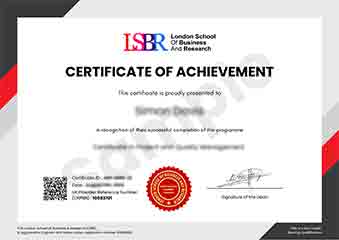
Sample Certificate
Preview the certificate you'll receive upon successful completion of this program.
Get Free Course Info
Enter your details and we'll send you a comprehensive course information pack straight to your inbox.
Employer Sponsored Training
Let your employer invest in your professional development. Request a corporate invoice and get your training funded.
Request Corporate InvoiceWhat People Say About Us
Hear from our students about their experience with the Executive Development Programme in Biodiversity Informatics Management at LSBRX - Executive Education.
Oliver Davies
United Kingdom"The course content was incredibly comprehensive, covering a wide range of topics in biodiversity informatics management that directly enhanced my analytical and data management skills. Gaining hands-on experience with real-world datasets has significantly boosted my confidence and prepared me well for roles that require managing biodiversity information systems."
Ashley Rodriguez
United States"The Executive Development Programme in Biodiversity Informatics Management has significantly enhanced my ability to manage large datasets and apply advanced analytical tools in conservation projects. This has opened up new opportunities in my career, allowing me to contribute more effectively to biodiversity conservation efforts."
James Thompson
United Kingdom"The course structure is well-organized, providing a comprehensive overview of biodiversity informatics management that seamlessly bridges theoretical knowledge with practical applications, significantly enhancing my understanding and professional growth in the field."