
Executive Development Programme in Building Management System Integration
This programme enhances leadership skills in integrating Building Management Systems, optimizing operations, and driving sustainable outcomes for organizations.
Executive Development Programme in Building Management System Integration
Programme Overview
The Executive Development Programme in Building Management System Integration is designed for senior-level executives and mid-career professionals who seek to enhance their expertise in the integration of advanced Building Management Systems (BMS) into large-scale commercial, industrial, and residential buildings. This program focuses on equipping participants with the latest technologies and strategies for sustainable building management, cybersecurity, and operational efficiency. Participants will gain a comprehensive understanding of how to leverage BMS to optimize building performance, reduce energy consumption, and improve occupant comfort and safety.
Key skills and knowledge developed through this program include master-level proficiency in BMS technology, including automation, IoT integration, and data analytics. Participants will learn to design, implement, and manage complex BMS integrations, ensuring compliance with industry standards and best practices. The curriculum also emphasizes cybersecurity protocols for BMS to protect against cyber threats and data breaches. Practical case studies and real-world examples will be used to demonstrate how to apply these skills in diverse building management scenarios.
The career impact of this program is significant, as participants will be well-prepared to lead and innovate in the field of building management systems. They will be better equipped to make informed decisions that enhance operational efficiency, sustainability, and security, which are critical in today's market. Graduates of this program will be positioned to assume leadership roles, drive organizational change, and contribute to the development of more intelligent and sustainable buildings.
What You'll Learn
The Executive Development Programme in Building Management System Integration is designed to empower leaders in the real estate and facility management sectors with the expertise needed to optimize and integrate building management systems (BMS). This program equips participants with a comprehensive understanding of advanced BMS technologies, including IoT, AI, and data analytics, to enhance building efficiency, sustainability, and occupant comfort.
Key topics include the principles of BMS integration, case studies of successful integration projects, and hands-on workshops on developing and implementing smart building strategies. Participants learn to leverage data to drive operational improvements, enhance security, and promote energy efficiency. By the end of the program, graduates will be proficient in using BMS to create more sustainable, cost-effective, and user-friendly environments.
Through this program, graduates can apply their new skills to improve the performance of existing buildings and design more efficient future projects. They are well-prepared to lead initiatives that integrate cutting-edge technologies, ensure regulatory compliance, and enhance the overall user experience. Career opportunities abound in roles such as BMS integrator, smart building consultant, and facility management director, where they can drive innovation and optimize building performance.
Programme Highlights
Industry-Aligned Curriculum
Developed with industry leaders for job-ready skills valued by employers worldwide.
Globally Recognised Certificate
Recognised by employers across 180+ countries as a mark of professional excellence.
Flexible Online Learning
Study at your own pace with lifetime access to all course materials and updates.
Instant Access
Start learning immediately — no application process or waiting period required.
Constantly Updated Content
Stay ahead with the latest industry trends, best practices, and emerging insights.
Career Advancement
87% of graduates report measurable career progression within 6 months of completion.
Topics Covered
- 1. Introduction to Building Management Systems (BMS): Learners will study the basics of BMS and their role in modern building management. They will gain an understanding of the key components and how BMS integrates various building systems.
- 2. Network Infrastructure for BMS: This module covers the essential network infrastructure components required for BMS, including cabling, routers, and switches. Learners will learn how to design and implement a robust network infrastructure for BMS.
- 3. Data Acquisition and Monitoring in BMS: Learners will study data acquisition techniques and real-time monitoring systems used in BMS. They will gain practical skills in configuring and managing data acquisition and monitoring tools.
- 4. Automation Controls in BMS: This module focuses on automation controls within BMS, including HVAC, lighting, and security systems. Learners will learn how to program and integrate automated control systems.
- 5. Energy Management in BMS: Learners will explore energy management strategies and technologies within BMS, including energy consumption analysis and optimization. They will gain skills in implementing energy-efficient solutions.
- 6. Building Automation and Integration: This module covers advanced building automation techniques and the integration of BMS with other building systems. Learners will learn how to design and implement integrated building systems.
- 7. Security and Access Control in BMS: Learners will study the security aspects of BMS, including access control systems and network security measures. They will gain practical skills in securing BMS environments.
- 8. Compliance and Regulatory Requirements: This module focuses on the compliance and regulatory requirements for BMS, including local and international standards. Learners will learn how to ensure BMS systems comply with relevant regulations.
- 9. Advanced BMS Software and Tools: Learners will study advanced software and tools used in BMS, including SCADA systems and analytics platforms. They will gain skills in using these tools to optimize building performance.
- 10. Project Management in BMS Implementation: This module covers project management principles and best practices for BMS implementation. Learners will learn how to manage BMS projects effectively from planning to deployment.
What You Get When You Enroll
Secure checkout • Instant access • Certificate included
Key Facts
Audience: Building managers, facility directors
Prerequisites: Basic IT knowledge, management experience
Outcomes: Enhanced management skills, integrated system knowledge
Ready to get started?
Join thousands of professionals who already took the next step. Enroll now and get instant access.
Enroll Now — $199Why This Course
Enhanced Career Opportunities: Professionals who enroll in an Executive Development Programme in Building Management System Integration can significantly expand their career prospects. This program equips them with the latest knowledge and skills necessary for managing and integrating complex building management systems, which are increasingly essential in modern construction and facility management. Graduates are well-prepared to lead projects that optimize energy use, improve occupant comfort, and enhance overall building performance, opening doors to senior management roles.
Advanced Technical Skills: The programme focuses on developing advanced technical skills in the integration of various building management systems, including HVAC, security, and energy systems. Participants learn to use cutting-edge software and tools to design, implement, and maintain integrated systems. These skills are highly valued by employers looking for professionals who can efficiently manage complex building infrastructure and contribute to sustainable building practices.
Leadership and Strategic Management: Building Management System Integration involves not just technical expertise but also strategic thinking and leadership. The programme teaches participants how to manage cross-functional teams, implement effective change management strategies, and align system integration efforts with broader organizational goals. This holistic approach prepares professionals for leadership roles where they can drive innovation and improve overall facility performance.
Your Path to Certification
Trusted by Professionals Worldwide
Course Brochure
Download our comprehensive course brochure with all details
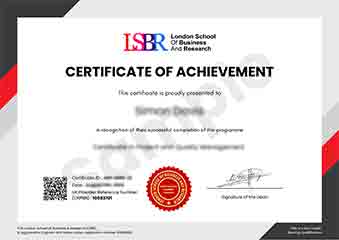
Sample Certificate
Preview the certificate you'll receive upon successful completion of this program.
Get Free Course Info
Enter your details and we'll send you a comprehensive course information pack straight to your inbox.
Employer Sponsored Training
Let your employer invest in your professional development. Request a corporate invoice and get your training funded.
Request Corporate InvoiceWhat People Say About Us
Hear from our students about their experience with the Executive Development Programme in Building Management System Integration at LSBRX - Executive Education.
James Thompson
United Kingdom"The course content was incredibly detailed and well-structured, providing a solid foundation in Building Management System Integration that has already enhanced my ability to handle complex projects in the field. I've gained practical skills that are directly applicable to real-world scenarios, which I believe will significantly boost my career prospects."
Zoe Williams
Australia"The Executive Development Programme in Building Management System Integration has significantly enhanced my understanding of integrating various building systems, making my skills highly relevant in the current industry landscape. This program has not only deepened my technical knowledge but also opened up new career opportunities in project management and system integration consultancy."
Ahmad Rahman
Malaysia"The course structure was meticulously organized, providing a clear pathway to understanding complex Building Management System Integration concepts, which has significantly enhanced my professional growth and ability to apply these systems in real-world scenarios."