
Executive Development Programme in Catkin Workspace Dependency Analysis
This programme enhances executive skills in analyzing and optimizing Catkin workspace dependencies for efficient robotics software development.
Executive Development Programme in Catkin Workspace Dependency Analysis
Programme Overview
The Executive Development Programme in Catkin Workspace Dependency Analysis is designed for senior software engineers, engineering managers, and technical leaders who are involved in the development and management of complex robotic and autonomous systems. This programme focuses on enhancing the participants' ability to manage and optimize dependencies within Catkin workspaces, which are essential for building and maintaining robust and scalable software systems in the robotics domain. Participants will learn best practices for dependency management, code organization, and continuous integration, enabling them to streamline their development processes and improve system reliability.
Key skills and knowledge developed through this programme include comprehensive understanding of Catkin and ROS (Robot Operating System) architectures, advanced dependency resolution techniques, and best practices for modular software design. Learners will also gain expertise in automated testing and deployment, and they will be equipped to lead technical teams in navigating the complexities of dependency management in large-scale software projects. This programme is crucial for professionals aiming to enhance their technical leadership and contribute effectively to the development of cutting-edge robotic technologies.
The career impact of this programme is significant, as it equips participants with the skills necessary to optimize software development processes, reduce development cycles, and improve the overall quality of their projects. By mastering Catkin workspace dependency analysis, attendees will be better positioned to lead projects that require high levels of software complexity and interdependencies, and they will be able to mentor and guide their teams toward more efficient and effective development strategies. This comprehensive skill set will not only enhance their current roles but also open up advanced opportunities in the field
What You'll Learn
Catkin Workspace Dependency Analysis (CWDA) is an executive development programme designed for professionals aiming to enhance their expertise in software dependency management, particularly within the ROS (Robot Operating System) ecosystem. This programme equips participants with advanced skills in analyzing and optimizing Catkin workspace dependencies, ensuring robust and efficient software development.
Key topics include dependency resolution techniques, best practices for package management, and hands-on experience with ROS tools and environments. Participants will learn to identify and mitigate dependency conflicts, streamline build processes, and improve the maintainability and scalability of ROS-based projects.
Graduates of this programme apply their newfound skills in various sectors, including robotics, autonomous vehicles, and industrial automation. They can optimize existing systems, contribute to the development of new technologies, and enhance team collaboration through effective dependency management practices.
This programme opens doors to advanced roles such as ROS Software Engineer, Systems Integration Specialist, and Senior Robotics Developer. Graduates are well-prepared to drive innovation and efficiency in their projects, leveraging their expertise in dependency analysis to create impactful solutions.
Programme Highlights
Industry-Aligned Curriculum
Developed with industry leaders for job-ready skills valued by employers worldwide.
Globally Recognised Certificate
Recognised by employers across 180+ countries as a mark of professional excellence.
Flexible Online Learning
Study at your own pace with lifetime access to all course materials and updates.
Instant Access
Start learning immediately — no application process or waiting period required.
Constantly Updated Content
Stay ahead with the latest industry trends, best practices, and emerging insights.
Career Advancement
87% of graduates report measurable career progression within 6 months of completion.
Topics Covered
- 1. Introduction to Catkin Workspaces: Learners will understand the basic concepts of Catkin workspaces and their importance in ROS (Robot Operating System) development. They will gain skills in setting up and managing Catkin workspaces.
- 2. Understanding ROS Dependencies: This module introduces the concept of dependencies in ROS packages and how they are managed within Catkin workspaces. Learners will learn to identify and resolve dependency issues.
- 3. Package Development Basics: Learners will study the fundamentals of creating ROS packages and the structure of a typical ROS package. Practical skills include creating, organizing, and managing package structures.
- 4. Advanced Package Management: This module delves into advanced package management techniques, including dependency resolution, package versioning, and managing dependencies across multiple Catkin workspaces.
- 5. Catkin Build System: Learners will explore the Catkin build system in depth, including building, testing, and packaging ROS packages. Practical skills include configuring and optimizing the build process.
- 6. CMake Integration: This module focuses on integrating CMake into Catkin workspaces for advanced build configurations. Learners will learn to write CMakeLists.txt files and customize build processes.
- 7. Debugging and Troubleshooting: Learners will learn techniques for debugging and troubleshooting issues in Catkin workspaces and ROS packages. Practical skills include using tools like roslaunch and rqt for debugging.
- 8. Best Practices in Catkin Workspace Management: This module covers best practices for managing Catkin workspaces, including version control, continuous integration, and maintaining a clean and organized workspace.
- 9. Integration with Other Tools: Learners will explore how Catkin workspaces integrate with other development tools and environments, such as IDEs and version control systems. Practical skills include setting up and using these integrations.
- 10. Advanced Topics in ROS Dependency Analysis: This module focuses on advanced topics in dependency analysis, including dependency graphs, circular dependencies, and strategies for managing complex dependency relationships in large-scale ROS projects.
What You Get When You Enroll
Secure checkout • Instant access • Certificate included
Key Facts
Audience: Software engineers, project managers
Prerequisites: Basic Python, Linux familiarity
Outcomes: Enhanced dependency management skills, improved project efficiency
Ready to get started?
Join thousands of professionals who already took the next step. Enroll now and get instant access.
Enroll Now — $199Why This Course
Enhance Technical Proficiency: By focusing on Catkin workspace dependency analysis, professionals can deepen their understanding of the ROS (Robot Operating System) ecosystem, a critical framework for robotics and autonomous systems. This expertise can significantly boost one's career in fields such as robotics, automotive engineering, or aerospace, where advanced automation and robotics technologies are increasingly important.
Improve Problem-Solving Skills: The program equips participants with advanced problem-solving techniques tailored to real-world scenarios in software development. Through hands-on projects and case studies, individuals learn to analyze and resolve complex dependencies, a skill highly valued in any software development role.
Foster Leadership and Strategic Thinking: As professionals progress through the program, they develop the ability to lead cross-functional teams and make strategic decisions based on technical insights. This is particularly beneficial for those aspiring to move into management or leadership roles, as it prepares them to handle the complexities of managing diverse technical projects and resources.
Stay Updated with Industry Trends: The curriculum is regularly updated to reflect the latest trends and technologies in software development. This ensures that participants remain at the forefront of industry practices, giving them a competitive edge in the job market and helping them to stay relevant in an ever-evolving technological landscape.
Your Path to Certification
Trusted by Professionals Worldwide
Course Brochure
Download our comprehensive course brochure with all details
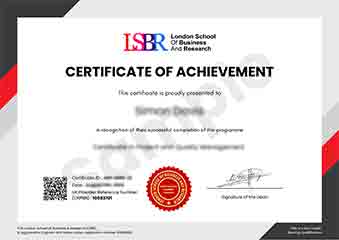
Sample Certificate
Preview the certificate you'll receive upon successful completion of this program.
Get Free Course Info
Enter your details and we'll send you a comprehensive course information pack straight to your inbox.
Employer Sponsored Training
Let your employer invest in your professional development. Request a corporate invoice and get your training funded.
Request Corporate InvoiceWhat People Say About Us
Hear from our students about their experience with the Executive Development Programme in Catkin Workspace Dependency Analysis at LSBRX - Executive Education.
James Thompson
United Kingdom"The course content on Executive Development Programme in Catkin Workspace Dependency Analysis is incredibly thorough and well-structured, providing a solid foundation in managing complex dependencies within robotic systems. I've gained practical skills that have directly enhanced my ability to optimize project workflows and reduce development time, which is invaluable in my role."
Wei Ming Tan
Singapore"The Executive Development Programme in Catkin Workspace Dependency Analysis has significantly enhanced my ability to manage complex dependencies in software projects, making me a more valuable asset in my team and opening up new opportunities for career growth in my field. The practical applications learned in the course are directly applicable to real-world scenarios, ensuring that my skills are highly relevant in today's industry."
Zoe Williams
Australia"The course structure was meticulously organized, providing a clear pathway for understanding complex dependency analysis in Catkin, which significantly enhanced my ability to manage project dependencies effectively in real-world scenarios. It offered a comprehensive overview that bridged theoretical knowledge with practical applications, fostering substantial professional growth."