
Executive Development Programme in Characterizing Molecular Interactions with DSC
This programme enhances skills in characterizing molecular interactions using Differential Scanning Calorimetry, boosting analytical and research capabilities.
Executive Development Programme in Characterizing Molecular Interactions with DSC
Programme Overview
The Executive Development Programme in Characterizing Molecular Interactions with DSC is designed for senior scientists, researchers, and managers in pharmaceuticals, biotechnology, and materials science. The programme aims to deepen participants' understanding of the principles and applications of Differential Scanning Calorimetry (DSC) in characterizing molecular interactions. It covers advanced topics such as thermodynamic principles, phase transitions, and kinetic analysis, with a focus on practical applications and real-world case studies.
Participants will develop key skills in data analysis, experimental design, and interpretation of DSC results. They will learn to apply DSC methodologies to assess interactions between proteins, polymers, and other biomolecules, enhancing their ability to innovate in product development and quality control. The programme also emphasizes the integration of DSC with other analytical techniques, providing a comprehensive skill set for solving complex characterization challenges.
Professional benefits include enhanced leadership capabilities, expanded technical expertise, and the ability to drive research and development initiatives that lead to breakthroughs in product innovation. Graduates of the programme will be well-equipped to lead interdisciplinary teams, contribute to strategic projects, and navigate the evolving landscape of molecular interactions research.
What You'll Learn
The Executive Development Programme in Characterizing Molecular Interactions with Differential Scanning Calorimetry (DSC) is designed to equip professionals with advanced skills in understanding and analyzing molecular interactions using DSC technology. This program is ideal for researchers, scientists, and executives in the pharmaceutical, biotechnology, and polymer science industries seeking to enhance their expertise in thermal analysis.
Key topics include the principles of DSC, advanced sample preparation techniques, data interpretation, and applications in drug development, material science, and quality control. Participants will gain hands-on experience through laboratory sessions, where they will use cutting-edge DSC instruments to characterize the stability, purity, and interactions of molecules under various conditions.
Upon completion, graduates will be proficient in applying DSC to solve complex problems and make informed decisions in their respective fields. They will also enhance their ability to lead interdisciplinary teams, innovate, and drive research projects forward. The skills acquired are particularly valuable for careers in research and development, product development, and quality assurance, with opportunities to work in leading pharmaceutical companies, academic institutions, and research organizations.
This program not only provides a solid foundation in DSC but also fosters a deep understanding of molecular interactions, enabling professionals to contribute significantly to advancements in their industry.
Programme Highlights
Industry-Aligned Curriculum
Developed with industry leaders for job-ready skills valued by employers worldwide.
Globally Recognised Certificate
Recognised by employers across 180+ countries as a mark of professional excellence.
Flexible Online Learning
Study at your own pace with lifetime access to all course materials and updates.
Instant Access
Start learning immediately — no application process or waiting period required.
Constantly Updated Content
Stay ahead with the latest industry trends, best practices, and emerging insights.
Career Advancement
87% of graduates report measurable career progression within 6 months of completion.
Topics Covered
- 1. Introduction to Characterizing Molecular Interactions: Learners will understand the basics of molecular interactions and the importance of thermodynamics in characterizing these interactions. They will gain foundational knowledge in using DSC (Differential Scanning Calorimetry) as a tool to study heat transitions in molecules.
- 2. Fundamentals of DSC Instrumentation: This module covers the principles and operation of DSC instruments, including heating and cooling rates, reference materials, and calibration techniques. Learners will learn how to set up and operate DSC equipment accurately.
- 3. Analyzing DSC Data for Molecular Interactions: Learners will study the analysis of DSC data to extract information about molecular interactions, such as enthalpy changes and transition temperatures. They will gain practical skills in data interpretation and visualization.
- 4. Interpreting Phase Transitions in DSC: This module focuses on the detailed interpretation of phase transitions observed in DSC scans. Learners will learn to identify and characterize different types of phase transitions, including melting, crystallization, and glass transitions.
- 5. Investigating Non-Ionic Interactions with DSC: Learners will explore the characterization of non-ionic interactions, such as hydrogen bonding and van der Waals forces, using DSC techniques. They will gain hands-on experience in designing experiments to study these interactions.
- 6. Advanced DSC Techniques for Complex Systems: This module introduces advanced DSC techniques for studying complex systems, including multi-component mixtures and supramolecular assemblies. Learners will learn how to design and execute experiments to understand the interactions within these systems.
- 7. Characterizing Protein-Ligand Interactions: Learners will study the application of DSC in characterizing protein-ligand interactions, focusing on the thermodynamics of binding processes. They will gain practical skills in designing and analyzing experiments to quantify binding affinities.
- 8. Dynamic DSC and Kinetics of Molecular Interactions: This module covers the use of dynamic DSC to study the kinetics of molecular interactions. Learners will learn how to interpret kinetic data and understand the rate processes involved in molecular interactions.
- 9. Advanced Data Analysis and Software Tools: Learners will delve into advanced data analysis techniques and software tools for DSC data. They will gain proficiency in using specialized software to process and analyze DSC data for detailed characterization of molecular interactions.
- 10. Case Studies and Practical Applications: In this module, learners will apply their knowledge to real-world case studies and practical applications of DSC in characterizing molecular interactions. They will work on projects that simulate industrial or research scenarios, gaining practical experience in solving complex problems.
What You Get When You Enroll
Secure checkout • Instant access • Certificate included
Key Facts
Audience: Scientists, researchers, and technical professionals
Prerequisites: Basic knowledge of biophysics, DSC technology
Outcomes: Proficient in DSC analysis, characterizes protein-ligand interactions
Ready to get started?
Join thousands of professionals who already took the next step. Enroll now and get instant access.
Enroll Now — $199Why This Course
Enhanced Skill Set and Expertise: Participating in an Executive Development Programme in Characterizing Molecular Interactions with DSC equips professionals with advanced knowledge in thermodynamics, biophysics, and computational methods. This deepens their expertise in structural biology and drug discovery, making them more valuable in their roles and companies.
Career Advancement Opportunities: The program offers insights into cutting-edge research methodologies and industry trends, enabling professionals to pursue leadership roles in research and development. With a strong portfolio of skills and a network of fellow professionals, career advancement becomes more accessible and promising.
Interdisciplinary Collaboration: The programme fosters interdisciplinary collaboration, encouraging participants to work with experts from various fields such as chemistry, bioinformatics, and pharmaceutical sciences. This collaborative environment enhances problem-solving skills and innovation, crucial for advancing scientific projects and product development.
Your Path to Certification
Trusted by Professionals Worldwide
Course Brochure
Download our comprehensive course brochure with all details
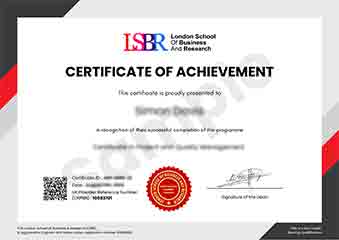
Sample Certificate
Preview the certificate you'll receive upon successful completion of this program.
Get Free Course Info
Enter your details and we'll send you a comprehensive course information pack straight to your inbox.
Employer Sponsored Training
Let your employer invest in your professional development. Request a corporate invoice and get your training funded.
Request Corporate InvoiceWhat People Say About Us
Hear from our students about their experience with the Executive Development Programme in Characterizing Molecular Interactions with DSC at LSBRX - Executive Education.
Sophie Brown
United Kingdom"The course content was incredibly thorough, providing a deep understanding of DSC techniques and their applications in characterizing molecular interactions. Gaining hands-on experience with the equipment and analysis software was invaluable, as it directly enhanced my ability to interpret DSC data in a professional setting."
Priya Sharma
India"The Executive Development Programme in Characterizing Molecular Interactions with DSC has significantly enhanced my ability to analyze complex molecular interactions, making my work in pharmaceutical research more effective and industry-relevant. This program has not only deepened my technical skills but also opened up new career opportunities by equipping me with practical tools and knowledge that are in high demand in the biotech sector."
Muhammad Hassan
Malaysia"The course structure was meticulously organized, providing a clear pathway that seamlessly connected theoretical concepts with practical applications, which greatly enhanced my understanding of DSC techniques and their use in characterizing molecular interactions. This comprehensive approach not only deepened my knowledge but also significantly broadened my perspective on how these principles can be applied in real-world scenarios, fostering my professional growth."