
Executive Development Programme in Child Behavior Assessment Techniques
This programme equips executives with advanced child behavior assessment techniques, enhancing their ability to support child welfare and development effectively.
Executive Development Programme in Child Behavior Assessment Techniques
Programme Overview
The Executive Development Programme in Child Behavior Assessment Techniques is designed for professionals who seek to enhance their skills in evaluating and addressing behavioral issues in children. Tailored for educators, social workers, psychologists, and healthcare providers, this program equips participants with comprehensive knowledge and practical tools to accurately assess and support children's behavioral development.
Participants will develop a deep understanding of various assessment methods, including observational, diagnostic, and psychological evaluations. They will learn to apply these techniques to diagnose common behavioral disorders such as ADHD, autism spectrum disorders, and emotional disturbances. The program also emphasizes the importance of creating supportive and inclusive environments that foster positive behavior and mental health. Key skills include data analysis, effective communication, and evidence-based intervention strategies.
This programme has a profound impact on careers by enabling professionals to make more informed decisions and implement effective behavioral interventions. Graduates will be better equipped to design and manage programs that improve child outcomes, leading to enhanced job performance and career advancement. The ability to conduct thorough and accurate assessments is crucial for addressing the complex needs of children, and this program provides the foundational skills necessary for success in this field.
What You'll Learn
The Executive Development Programme in Child Behavior Assessment Techniques is a comprehensive, cutting-edge program designed to equip professionals with advanced skills in evaluating and understanding child behavior. This program, tailored for educators, social workers, and mental health professionals, focuses on the latest research and methodologies in child psychology, ensuring participants are at the forefront of their field.
Key topics include developmental psychology, behavioral assessment tools, and practical application of assessments in diverse settings. Participants will learn to identify and address common behavioral issues, foster positive behavioral interventions, and collaborate effectively with families and other professionals.
Upon completion, graduates will be well-prepared to implement evidence-based practices in their respective roles, enhancing their ability to support children's mental health and well-being. This program opens doors to advanced positions in child psychology, school counseling, and clinical settings, as well as opportunities for consultancy and research in child behavior assessment. With a solid foundation in child behavior assessment techniques, professionals can make a meaningful impact on the lives of young individuals, contributing to healthier and more supportive communities.
Programme Highlights
Industry-Aligned Curriculum
Developed with industry leaders for job-ready skills valued by employers worldwide.
Globally Recognised Certificate
Recognised by employers across 180+ countries as a mark of professional excellence.
Flexible Online Learning
Study at your own pace with lifetime access to all course materials and updates.
Instant Access
Start learning immediately — no application process or waiting period required.
Constantly Updated Content
Stay ahead with the latest industry trends, best practices, and emerging insights.
Career Advancement
87% of graduates report measurable career progression within 6 months of completion.
Topics Covered
- 1. Introduction to Child Behavior Assessment: Learners will explore the foundational concepts of child behavior, including the types of behaviors, the role of environment, and the importance of cultural considerations. They will gain skills in observing and documenting behaviors effectively.
- 2. Psychological Theories in Child Behavior: This module delves into key psychological theories that explain child behavior, such as cognitive development, behavioral theory, and attachment theory. Learners will understand how these theories can be applied in practical settings.
- 3. Behavioral Assessment Tools and Techniques: Learners will study various tools and techniques used in assessing child behavior, including checklists, rating scales, and behavioral observation forms. They will practice using these tools to gather accurate and reliable data.
- 4. Data Analysis and Interpretation: This module focuses on the analysis and interpretation of behavior assessment data. Learners will learn statistical methods and how to interpret results to inform intervention strategies.
- 5. Conducting Behavior Assessments: Learners will learn the step-by-step process of conducting a behavior assessment, from planning and preparation to data collection and reporting. They will practice these skills in simulated scenarios.
- 6. Intervention Planning and Implementation: This module covers the development of behavior intervention plans based on assessment data. Learners will learn how to develop and implement effective interventions, including positive reinforcement and behavior modification techniques.
- 7. Advanced Behavior Modification Techniques: Learners will explore advanced behavioral modification techniques, such as token economies and functional communication training. They will gain hands-on experience in designing and implementing these interventions.
- 8. Ethical Considerations in Behavior Assessment: This module addresses the ethical considerations involved in behavior assessment and intervention, including confidentiality, informed consent, and cultural sensitivity. Learners will discuss case studies to apply ethical principles.
- 9. Legal and Regulatory Framework: Learners will understand the legal and regulatory framework surrounding behavior assessment and intervention, including laws related to confidentiality, informed consent, and the rights of children and families.
- 10. Leadership and Teamwork in Child Behavior Assessment: This module focuses on leadership and teamwork skills necessary for effective collaboration in a child behavior assessment setting. Learners will practice communication, conflict resolution, and leadership strategies in group projects.
What You Get When You Enroll
Secure checkout • Instant access • Certificate included
Key Facts
Audience: Professionals in child development, psychology
Prerequisites: Basic understanding of child psychology
Outcomes: Master behavior assessment, enhance clinical skills
Ready to get started?
Join thousands of professionals who already took the next step. Enroll now and get instant access.
Enroll Now — $199Why This Course
Enhance Clinical Competence: Professionals who undertake the Executive Development Programme in Child Behavior Assessment Techniques can significantly improve their ability to assess and manage behavioral issues in children effectively. This program equips them with advanced tools and methodologies, enabling a more nuanced understanding of child psychology and behavior, which is crucial for developing personalized interventions.
Career Advancement: Mastery over child behavior assessment techniques opens up new career opportunities in various sectors such as child psychology, mental health, and educational settings. Graduates of this program often find themselves in leadership roles where they can make a substantial impact, both in terms of client care and organizational development.
Strengthen Interdisciplinary Collaboration: The program fosters a deeper understanding of how different fields interact, particularly in the context of child development and behavior. This interdisciplinary knowledge is invaluable for professionals working in teams, as it enhances their ability to communicate effectively and contribute meaningfully to integrated care plans.
Empower Clients and Families: By acquiring advanced assessment skills, professionals can provide more accurate and comprehensive evaluations, leading to better support for children and their families. This not only improves treatment outcomes but also builds stronger, more trusting relationships between professionals and their clients.
Your Path to Certification
Trusted by Professionals Worldwide
Course Brochure
Download our comprehensive course brochure with all details
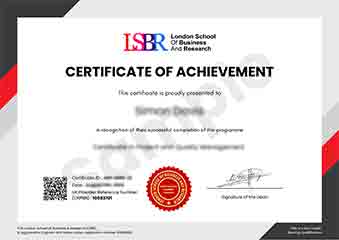
Sample Certificate
Preview the certificate you'll receive upon successful completion of this program.
Get Free Course Info
Enter your details and we'll send you a comprehensive course information pack straight to your inbox.
Employer Sponsored Training
Let your employer invest in your professional development. Request a corporate invoice and get your training funded.
Request Corporate InvoiceWhat People Say About Us
Hear from our students about their experience with the Executive Development Programme in Child Behavior Assessment Techniques at LSBRX - Executive Education.
Sophie Brown
United Kingdom"The course provided in-depth, well-researched content that significantly enhanced my understanding of child behavior assessment techniques, equipping me with practical skills to apply in real-world scenarios. It has already opened up new opportunities in my career by allowing me to approach challenges with a more nuanced and effective strategy."
Rahul Singh
India"The Executive Development Programme in Child Behavior Assessment Techniques has significantly enhanced my ability to apply evidence-based practices in my role, making me more effective in supporting children and their families. This program has not only deepened my understanding of behavioral assessment but also equipped me with practical tools that have directly contributed to career advancement and industry recognition."
Connor O'Brien
Canada"The course structure was meticulously organized, providing a seamless transition from theoretical concepts to practical applications, which significantly enhanced my understanding and knowledge in child behavior assessment techniques. It offered a wealth of real-world scenarios that allowed me to apply the learned skills effectively, fostering my professional growth in the field."