
Executive Development Programme in Clean Air Policy Development
This programme equips executives with strategic insights and skills for effective clean air policy development and implementation.
Executive Development Programme in Clean Air Policy Development
Programme Overview
The Executive Development Programme in Clean Air Policy Development is designed for senior executives, policymakers, and industry leaders who are committed to advancing sustainable environmental practices and advocating for effective clean air policies. This program equips participants with a deep understanding of the global air quality challenges, the latest scientific research, and the regulatory frameworks governing air pollution. It also delves into the integration of technological innovations and green strategies to foster sustainable development.
Participants will develop a range of critical skills and knowledge, including the ability to analyze complex environmental data, design and implement evidence-based policy initiatives, and engage in effective stakeholder collaboration. They will learn to navigate the intricate relationships between air quality, public health, and economic growth, and will be prepared to lead projects that enhance environmental sustainability and public well-being. The program also emphasizes the importance of international cooperation and the role of diplomacy in addressing global air pollution issues.
The career impact of this program is significant, as graduates will be well-positioned to drive change in their organizations and communities. Participants will be able to influence policy decisions at local, national, and international levels, and will have the expertise to develop innovative solutions to air pollution problems. This program not only enhances professional capabilities but also empowers leaders to make a substantial contribution to the global effort to improve air quality and protect public health.
What You'll Learn
The Executive Development Programme in Clean Air Policy Development is an intensive, nine-month initiative designed for executives and leaders in environmental, governmental, and corporate sectors who aim to drive meaningful change in air quality. This program offers a unique blend of theoretical and practical learning, focusing on the latest in air quality science, policy frameworks, regulatory landscapes, and innovative technologies.
Key topics include the impact of air pollution on public health, economic implications, and global environmental policies. Participants will explore case studies of successful air quality management strategies, engage with leading experts, and collaborate with peers from diverse organizations. The curriculum is designed to foster a deep understanding of policy development and implementation, enabling graduates to design and advocate for effective air quality policies.
Upon completion, graduates are well-equipped to lead cross-sectoral initiatives, influence public policy, and drive corporate sustainability. They can apply their skills in roles such as environmental policy advisors, air quality managers, and sustainability officers. The program also provides access to a network of industry leaders, offering valuable career advancement opportunities and a platform for continued professional growth.
This program is essential for those committed to addressing the urgent challenge of air pollution, equipping them with the knowledge and skills to create lasting, positive change.
Programme Highlights
Industry-Aligned Curriculum
Developed with industry leaders for job-ready skills valued by employers worldwide.
Globally Recognised Certificate
Recognised by employers across 180+ countries as a mark of professional excellence.
Flexible Online Learning
Study at your own pace with lifetime access to all course materials and updates.
Instant Access
Start learning immediately — no application process or waiting period required.
Constantly Updated Content
Stay ahead with the latest industry trends, best practices, and emerging insights.
Career Advancement
87% of graduates report measurable career progression within 6 months of completion.
Topics Covered
- 1. Introduction to Air Quality and Policy: Learners will understand the basics of air quality, key pollutants, and the global air pollution crisis. They will gain foundational knowledge on how air quality is measured and monitored, and the role of policy in addressing air pollution.
- 2. Legal Frameworks for Air Quality Management: This module covers the legal and regulatory frameworks governing air quality at local, national, and international levels. Learners will study relevant laws, regulations, and international agreements and understand how they can be utilized to develop effective air quality policies.
- 3. Health Impacts of Air Pollution: In this module, learners will explore the health impacts of air pollution, focusing on respiratory and cardiovascular diseases. Practical skills include analyzing health data and understanding the economic costs of air pollution.
- 4. Sources of Air Pollution: This module examines various sources of air pollution, including industrial emissions, transportation, and biomass burning. Learners will learn to identify and assess these sources and understand their contribution to air pollution.
- 5. Economic Instruments for Air Quality Management: Here, learners will study economic instruments such as taxes, subsidies, and tradable permits that can be used to reduce emissions and improve air quality. Practical skills include designing and evaluating economic policies.
- 6. Technology and Innovation in Air Quality Management: This module focuses on the role of technology and innovation in reducing air pollution. Learners will explore clean technologies and innovative solutions for air quality management and learn to assess their effectiveness.
- 7. Stakeholder Engagement and Public Participation: In this module, learners will learn how to engage stakeholders and the public in the development and implementation of air quality policies. Practical skills include developing communication strategies and stakeholder management techniques.
- 8. Case Studies in Clean Air Policy Development: This module involves in-depth analysis of successful and unsuccessful clean air policies from around the world. Learners will apply theoretical knowledge to real-world scenarios and understand the factors that contribute to policy success or failure.
- 9. Air Quality Modeling and Forecasting: Here, learners will learn to use air quality models and forecasting tools to predict pollution levels and understand the impact of different scenarios. Practical skills include using software for air quality modeling.
- 10. Policy Implementation and Monitoring: In this final module, learners will focus on the practical aspects of policy implementation and monitoring. They will learn about best practices in policy implementation, monitoring techniques, and evaluating the effectiveness of policies.
What You Get When You Enroll
Secure checkout • Instant access • Certificate included
Key Facts
Target audience: Policy makers, environmental professionals
Prerequisites: Basic understanding of environmental science
Outcomes: Enhanced policy development skills, clean air expertise
Ready to get started?
Join thousands of professionals who already took the next step. Enroll now and get instant access.
Enroll Now — $199Why This Course
Enhanced Strategic Skills: Participating in an Executive Development Programme in Clean Air Policy Development equips professionals with the strategic skills necessary to navigate complex environmental issues. This includes understanding the intersection of policy, technology, and public health, which are crucial for developing effective and sustainable solutions.
Improved Policy Analysis and Implementation: The programme offers a deep dive into policy frameworks, legal requirements, and international agreements related to air quality. This knowledge enhances professionals' ability to analyze, design, and implement policies that effectively reduce air pollution, thereby improving public health and environmental quality.
Networking Opportunities: Engaging in this programme provides a platform for networking with experts, policymakers, and industry leaders. These connections can lead to collaborations, mentorship opportunities, and access to resources that are vital for career advancement in the field of environmental policy.
Increased Marketability: As global concerns over air quality continue to grow, professionals with expertise in clean air policy development are in high demand. This programme not only updates and expands their knowledge base but also provides them with a competitive edge in the job market, making them valuable assets to organizations committed to sustainability and environmental stewardship.
Your Path to Certification
Trusted by Professionals Worldwide
Course Brochure
Download our comprehensive course brochure with all details
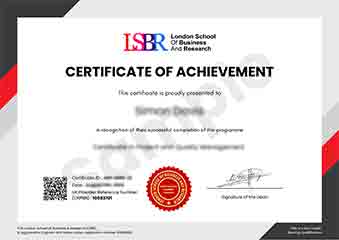
Sample Certificate
Preview the certificate you'll receive upon successful completion of this program.
Get Free Course Info
Enter your details and we'll send you a comprehensive course information pack straight to your inbox.
Employer Sponsored Training
Let your employer invest in your professional development. Request a corporate invoice and get your training funded.
Request Corporate InvoiceWhat People Say About Us
Hear from our students about their experience with the Executive Development Programme in Clean Air Policy Development at LSBRX - Executive Education.
Charlotte Williams
United Kingdom"The course provided an in-depth look at clean air policy development, equipping me with practical skills to analyze and develop effective policies. It has significantly enhanced my career prospects in environmental policy."
Kai Wen Ng
Singapore"The Executive Development Programme in Clean Air Policy Development has significantly enhanced my understanding of air quality management and policy-making, equipping me with practical tools to address real-world environmental challenges. This program has not only deepened my technical skills but also opened new career opportunities in the environmental sector."
Tyler Johnson
United States"The course structure was meticulously organized, providing a clear pathway for understanding complex clean air policy development, which greatly enhanced my knowledge and prepared me for real-world challenges in the field."