
Executive Development Programme in Climate Risk Analytics: Predictive Modeling
This program equips executives with predictive modeling skills for climate risk analytics, enhancing strategic decision-making and resilience.
Executive Development Programme in Climate Risk Analytics: Predictive Modeling
Programme Overview
This Executive Development Programme in Climate Risk Analytics: Predictive Modeling is designed for senior executives, risk managers, and data scientists in the financial, insurance, and energy sectors who seek to enhance their understanding and application of advanced predictive modeling techniques to evaluate and mitigate climate-related risks. The programme is structured to provide a comprehensive framework for analyzing climate data, applying statistical and machine learning methods, and integrating these insights into strategic decision-making processes.
Participants will develop key skills in climate risk analytics, including the ability to interpret climate models, conduct scenario analysis, and build predictive models to forecast climate-related risks. They will also gain proficiency in using cutting-edge software tools and platforms for data analysis and modeling. Furthermore, the programme emphasizes the integration of ethical considerations and regulatory requirements in the development and implementation of climate risk management strategies.
Upon completion of this programme, participants will be well-equipped to make informed, data-driven decisions that enhance their organization's resilience to climate risks. They will be able to lead initiatives that incorporate climate risk analysis into broader business strategies, thereby positioning their organizations at the forefront of sustainable and responsible risk management practices.
What You'll Learn
Embark on a transformative journey with our Executive Development Programme in Climate Risk Analytics: Predictive Modeling. This cutting-edge program equips leaders with the essential skills to navigate the complex landscape of climate risk through advanced predictive modeling techniques. Participants will delve into the latest methodologies for analyzing climate data, assessing risks, and developing strategies to mitigate environmental impacts on business operations.
The curriculum covers a broad spectrum of topics, including statistical analysis, machine learning algorithms, and data visualization tools. You will learn to interpret climate data, build predictive models, and integrate these insights into corporate decision-making processes. This program is ideal for professionals seeking to understand and manage the financial, operational, and reputational risks associated with climate change.
Graduates of this program will be well-prepared to lead initiatives that promote resilience and sustainability within their organizations. They will gain the ability to communicate complex climate data to stakeholders, driving informed strategies that enhance business performance while contributing to global environmental goals.
Career opportunities are vast, ranging from senior roles in corporate sustainability, environmental consulting, and financial services to leadership positions in government agencies and non-profits focused on climate adaptation and mitigation. This program not only advances your career but also positions you as a key leader in the evolving field of climate risk management.
Programme Highlights
Industry-Aligned Curriculum
Developed with industry leaders for job-ready skills valued by employers worldwide.
Globally Recognised Certificate
Recognised by employers across 180+ countries as a mark of professional excellence.
Flexible Online Learning
Study at your own pace with lifetime access to all course materials and updates.
Instant Access
Start learning immediately — no application process or waiting period required.
Constantly Updated Content
Stay ahead with the latest industry trends, best practices, and emerging insights.
Career Advancement
87% of graduates report measurable career progression within 6 months of completion.
Topics Covered
- 1. Introduction to Climate Risk Analytics: Learners will understand the basics of climate risk and its importance in business decision-making. They will gain foundational knowledge on climate risk metrics and tools for initial assessment.
- 2. Predictive Modeling Fundamentals: This module covers basic predictive modeling techniques and their application in climate risk scenarios. Learners will learn how to select appropriate models and understand their limitations.
- 3. Data Collection and Management: Focusing on data sources and management strategies, learners will learn how to gather, clean, and prepare data for predictive modeling. They will also understand the importance of data quality and integrity.
- 4. Statistical Methods in Climate Risk: This module explores statistical methodologies relevant to climate risk analysis. Learners will study techniques such as regression, time series analysis, and factor analysis.
- 5. Machine Learning for Climate Risk: Advanced machine learning techniques and their application in climate risk analytics will be covered. Learners will gain hands-on experience with algorithms like random forests, neural networks, and ensemble methods.
- 6. Scenario Analysis and Stress Testing: Learners will learn how to create and analyze climate risk scenarios and perform stress tests on financial portfolios. They will understand the impact of varying climate conditions on business outcomes.
- 7. Integration of Climate Risk into Decision-Making: This module focuses on integrating climate risk assessments into strategic business planning and decision-making processes. Learners will learn how to communicate climate risk findings effectively.
- 8. Advanced Predictive Modeling Techniques: Covering more complex modeling techniques such as deep learning and Bayesian models, learners will explore advanced methods for climate risk prediction and management.
- 9. Case Studies in Climate Risk Management: Through real-world case studies, learners will analyze how companies manage climate risk using predictive modeling. They will explore successful strategies and learn from practical examples.
- 10. Ethical Considerations in Climate Risk Analytics: This module addresses the ethical implications of climate risk analytics and predictive modeling. Learners will discuss responsible data use, bias in models, and the role of transparency in decision-making.
What You Get When You Enroll
Secure checkout • Instant access • Certificate included
Key Facts
Audience: Executives, data analysts
Prerequisites: Basic statistics, Excel proficiency
Outcomes: Climate risk modeling skills, predictive analytics proficiency
Ready to get started?
Join thousands of professionals who already took the next step. Enroll now and get instant access.
Enroll Now — $199Why This Course
Enhanced Skill Set for Career Advancement: Participating in an Executive Development Programme in Climate Risk Analytics: Predictive Modeling equips professionals with advanced skills in data analysis, predictive modeling, and risk assessment. These skills are highly sought after in various industries, particularly in finance, insurance, and environmental sectors. For instance, proficiency in climate risk analytics can enable you to better understand and mitigate the financial impacts of climate change, opening up opportunities for leadership roles.
Market-Driven Insights and Trends: The programme focuses on the latest trends and technologies in climate risk analytics, which are crucial for making informed business decisions. By learning how to interpret complex climate data and predict future risks, professionals can anticipate market shifts and prepare their organizations for potential challenges. This not only enhances their strategic thinking but also ensures they stay ahead of industry trends.
Networking and Industry Connections: The programme offers a platform to connect with industry leaders, experts, and peers who are at the forefront of climate risk management. These connections can lead to collaborative opportunities, mentorship, and access to new projects and job openings. For example, networking with climate risk analysts from leading organizations can provide valuable insights and career growth opportunities in sustainability and resilience.
Your Path to Certification
Trusted by Professionals Worldwide
Course Brochure
Download our comprehensive course brochure with all details
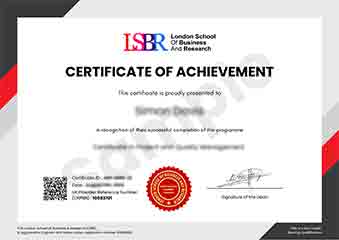
Sample Certificate
Preview the certificate you'll receive upon successful completion of this program.
Get Free Course Info
Enter your details and we'll send you a comprehensive course information pack straight to your inbox.
Employer Sponsored Training
Let your employer invest in your professional development. Request a corporate invoice and get your training funded.
Request Corporate InvoiceWhat People Say About Us
Hear from our students about their experience with the Executive Development Programme in Climate Risk Analytics: Predictive Modeling at LSBRX - Executive Education.
Oliver Davies
United Kingdom"The course provided high-quality material that significantly enhanced my understanding of climate risk analytics and predictive modeling, equipping me with practical skills to analyze and mitigate environmental risks effectively. This knowledge has already opened new career opportunities and will be invaluable in my professional growth."
Emma Tremblay
Canada"This course has been instrumental in enhancing my ability to analyze and predict climate risks, making my insights highly valuable in the industry. It has not only deepened my technical skills in predictive modeling but also opened up new career opportunities in sustainability and risk management roles."
Ashley Rodriguez
United States"The course structure was meticulously organized, providing a seamless transition from theoretical concepts to practical applications in climate risk analytics. The comprehensive content equipped me with valuable tools and insights that have significantly enhanced my ability to analyze and mitigate climate risks in a professional setting."