
Executive Development Programme in Creating Adaptive Assessment Tools
This programme equips executives with skills to develop flexible, data-driven assessment tools that enhance organizational adaptability and performance.
Executive Development Programme in Creating Adaptive Assessment Tools
Programme Overview
The Executive Development Programme in Creating Adaptive Assessment Tools is designed for senior-level education professionals, including educators, administrators, and policymakers, aiming to enhance the effectiveness of their assessment strategies. This program equips participants with the latest methodologies and technologies in adaptive testing, enabling them to develop and implement assessment tools that dynamically adjust to the individual needs and abilities of learners.
Participants will gain expertise in designing, validating, and deploying adaptive assessments, which are tailored to individual test-takers by adjusting the difficulty of questions in real-time based on their responses. Key skills developed include data analytics for assessment performance, item response theory, and the use of psychometric models to ensure fairness and accuracy. Additionally, learners will master the use of advanced software and tools for creating adaptive assessments, as well as learn to interpret and apply psychometric principles to improve educational outcomes.
This program significantly impacts careers by preparing professionals to lead innovative educational initiatives, enhance the reliability and validity of assessments, and contribute to more effective educational policies. Graduates will be well-equipped to drive change in their institutions, ensuring that assessment tools are not only rigorous but also responsive to the diverse needs of their student populations.
What You'll Learn
The Executive Development Programme in Creating Adaptive Assessment Tools is designed for leaders and professionals seeking to innovate in the field of educational and psychological assessments. This program equips participants with the skills to develop, implement, and manage adaptive assessments that enhance learning outcomes and are tailored to individual needs. Key topics include the foundational principles of adaptive testing, psychometrics, data-driven decision-making, and the integration of technology in assessments.
Graduates of this program are well-prepared to apply these skills in real-world settings. They can design assessments that dynamically adjust to the test-taker's performance, ensuring more accurate and fair evaluations. This capability is highly valued in higher education, corporate training, and psychological assessment industries. Graduates are qualified to lead projects that aim to improve assessment methods, thereby contributing to more effective learning and development programs.
Career opportunities abound for program alumni. They can pursue roles such as assessment developers, psychometricians, or educational leaders, where they can implement adaptive assessment tools to drive educational and organizational success. The program’s emphasis on practical application and innovative thinking positions graduates as leaders in their field, capable of driving change and improving assessment practices.
Programme Highlights
Industry-Aligned Curriculum
Developed with industry leaders for job-ready skills valued by employers worldwide.
Globally Recognised Certificate
Recognised by employers across 180+ countries as a mark of professional excellence.
Flexible Online Learning
Study at your own pace with lifetime access to all course materials and updates.
Instant Access
Start learning immediately — no application process or waiting period required.
Constantly Updated Content
Stay ahead with the latest industry trends, best practices, and emerging insights.
Career Advancement
87% of graduates report measurable career progression within 6 months of completion.
Topics Covered
- 1. Understanding Assessment Tools: Learners will explore the foundational concepts of assessment tools, including types, purposes, and basic design principles. They will gain an understanding of how to select appropriate tools for different contexts and objectives.
- 2. Psychological Foundations of Assessment: This module covers the psychological theories and principles underlying effective assessment practices. Learners will study key concepts such as validity, reliability, and fairness, and how these impact the development of adaptive assessment tools.
- 3. Data Analysis Techniques for Assessments: Learners will delve into statistical methods and data analysis techniques used in creating and evaluating assessment tools. They will learn how to interpret and analyze data to refine and improve assessment tools.
- 4. Technological Tools for Adaptive Assessments: This module focuses on the integration of technology in the development of adaptive assessment tools. Learners will explore various technological platforms and software used for creating, administering, and analyzing adaptive assessments.
- 5. Developing Adaptive Algorithms: Learners will study the design and implementation of adaptive algorithms that can adjust the difficulty of questions based on the test-taker's performance. They will gain hands-on experience in coding and testing these algorithms.
- 6. Item Response Theory (IRT): This module provides an in-depth understanding of Item Response Theory, a statistical framework used to model the relationship between test items and examinee ability. Learners will learn how to apply IRT to improve the accuracy and reliability of assessments.
- 7. Creating Adaptive Assessment Scenarios: Learners will design and develop adaptive assessment scenarios that can be used in various educational and professional settings. They will apply the knowledge and skills gained in previous modules to create practical and effective adaptive assessment tools.
- 8. Legal and Ethical Considerations in Assessment: This module covers the legal and ethical issues related to the development and use of assessment tools. Learners will learn about best practices for ensuring that assessment tools are fair, valid, and comply with relevant laws and regulations.
- 9. Implementing and Evaluating Adaptive Assessments: Learners will learn how to implement adaptive assessments in real-world settings and evaluate their effectiveness. They will gain practical experience in administering and analyzing adaptive assessments to gather feedback and make necessary adjustments.
- 10. Leadership in Assessments: This final module focuses on the leadership and management aspects of creating and deploying adaptive assessment tools. Learners will explore strategies for leading cross-functional teams, managing projects, and communicating the value of adaptive assessments to stakeholders.
What You Get When You Enroll
Secure checkout • Instant access • Certificate included
Key Facts
Audience: Executives in educational leadership
Prerequisites: Basic assessment knowledge, leadership experience
Outcomes: Enhanced tool development skills, improved adaptability, better assessment outcomes
Ready to get started?
Join thousands of professionals who already took the next step. Enroll now and get instant access.
Enroll Now — $199Why This Course
Enhance Your Leadership Skills: Participating in an Executive Development Programme in Creating Adaptive Assessment Tools equips you with advanced expertise in designing and implementing assessment tools. This knowledge is crucial for leaders in education, HR, and consulting, as it enables you to develop more effective and inclusive evaluation methods that adapt to diverse learning needs and performance metrics.
Drive Informed Decision Making: The programme focuses on data analytics and psychometrics, providing you with the skills to analyze complex data and make informed decisions. This capability is invaluable in leadership roles, allowing you to tailor strategies and improve organizational performance based on empirical evidence rather than assumptions.
Foster a Culture of Continuous Improvement: By learning to create adaptive assessment tools, professionals can promote a culture of continuous learning and development within their organizations. This approach helps in identifying areas for improvement, fostering innovation, and ensuring that employees are equipped with the necessary skills to meet dynamic challenges in their field.
Stay Ahead of Industry Trends: This programme keeps you abreast of the latest trends and technologies in assessment tools, including artificial intelligence and machine learning applications. Staying updated on these advancements is essential for career progression, as it allows you to leverage cutting-edge tools and methodologies to enhance your professional expertise and organizational effectiveness.
Your Path to Certification
Trusted by Professionals Worldwide
Course Brochure
Download our comprehensive course brochure with all details
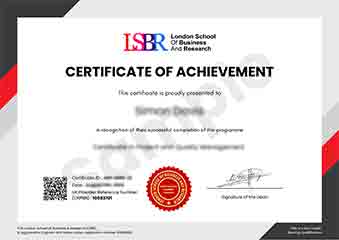
Sample Certificate
Preview the certificate you'll receive upon successful completion of this program.
Get Free Course Info
Enter your details and we'll send you a comprehensive course information pack straight to your inbox.
Employer Sponsored Training
Let your employer invest in your professional development. Request a corporate invoice and get your training funded.
Request Corporate InvoiceWhat People Say About Us
Hear from our students about their experience with the Executive Development Programme in Creating Adaptive Assessment Tools at LSBRX - Executive Education.
Sophie Brown
United Kingdom"The course content was incredibly rich and well-structured, providing a deep understanding of adaptive assessment tools and their implementation. Gaining insights into how to create and use these tools has significantly enhanced my ability to design more effective assessments, which I believe will greatly benefit my career in educational technology."
Tyler Johnson
United States"The Executive Development Programme in Creating Adaptive Assessment Tools has significantly enhanced my ability to develop assessments that are not only industry-relevant but also highly adaptive to individual learner needs. This program has been instrumental in advancing my career, providing me with practical tools and insights that I can immediately apply in my role."
Connor O'Brien
Canada"The course structure was well-organized, providing a clear progression from theoretical concepts to practical applications, which significantly enhanced my understanding of adaptive assessment tools and their real-world benefits. It offered a wealth of knowledge that has greatly contributed to my professional growth in developing more effective assessment strategies."