
Executive Development Programme in Creating Elderly Friendly Environments
This programme equips executives with strategies to create inclusive, elderly-friendly environments, enhancing quality of life and business sustainability.
Executive Development Programme in Creating Elderly Friendly Environments
Programme Overview
The Executive Development Programme in Creating Elderly Friendly Environments is a comprehensive initiative tailored for senior executives and professionals in the fields of architecture, urban planning, healthcare, and social services. This program equips participants with a deep understanding of the unique needs and challenges faced by the elderly population, as well as the latest trends and best practices in designing and managing environments that cater to their well-being and safety.
Learners will develop critical skills in user-centered design, universal design principles, and inclusive urban planning. They will gain proficiency in assessing the accessibility and usability of spaces, integrating assistive technologies, and fostering community engagement to enhance the quality of life for the elderly. Through case studies, workshops, and practical projects, participants will learn to analyze and address the specific requirements of aging populations, ensuring that their environments are not only physically accessible but also socially inclusive and culturally sensitive.
The program has a significant impact on career progression, enabling professionals to take on leadership roles in creating sustainable and age-friendly urban environments. It provides them with the tools and knowledge to influence policy and design standards, ultimately contributing to the development of healthier, more inclusive communities. Participants will be better positioned to drive innovation and make a meaningful difference in the lives of the elderly, enhancing their professional reputation and opening up new opportunities in this rapidly evolving field.
What You'll Learn
The Executive Development Programme in Creating Elderly Friendly Environments is a comprehensive initiative designed to equip professionals with the knowledge and skills necessary to design and manage spaces and services that cater to the needs of elderly individuals. This program, aligned with the latest trends and best practices in gerontology and accessibility, offers a unique blend of theoretical insights and practical applications, ensuring that participants can make immediate and meaningful contributions to enhancing the quality of life for older adults.
Key topics include the psychology of aging, design principles for accessibility, technology integration, and policy and regulation updates. Participants will learn how to assess and improve environments, from residential settings to public spaces, to ensure they are safe, inclusive, and supportive of the elderly. The curriculum also explores innovative solutions in healthcare and leisure that promote independence and social engagement among the elderly.
Upon completion, graduates will be well-prepared to implement senior-friendly initiatives in various sectors, including healthcare, real estate, urban planning, and social services. They can contribute to designing age-friendly communities, develop marketing strategies for services tailored to the elderly, and advocate for policy changes that support an aging population. This program opens doors to a range of career opportunities, from senior living facility managers to gerontological researchers, ensuring that participants are at the forefront of creating a more inclusive and supportive society for all ages.
Programme Highlights
Industry-Aligned Curriculum
Developed with industry leaders for job-ready skills valued by employers worldwide.
Globally Recognised Certificate
Recognised by employers across 180+ countries as a mark of professional excellence.
Flexible Online Learning
Study at your own pace with lifetime access to all course materials and updates.
Instant Access
Start learning immediately — no application process or waiting period required.
Constantly Updated Content
Stay ahead with the latest industry trends, best practices, and emerging insights.
Career Advancement
87% of graduates report measurable career progression within 6 months of completion.
Topics Covered
- 1. Understanding Ageing Demographics: Learners will study the demographics of an ageing population, including trends and projections. They will gain an understanding of the challenges and opportunities presented by an older workforce and community.
- 2. Principles of Universal Design: Learners will explore the core principles of universal design in creating environments that are accessible and usable by everyone, regardless of age or ability.
- 3. Cognitive and Physical Changes in Older Adults: Learners will delve into the cognitive and physical changes that typically occur as people age, providing insights into the design of safe, supportive, and engaging environments.
- 4. Legal and Ethical Considerations: Learners will study the legal frameworks and ethical principles that govern the design and provision of elder-friendly environments, ensuring learners can apply these principles in their work.
- 5. Designing for Accessibility: Learners will learn how to design physical spaces that are accessible to individuals with a wide range of abilities, including those with mobility, visual, and hearing impairments.
- 6. Creating Age-Friendly Technology Solutions: Learners will explore the development and implementation of technology solutions that enhance the independence and quality of life for older adults.
- 7. Sustainable and Green Design Practices: Learners will study sustainable design practices that create environmentally friendly and resource-efficient elderly-friendly environments, focusing on longevity and energy efficiency.
- 8. Community Engagement and Collaboration: Learners will understand the importance of engaging with communities to create meaningful and culturally appropriate elderly-friendly environments, fostering collaboration between designers, planners, and community members.
- 9. Case Studies in Elderly-Friendly Design: Learners will analyze real-world examples of successful elderly-friendly environments, examining best practices and lessons learned from various design projects.
- 10. Implementing and Evaluating Elderly-Friendly Initiatives: Learners will learn how to develop, implement, and evaluate initiatives that promote elderly-friendly environments, measuring success and making data-driven improvements.
What You Get When You Enroll
Secure checkout • Instant access • Certificate included
Key Facts
Audience: Mid-to-senior level executives
Prerequisites: Basic understanding of aging demographics
Outcomes: Enhanced knowledge on elderly needs, developed strategies for inclusivity
Ready to get started?
Join thousands of professionals who already took the next step. Enroll now and get instant access.
Enroll Now — $199Why This Course
Professionals in various sectors can enhance their career prospects by participating in the 'Executive Development Programme in Creating Elderly Friendly Environments.' This program equips participants with specialized skills in designing and managing environments that cater to the needs of older adults, a demographic expected to grow significantly in the coming decades. By gaining expertise in this area, professionals can open new opportunities in sectors like healthcare, real estate, and urban planning, where demand for age-friendly solutions is increasing.
The program offers hands-on training and real-world case studies, enabling participants to develop practical strategies for creating inclusive spaces. These skills are highly valued in the current job market, as businesses increasingly seek leaders who can adapt their offerings to meet the diverse needs of the population. For instance, participants learn how to apply universal design principles, which can be applied across various industries to improve accessibility and usability.
Engaging in this program fosters leadership and innovation, crucial for advancing in managerial roles. The curriculum encourages critical thinking and problem-solving, preparing professionals to address complex challenges related to aging populations. By participating, individuals can emerge as leaders in developing and implementing innovative solutions, thereby distinguishing themselves in their fields and contributing to societal progress.
Your Path to Certification
Trusted by Professionals Worldwide
Course Brochure
Download our comprehensive course brochure with all details
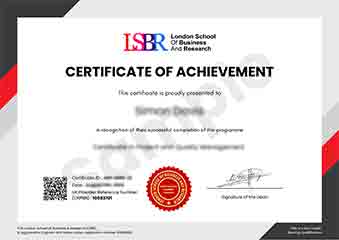
Sample Certificate
Preview the certificate you'll receive upon successful completion of this program.
Get Free Course Info
Enter your details and we'll send you a comprehensive course information pack straight to your inbox.
Employer Sponsored Training
Let your employer invest in your professional development. Request a corporate invoice and get your training funded.
Request Corporate InvoiceWhat People Say About Us
Hear from our students about their experience with the Executive Development Programme in Creating Elderly Friendly Environments at LSBRX - Executive Education.
Oliver Davies
United Kingdom"The course provided in-depth material on designing elderly-friendly environments, equipping me with practical skills to assess and improve living spaces for seniors. It has significantly enhanced my ability to contribute to creating more inclusive and safe environments, which is invaluable in my career."
Oliver Davies
United Kingdom"This course has significantly enhanced my ability to design and implement elderly-friendly environments, making my work more relevant and impactful in the industry. It has opened up new career opportunities and allowed me to contribute more effectively to projects that improve the quality of life for seniors."
Muhammad Hassan
Malaysia"The course structure was meticulously organized, providing a clear pathway for understanding the complexities of creating elderly-friendly environments. The knowledge gained has been incredibly beneficial, offering practical insights that can be directly applied to enhance the quality of life for older adults."