
Executive Development Programme in Credit Rating Model Validation
This programme enhances executives' skills in developing and validating credit rating models, improving risk management and decision-making.
Executive Development Programme in Credit Rating Model Validation
Programme Overview
The Executive Development Programme in Credit Rating Model Validation is designed for senior professionals and executives in the finance sector, including risk managers, compliance officers, and credit analysts. This program equips participants with a comprehensive understanding of credit rating methodologies and the validation processes essential for ensuring the reliability and accuracy of credit assessments. Participants will explore statistical techniques, risk management frameworks, and regulatory requirements, enabling them to make informed decisions that can significantly impact their organization's risk posture.
Key skills and knowledge developed through this program include an in-depth understanding of advanced statistical models, proficiency in using quantitative tools for risk analysis, and the ability to effectively communicate complex financial data to non-technical stakeholders. Learners will also gain expertise in regulatory compliance, particularly in adhering to international standards and best practices in credit rating model validation. This knowledge base is crucial for developing robust risk management strategies and maintaining a competitive edge in the financial sector.
The career impact of this program is substantial, as participants will enhance their ability to assess and manage credit risk more effectively. They will be better positioned to lead projects that improve the accuracy and efficiency of credit rating models, thereby contributing to their organization's profitability and stability. The program also provides valuable insights for advancing into higher-level executive roles, where strategic decision-making and risk management are critical.
What You'll Learn
The Executive Development Programme in Credit Rating Model Validation is a transformative journey designed for professionals eager to master the intricacies of credit risk assessment and model validation within financial institutions. This program equips participants with advanced skills in quantitative analysis, risk management, and regulatory compliance. By delving into real-world case studies and industry best practices, participants learn to develop and validate credit rating models that meet stringent regulatory requirements and enhance organizational risk management.
Key topics include statistical analysis, machine learning techniques, and the application of regulatory frameworks such as Basel III. Through hands-on workshops and practical exercises, graduates gain the ability to lead cross-functional teams, ensure model accuracy, and communicate complex financial data effectively to stakeholders. The program also emphasizes ethical considerations in risk assessment, fostering a culture of integrity and responsible practice.
Graduates of this program are well-prepared for leadership roles in risk management, regulatory compliance, and quantitative analysis. They can pursue careers as Chief Risk Officers, Model Validation Managers, or Quantitative Analysts, contributing to the strategic decision-making processes of financial institutions. By joining this program, professionals can significantly enhance their expertise and open doors to advanced career opportunities in the financial sector.
Programme Highlights
Industry-Aligned Curriculum
Developed with industry leaders for job-ready skills valued by employers worldwide.
Globally Recognised Certificate
Recognised by employers across 180+ countries as a mark of professional excellence.
Flexible Online Learning
Study at your own pace with lifetime access to all course materials and updates.
Instant Access
Start learning immediately — no application process or waiting period required.
Constantly Updated Content
Stay ahead with the latest industry trends, best practices, and emerging insights.
Career Advancement
87% of graduates report measurable career progression within 6 months of completion.
Topics Covered
- 1. Introduction to Credit Risk and Rating Models: Learners will explore the basics of credit risk management and the role of rating models in financial institutions. They will gain foundational knowledge on key concepts like credit risk, rating scales, and the importance of model validation.
- 2. Fundamentals of Credit Rating Models: This module covers the core components of credit rating models, including data sources, model types, and the process of building and validating these models. Learners will understand how to assess model performance and identify potential biases.
- 3. Statistical Methods for Model Validation: Learners will delve into statistical techniques used in model validation, such as backtesting, loss distribution analysis, and stress testing. They will gain practical skills in applying these methods to real-world credit rating models.
- 4. Advanced Topics in Model Validation: This module focuses on advanced validation techniques, including machine learning approaches, scenario analysis, and the integration of qualitative factors. Learners will learn how to apply these methods to improve model accuracy and robustness.
- 5. Regulatory Compliance and Best Practices: Learners will study the regulatory frameworks governing credit rating models and best practices for model validation. They will understand the implications of regulatory requirements on model development and validation processes.
- 6. Case Studies in Model Validation: Through in-depth case studies, learners will analyze real-world scenarios involving credit rating model validation. They will learn how to apply theoretical knowledge to practical situations and develop problem-solving skills.
- 7. Communication and Reporting: This module teaches learners how to effectively communicate model validation results to stakeholders. They will develop skills in creating clear reports and presenting complex information in a comprehensible manner.
- 8. Technological Tools and Platforms: Learners will explore the latest technological tools and platforms used in model validation, such as machine learning algorithms, data analytics software, and risk management systems. They will learn how to leverage these tools to enhance model validation practices.
- 9. Emerging Trends in Credit Rating Models: This module examines emerging trends and innovations in credit rating models, including the use of alternative data, advanced analytics, and artificial intelligence. Learners will stay updated on the latest developments in the field.
- 10. Strategic Planning and Model Governance: Learners will learn how to develop strategic plans for model validation and implement effective governance structures. They will understand the importance of strategic oversight in ensuring the integrity and reliability of credit rating models.
What You Get When You Enroll
Secure checkout • Instant access • Certificate included
Key Facts
Auditors, risk managers, credit analysts
Familiarity with credit rating models
Enhanced validation skills
Improved risk assessment techniques
Strengthened regulatory compliance knowledge
Ready to get started?
Join thousands of professionals who already took the next step. Enroll now and get instant access.
Enroll Now — $199Why This Course
Enhance Expertise: An Executive Development Programme in Credit Rating Model Validation equips professionals with a deep understanding of quantitative and qualitative methodologies used in financial risk assessment. This knowledge is crucial for making informed decisions that can significantly impact financial stability and compliance.
Career Advancement: By mastering model validation techniques, professionals can take on leadership roles in risk management or regulatory compliance. The program’s focus on practical applications and case studies prepares participants to tackle real-world challenges, making them more competitive for advanced positions.
Regulatory Compliance: The programme ensures that professionals stay updated with the latest regulatory requirements and standards, such as those set by bodies like the Basel Committee on Banking Supervision. This is particularly important for those working in financial institutions that must adhere to strict regulatory frameworks.
Decision-Making Skills: Through the programme, individuals develop robust analytical skills and a comprehensive understanding of credit risk models. This enables them to make more accurate forecasts and assessments, leading to better strategic planning and risk management practices.
Your Path to Certification
Trusted by Professionals Worldwide
Course Brochure
Download our comprehensive course brochure with all details
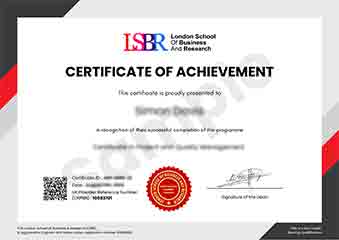
Sample Certificate
Preview the certificate you'll receive upon successful completion of this program.
Get Free Course Info
Enter your details and we'll send you a comprehensive course information pack straight to your inbox.
Employer Sponsored Training
Let your employer invest in your professional development. Request a corporate invoice and get your training funded.
Request Corporate InvoiceWhat People Say About Us
Hear from our students about their experience with the Executive Development Programme in Credit Rating Model Validation at LSBRX - Executive Education.
Charlotte Williams
United Kingdom"The course provided in-depth material on credit rating model validation, equipping me with practical skills to analyze and validate credit models effectively. It has significantly enhanced my ability to assess financial risks and make informed decisions, which is invaluable for my career in finance."
James Thompson
United Kingdom"The Executive Development Programme in Credit Rating Model Validation has significantly enhanced my ability to analyze financial data and assess risk, making me more valuable in my current role and opening up new opportunities in the industry. The practical applications taught in the course have directly contributed to improving our company's credit risk management strategies."
Greta Fischer
Germany"The course structure was meticulously organized, providing a clear path from foundational concepts to advanced topics in credit rating model validation, which significantly enhanced my understanding and practical skills. The comprehensive content and real-world applications have been invaluable for my professional growth, equipping me with the tools to effectively validate credit models in a professional setting."