
Executive Development Programme in Data-Driven Housing Policy Analysis
This programme equips executives with data analytics skills to drive evidence-based housing policy decisions, enhancing effectiveness and impact.
Executive Development Programme in Data-Driven Housing Policy Analysis
Programme Overview
The Executive Development Programme in Data-Driven Housing Policy Analysis is designed for senior executives, policy makers, and data analysts working in governmental bodies, non-profit organizations, and research institutions with a focus on urban planning and housing. This comprehensive program equips participants with advanced analytical tools and methodologies to interpret complex housing data, enabling them to develop effective and data-driven policy solutions. It covers a wide range of topics including data collection and management, statistical analysis, predictive modeling, and policy impact assessment. The curriculum also delves into the ethical considerations of using data in policy-making and the integration of technological advancements such as machine learning and big data analytics.
Participants will develop key skills in data interpretation, policy formulation, and strategic decision-making. They will learn to use sophisticated data visualization tools to communicate findings effectively to stakeholders, policymakers, and the public. The program also emphasizes the importance of cross-disciplinary collaboration and the application of data science to address real-world housing challenges. Upon completion, participants will be well-prepared to lead initiatives that leverage data to enhance housing policies, drive inclusive growth, and improve the quality of life in urban communities. This program will significantly enhance their ability to influence policy outcomes and contribute to sustainable housing solutions.
What You'll Learn
The Executive Development Programme in Data-Driven Housing Policy Analysis is a transformative initiative designed for leaders in urban planning, housing policy, and related fields. This program equips professionals with advanced skills in leveraging big data, machine learning, and statistical analysis to inform evidence-based housing policies. Participants will delve into key topics such as data collection methodologies, predictive modeling, and policy impact assessment, all while engaging with real-world case studies and expert guest lecturers.
By integrating theoretical knowledge with practical applications, the program enables graduates to make data-driven decisions that address complex housing challenges, such as affordability, gentrification, and homelessness. Upon completion, participants will be adept at using data to advocate for policies that enhance community well-being and promote sustainable urban development.
Career opportunities for graduates are extensive, ranging from senior positions in local and national housing agencies, to roles in think tanks, non-profits, and private consulting firms. Graduates will also be well-prepared to lead data initiatives within their organizations, fostering a culture of evidence-based policy-making and innovation. This program is ideal for those seeking to make a meaningful impact in housing policy through the power of data.
Programme Highlights
Industry-Aligned Curriculum
Developed with industry leaders for job-ready skills valued by employers worldwide.
Globally Recognised Certificate
Recognised by employers across 180+ countries as a mark of professional excellence.
Flexible Online Learning
Study at your own pace with lifetime access to all course materials and updates.
Instant Access
Start learning immediately — no application process or waiting period required.
Constantly Updated Content
Stay ahead with the latest industry trends, best practices, and emerging insights.
Career Advancement
87% of graduates report measurable career progression within 6 months of completion.
Topics Covered
- 1. Introduction to Data-Driven Policy Analysis: Learners will explore the basics of data-driven policy analysis, including the importance of data in housing policy, types of data, and data sources. They will gain foundational skills in identifying relevant data and understanding how data can inform policy decisions.
- 2. Data Collection and Management: This module covers the principles of collecting and managing data for housing policy analysis, including data quality, data cleaning, and managing large datasets. Learners will develop skills in using data collection tools and software for housing policy research.
- 3. Statistical Methods for Policy Analysis: Learners will study fundamental statistical methods used in housing policy analysis, such as regression analysis and correlation. They will learn how to apply these methods to real-world housing data to identify trends and relationships.
- 4. Advanced Statistical Techniques: Building on Module 3, this module delves into more complex statistical techniques, including time series analysis and predictive modeling. Learners will gain the skills to analyze longitudinal housing data and forecast future trends.
- 5. Geospatial Analysis for Housing Policy: This module introduces geospatial tools and techniques for analyzing housing data, including GIS software and spatial statistics. Learners will learn how to map housing trends and identify spatial patterns that can inform policy decisions.
- 6. Policy Impact Evaluation: Learners will study methods for evaluating the impact of housing policies, including before-and-after analysis and impact assessment models. They will learn how to design and conduct rigorous evaluations to measure policy effectiveness.
- 7. Communicating Data-Driven Policy Insights: This module focuses on the communication of data-driven insights to stakeholders, policymakers, and the public. Learners will develop skills in creating effective visualizations, writing clear reports, and presenting findings.
- 8. Case Studies in Data-Driven Housing Policy: Through in-depth case studies, learners will analyze real-world examples of data-driven housing policies and their impacts. They will gain insights into successful policy implementation and the challenges of data-driven policy-making.
- 9. Ethical Considerations in Data-Driven Policy Analysis: This module explores the ethical dimensions of data collection, analysis, and policy implementation in housing. Learners will discuss issues such as privacy, bias, and equity in the context of data-driven policy analysis.
- 10. Future Directions in Data-Driven Housing Policy: The final module examines emerging trends and technologies in data-driven housing policy analysis, including big data, artificial intelligence, and machine learning. Learners will discuss the potential of these technologies to transform housing policy analysis and practice.
What You Get When You Enroll
Secure checkout • Instant access • Certificate included
Key Facts
Audience: Policy analysts, data scientists, housing policymakers
Prerequisites: Basic data analysis skills, policy interest
Outcomes: Enhanced data literacy, policy impact assessment skills
Ready to get started?
Join thousands of professionals who already took the next step. Enroll now and get instant access.
Enroll Now — $199Why This Course
Professionals should choose the 'Executive Development Programme in Data-Driven Housing Policy Analysis' to enhance their analytical skills. This program equips participants with advanced statistical and machine learning techniques, enabling them to interpret complex data and derive actionable insights for housing policy. This skill set is crucial as it allows professionals to make evidence-based decisions that can significantly influence policy outcomes.
The programme offers a unique opportunity to gain hands-on experience with real-world data and policy scenarios. Participants will work on projects that address current housing challenges, such as affordable housing, homelessness, and urban planning. This practical experience can lead to innovative solutions and a deeper understanding of the housing market dynamics, which is invaluable for career advancement in the field of urban development and policy.
Engaging with a diverse group of professionals from various sectors and backgrounds fosters a collaborative environment. This network can be instrumental for career growth, as it provides access to mentorship, potential partnerships, and a broader perspective on data-driven policy analysis. Such a network can open doors to new opportunities and enhance one's professional reputation in the data-driven policy analysis community.
Your Path to Certification
Trusted by Professionals Worldwide
Course Brochure
Download our comprehensive course brochure with all details
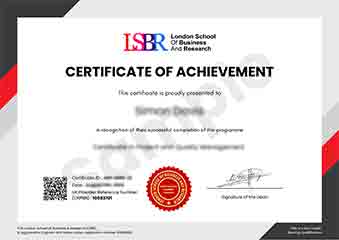
Sample Certificate
Preview the certificate you'll receive upon successful completion of this program.
Get Free Course Info
Enter your details and we'll send you a comprehensive course information pack straight to your inbox.
Employer Sponsored Training
Let your employer invest in your professional development. Request a corporate invoice and get your training funded.
Request Corporate InvoiceWhat People Say About Us
Hear from our students about their experience with the Executive Development Programme in Data-Driven Housing Policy Analysis at LSBRX - Executive Education.
Sophie Brown
United Kingdom"The course provided high-quality, real-world data analysis tools that significantly enhanced my ability to develop evidence-based housing policies. It equipped me with practical skills that are directly applicable to my career, making me more confident in my ability to contribute to data-driven policy initiatives."
Brandon Wilson
United States"The Executive Development Programme in Data-Driven Housing Policy Analysis has significantly enhanced my ability to analyze complex housing data and develop evidence-based policies. This course has not only deepened my technical skills but also provided me with practical tools and insights that are directly applicable in the housing sector, making my career more impactful and aligned with industry needs."
Rahul Singh
India"The course structure was meticulously organized, providing a seamless transition from theoretical concepts to practical applications in real-world housing policy analysis. It offered a wealth of knowledge that significantly enhanced my analytical skills and deepened my understanding of data-driven approaches in policy-making."