
Executive Development Programme in Data-Driven Policy Making and Evaluation
This programme equips executives with data analytics skills for informed policy making and evaluation, driving evidence-based decision-making.
Executive Development Programme in Data-Driven Policy Making and Evaluation
Programme Overview
The Executive Development Programme in Data-Driven Policy Making and Evaluation is designed for senior government officials, policymakers, and professionals who are committed to enhancing their ability to leverage data for informed decision-making. This program equips participants with the latest methodologies and tools in data analysis, policy evaluation, and strategic planning. Through an intensive curriculum, learners gain a deep understanding of how to collect, analyze, and interpret large datasets to inform policy development and improve public service delivery.
Key skills and knowledge developed in this program include advanced statistical analysis techniques, data visualization, policy impact assessment, and the use of machine learning and artificial intelligence in policy formulation. Participants will learn to create and utilize predictive models to anticipate policy outcomes and adapt to changing data landscapes. They will also enhance their understanding of ethical considerations in data use and privacy.
The programme has a significant impact on career advancement, enabling professionals to lead data-driven initiatives that can transform policy outcomes. Graduates are better positioned to drive evidence-based policies, improve program effectiveness, and enhance public service delivery. This expertise is highly valued in governmental and non-governmental organizations, research institutions, and consulting firms, opening up new opportunities for leadership roles in data and policy sectors.
What You'll Learn
The Executive Development Programme in Data-Driven Policy Making and Evaluation is designed for leaders and professionals seeking to enhance their ability to leverage data in crafting and evaluating policy initiatives. This comprehensive program equips participants with advanced analytical skills, enabling them to make informed, evidence-based decisions that drive impactful policy outcomes. Key topics include data analysis, statistical modeling, policy design, and evaluation methodologies.
Participants learn to integrate big data, machine learning, and predictive analytics into their decision-making processes, using real-world case studies and interactive workshops. The program emphasizes ethical considerations in data use and privacy, ensuring that graduates understand the broader implications of their work.
Upon completion, graduates are well-prepared to lead data-driven initiatives in government, non-profit organizations, and the private sector. They can develop and implement policies that are not only effective but also transparent, accountable, and responsive to the needs of diverse populations. Career opportunities include roles such as data policy analyst, policy research manager, and data-driven policy consultant. This program not only provides the technical skills needed but also fosters a deep understanding of how to translate data insights into actionable policy solutions.
Programme Highlights
Industry-Aligned Curriculum
Developed with industry leaders for job-ready skills valued by employers worldwide.
Globally Recognised Certificate
Recognised by employers across 180+ countries as a mark of professional excellence.
Flexible Online Learning
Study at your own pace with lifetime access to all course materials and updates.
Instant Access
Start learning immediately — no application process or waiting period required.
Constantly Updated Content
Stay ahead with the latest industry trends, best practices, and emerging insights.
Career Advancement
87% of graduates report measurable career progression within 6 months of completion.
Topics Covered
- 1. Introduction to Data-Driven Policy Making: Learners will understand the basics of data-driven policy making, including the importance of data in policy formulation and the ethical considerations involved. They will gain foundational skills in identifying relevant data sources and understanding data quality.
- 2. Data Collection and Management: This module covers the principles and practices of data collection, cleaning, and management. Learners will learn how to design effective data collection strategies and manage large datasets efficiently.
- 3. Data Analysis for Policy Making: Learners will explore various statistical and analytical techniques used in policy analysis. They will gain hands-on experience in using software tools for data analysis to support evidence-based policy decisions.
- 4. Policy Impact Evaluation: This module focuses on methods for evaluating the impact of policies. Learners will study different evaluation designs and learn how to apply them to real-world policy scenarios.
- 5. Predictive Modelling for Policy: Learners will delve into predictive modelling techniques and their application in policy development. They will gain skills in building and interpreting predictive models to forecast policy outcomes.
- 6. Data Visualization and Communication: This module teaches learners how to effectively communicate data-driven insights to stakeholders through visualization techniques. They will learn to create compelling visual stories that enhance decision-making processes.
- 7. Legal and Ethical Considerations in Data Use: Learners will explore the legal and ethical frameworks governing the use of data in policy making. They will understand the implications of data use on privacy, consent, and transparency.
- 8. Advanced Topics in Data Policy: This module covers cutting-edge topics in data policy, including big data analytics, artificial intelligence, and their implications for policy making. Learners will engage in discussions and case studies to deepen their understanding.
- 9. Policy Implementation and Monitoring: Learners will study the stages of policy implementation and monitoring. They will learn how to design monitoring frameworks and use data to track progress and make adjustments as needed.
- 10. Policy Innovation through Technology: This module focuses on the role of technology in driving policy innovation. Learners will explore how emerging technologies can be leveraged to develop and implement more effective policies.
What You Get When You Enroll
Secure checkout • Instant access • Certificate included
Key Facts
Audience: Public sector leaders, policymakers
Prerequisites: Basic policy-making knowledge
Outcomes: Data analysis skills, evidence-based decision-making
Ready to get started?
Join thousands of professionals who already took the next step. Enroll now and get instant access.
Enroll Now — $199Why This Course
Enhanced Analytical Skills: Participating in the Executive Development Programme in Data-Driven Policy Making and Evaluation equips professionals with advanced analytical tools and techniques. This enhances their ability to interpret complex data, enabling more informed and evidence-based decision-making. For instance, learning statistical analysis software like R or Python can significantly improve policy outcomes by identifying trends and patterns that might otherwise go unnoticed.
Expertise in Data-Driven Policy: The programme focuses on the application of data in developing and evaluating public policies. Professionals gain a deep understanding of how to use data to address societal challenges, such as healthcare, education, and economic development. This expertise is highly valued in roles requiring strategic planning and policy development, as it ensures that policies are not only well-informed but also adaptable to changing conditions.
Leadership in Data-Driven Decision Making: The programme not only trains participants in technical skills but also in leadership and communication. It helps professionals articulate the value of data-driven decision making to stakeholders and teams, fostering a culture of evidence-based practices. This skill is crucial for leading cross-functional teams and driving organizational change, particularly in fields where data plays a pivotal role in achieving strategic objectives.
Competitive Advantage in the Job Market: As organizations increasingly rely on data to drive their operations, the demand for professionals who can navigate and leverage data is growing. Completing this programme makes professionals stand out in the job market. Employers seek skilled individuals capable of translating data insights
Your Path to Certification
Trusted by Professionals Worldwide
Course Brochure
Download our comprehensive course brochure with all details
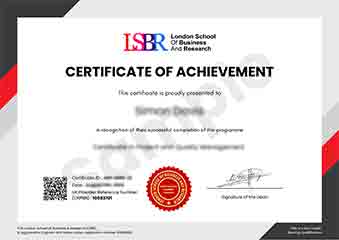
Sample Certificate
Preview the certificate you'll receive upon successful completion of this program.
Get Free Course Info
Enter your details and we'll send you a comprehensive course information pack straight to your inbox.
Employer Sponsored Training
Let your employer invest in your professional development. Request a corporate invoice and get your training funded.
Request Corporate InvoiceWhat People Say About Us
Hear from our students about their experience with the Executive Development Programme in Data-Driven Policy Making and Evaluation at LSBRX - Executive Education.
Charlotte Williams
United Kingdom"The course provided high-quality, cutting-edge material that significantly enhanced my ability to apply data-driven methods in policy making. I gained practical skills that are directly applicable to real-world scenarios, which I believe will be invaluable in my career."
Muhammad Hassan
Malaysia"The Executive Development Programme in Data-Driven Policy Making and Evaluation has significantly enhanced my ability to analyze complex data and translate insights into actionable policies. This course has not only made my work more impactful but also opened up new career opportunities in data-driven sectors."
Arjun Patel
India"The course structure was well-organized, providing a clear pathway from foundational concepts to advanced applications in data-driven policy making. The comprehensive content not only enhanced my understanding but also equipped me with practical tools to analyze and evaluate policies effectively in real-world scenarios."