
Executive Development Programme in Data Mining for Unsupervised Learning
This programme equips executives with advanced skills in unsupervised learning for data mining, enhancing strategic decision-making and competitive advantage.
Executive Development Programme in Data Mining for Unsupervised Learning
Programme Overview
The Executive Development Programme in Data Mining for Unsupervised Learning is tailored for mid-to-senior level executives and data professionals who seek to enhance their expertise in leveraging unsupervised learning techniques to drive strategic business decisions. This program is designed to provide participants with a comprehensive understanding of unsupervised learning methodologies, including clustering, dimensionality reduction, and anomaly detection, and their practical applications in real-world business scenarios.
Participants will develop key skills in data preprocessing, model selection, and evaluation, as well as gain proficiency in using advanced data mining tools and techniques. They will learn how to implement unsupervised learning algorithms to uncover hidden patterns, insights, and trends within large datasets, and effectively communicate these findings to non-technical stakeholders. The curriculum also emphasizes the practical application of these skills through hands-on workshops and case studies, ensuring that learners can quickly apply their knowledge to address business challenges.
This programme will significantly impact participants' careers by equipping them with the ability to drive innovation through data-driven decision-making. Graduates will be better positioned to lead data analytics initiatives, optimize business processes, and enhance customer experiences through advanced data mining techniques. The program also facilitates networking opportunities with industry peers and experts, fostering a collaborative environment that can lead to new business opportunities and strategic partnerships.
What You'll Learn
The Executive Development Programme in Data Mining for Unsupervised Learning is designed to equip professionals with advanced skills in handling complex data sets through unsupervised learning techniques. This program is ideal for executives and professionals in data science, analytics, and technology who seek to enhance their capabilities in extracting meaningful insights from unstructured data.
Key topics include clustering techniques, dimensionality reduction, anomaly detection, and neural networks, all delivered through a blend of theoretical and practical sessions. Participants will learn to implement unsupervised learning algorithms using Python and R, with hands-on projects that simulate real-world scenarios. The program also emphasizes the ethical considerations and implications of data mining in decision-making processes.
Upon completion, graduates will be well-prepared to lead data-driven initiatives, optimize business operations, and drive innovation. They will gain the ability to interpret complex data, develop predictive models, and make data-driven strategic decisions. Career opportunities abound in roles such as data scientists, machine learning engineers, and analytics leads, where they can leverage their skills to transform data into actionable intelligence.
By the end of the program, participants will not only have a robust understanding of unsupervised learning but also the practical skills to apply these methods in a variety of industries, from finance to healthcare, and beyond.
Programme Highlights
Industry-Aligned Curriculum
Developed with industry leaders for job-ready skills valued by employers worldwide.
Globally Recognised Certificate
Recognised by employers across 180+ countries as a mark of professional excellence.
Flexible Online Learning
Study at your own pace with lifetime access to all course materials and updates.
Instant Access
Start learning immediately — no application process or waiting period required.
Constantly Updated Content
Stay ahead with the latest industry trends, best practices, and emerging insights.
Career Advancement
87% of graduates report measurable career progression within 6 months of completion.
Topics Covered
- 1. Introduction to Unsupervised Learning: Learners will understand the basic concepts and applications of unsupervised learning. They will gain foundational knowledge in clustering, dimensionality reduction, and data visualization techniques.
- 2. Clustering Techniques: This module covers various clustering algorithms including K-means, hierarchical clustering, and DBSCAN. Learners will learn how to apply these techniques and evaluate their performance on real-world datasets.
- 3. Dimensionality Reduction: Learners will explore methods for reducing data dimensions while preserving important features, such as Principal Component Analysis (PCA) and t-distributed Stochastic Neighbor Embedding (t-SNE). Practical skills include implementing and optimizing dimensionality reduction techniques.
- 4. Generative Models: This module introduces learners to generative models like Gaussian Mixture Models (GMM) and Variational Autoencoders (VAE). Learners will understand how to build and train these models for data generation and modeling purposes.
- 5. Anomaly Detection: Learners will study techniques for identifying unusual patterns in data, including one-class SVMs and Isolation Forests. Practical exercises will focus on detecting anomalies in various types of datasets.
- 6. Non-Parametric Methods: This module covers non-parametric methods such as KDE (Kernel Density Estimation) and Gaussian Processes. Learners will learn how to apply these methods for estimating probability densities and making predictions.
- 7. Advanced Clustering Techniques: This module delves into more sophisticated clustering methods like BIRCH, OPTICS, and HDBSCAN. Practical skills include implementing and tuning these advanced clustering algorithms.
- 8. Deep Learning for Unsupervised Learning: Learners will explore how deep learning can be applied to unsupervised tasks, including autoencoders and deep generative models. Practical exercises will involve building and training deep learning models for unsupervised tasks.
- 9. Evaluation Metrics for Unsupervised Learning: This module covers various metrics for evaluating unsupervised learning models, such as silhouette score, Davies-Bouldin index, and information-theoretic measures. Learners will learn how to choose and apply these metrics appropriately.
- 10. Case Studies and Applications: Learners will work on real-world case studies that apply unsupervised learning techniques to solve complex problems in industries such as finance, healthcare, and marketing. Practical skills include project management, data preprocessing, and model deployment.
What You Get When You Enroll
Secure checkout • Instant access • Certificate included
Key Facts
Audience: Data scientists, analysts, managers
Prerequisites: Basic statistics, programming experience
Outcomes: Expertise in unsupervised learning, advanced data mining techniques
Ready to get started?
Join thousands of professionals who already took the next step. Enroll now and get instant access.
Enroll Now — $199Why This Course
Enhance Analytical Skills: The programme focuses on unsupervised learning techniques, which are crucial for discovering hidden patterns and insights within large datasets. This can significantly improve professionals' ability to analyze complex data, a skill highly valued in data-driven industries. For instance, marketers can use these techniques to segment customers into distinct groups based on behavior, enhancing targeted marketing strategies.
Expand Technical Expertise: By specializing in data mining for unsupervised learning, professionals can become adept at using advanced tools and technologies. This includes proficiency in Python, R, and machine learning frameworks like Scikit-learn and TensorFlow. These skills are in high demand, as companies increasingly rely on data to drive innovation and decision-making.
Gain Competitive Edge: As businesses seek to leverage big data for competitive advantage, professionals with expertise in unsupervised learning can offer unique value. The programme equips participants with the knowledge to develop innovative solutions that can help organizations optimize operations, reduce costs, and enhance customer experience. For example, a data analyst who understands unsupervised learning can identify underutilized resources or predict equipment failures before they occur, leading to more efficient processes.
Your Path to Certification
Trusted by Professionals Worldwide
Course Brochure
Download our comprehensive course brochure with all details
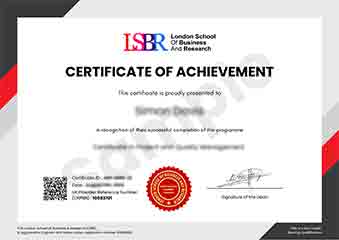
Sample Certificate
Preview the certificate you'll receive upon successful completion of this program.
Get Free Course Info
Enter your details and we'll send you a comprehensive course information pack straight to your inbox.
Employer Sponsored Training
Let your employer invest in your professional development. Request a corporate invoice and get your training funded.
Request Corporate InvoiceWhat People Say About Us
Hear from our students about their experience with the Executive Development Programme in Data Mining for Unsupervised Learning at LSBRX - Executive Education.
Sophie Brown
United Kingdom"The course provided an in-depth look at unsupervised learning techniques, which significantly enhanced my ability to analyze complex data sets without labeled responses. Gained practical skills that will undoubtedly be valuable in my role as a data analyst, particularly in clustering and dimensionality reduction."
James Thompson
United Kingdom"The Executive Development Programme in Data Mining for Unsupervised Learning has significantly enhanced my ability to analyze complex data sets and identify hidden patterns, which has been invaluable in my role as a data analyst. This course has not only deepened my technical skills but also provided me with practical tools that I can directly apply to real-world problems, opening up new opportunities for career advancement."
Jia Li Lim
Singapore"The course structure was well-organized, providing a clear progression from foundational concepts to advanced topics in unsupervised learning, which greatly enhanced my understanding and practical skills in data mining. The comprehensive content and real-world applications have significantly contributed to my professional growth in analyzing complex data sets."