
Executive Development Programme in Designing and Implementing High-Performance Clusters
This program equips executives with the knowledge to design and implement high-performance clusters, enhancing organizational efficiency and competitiveness.
Executive Development Programme in Designing and Implementing High-Performance Clusters
Programme Overview
The Executive Development Programme in Designing and Implementing High-Performance Clusters is tailored for senior-level professionals in the IT, data science, and engineering sectors who are responsible for overseeing or planning the development of high-performance computing (HPC) systems. This program is designed to equip participants with the latest methodologies and best practices for designing and implementing scalable, efficient, and high-performance clusters, essential for advancing their roles in research, industry, and academic settings.
Participants will develop a comprehensive understanding of HPC architecture, including the selection of hardware and software components, system integration, and performance optimization. They will gain expertise in managing and optimizing cluster performance, deploying parallel and distributed computing environments, and ensuring high reliability and scalability. This includes hands-on experience with leading HPC tools and technologies, as well as strategies for cost-effective resource management and energy efficiency.
Upon completion of the program, participants will be well-equipped to lead or contribute to initiatives that enhance their organization’s computing capabilities, drive innovation, and improve research outcomes. The program’s curriculum is aligned with industry standards and trends, ensuring that participants are prepared to address the evolving challenges in the field of high-performance computing. The knowledge and skills gained are particularly valuable for advancing to senior leadership positions or for launching new projects that require a deep understanding of HPC architecture and implementation.
What You'll Learn
The Executive Development Programme in Designing and Implementing High-Performance Clusters (HPC) is tailored for mid-to-senior executives seeking to enhance their strategic leadership in the realm of high-performance computing. This program equips participants with the knowledge and skills to design, implement, and optimize HPC systems, ensuring they stay ahead in a rapidly evolving technological landscape.
Key topics include the latest advancements in HPC architecture, parallel computing techniques, cloud and on-premises deployment strategies, and energy efficiency. Participants will learn to leverage HPC for data-intensive applications, driving innovation and competitive advantage in their industries.
By the end of the program, graduates will be adept at making informed decisions about HPC investments, leading cross-functional teams, and integrating HPC solutions to solve complex business challenges. They will be prepared to manage HPC projects from inception to completion, ensuring alignment with organizational goals.
This program opens the door to a range of career opportunities, including executive leadership roles in IT, data analytics, and research and development. Graduates may also pursue specialized positions such as HPC architect, director of high-performance computing, or chief technology officer. The program's comprehensive curriculum and practical, hands-on approach ensure that participants are not only knowledgeable but also capable of driving impactful change in their organizations.
Programme Highlights
Industry-Aligned Curriculum
Developed with industry leaders for job-ready skills valued by employers worldwide.
Globally Recognised Certificate
Recognised by employers across 180+ countries as a mark of professional excellence.
Flexible Online Learning
Study at your own pace with lifetime access to all course materials and updates.
Instant Access
Start learning immediately — no application process or waiting period required.
Constantly Updated Content
Stay ahead with the latest industry trends, best practices, and emerging insights.
Career Advancement
87% of graduates report measurable career progression within 6 months of completion.
Topics Covered
- 1. Introduction to High-Performance Computing (HPC): Learners will study the basics of HPC and its significance in modern data-intensive applications. They will gain foundational knowledge of HPC architecture and terminology, essential for understanding more complex systems.
- 2. Cluster Architecture and Networking: This module covers the design and implementation of efficient cluster architectures, focusing on networking protocols and topologies. Learners will develop skills in configuring and optimizing network performance for HPC clusters.
- 3. Operating System and Middleware for HPC: Learners will explore the use of Linux distributions and middleware technologies in HPC environments. They will learn to install, configure, and manage these systems for optimal performance.
- 4. Resource Management and Scheduling: This module delves into resource management strategies and scheduling algorithms used in HPC. Learners will gain expertise in configuring and using job schedulers to optimize resource utilization.
- 5. Software and Tools for HPC: Learners will study essential software tools and libraries commonly used in HPC, including compilers, profilers, and performance analysis tools. They will learn to use these tools to analyze and optimize code performance.
- 6. Parallel Programming Models: This module introduces various parallel programming models and languages, such as MPI and OpenMP. Learners will develop skills in writing parallel code and understanding the trade-offs between different models.
- 7. Performance Tuning and Benchmarking: Learners will learn techniques for performance tuning and benchmarking HPC applications. They will gain hands-on experience in measuring and improving the performance of complex HPC workloads.
- 8. Fault Tolerance and Data Management: This module covers strategies for ensuring fault tolerance and efficient data management in HPC clusters. Learners will learn about checkpointing, recovery mechanisms, and data storage solutions.
- 9. High-Performance Data Analytics: Learners will study advanced techniques for data analytics in HPC environments, including big data processing and machine learning applications. They will gain skills in leveraging HPC resources for large-scale data analysis.
- 10. Case Studies and Best Practices: This module presents real-world case studies and best practices from leading HPC organizations. Learners will analyze successful implementations and learn from industry experts to apply best practices in their own projects.
What You Get When You Enroll
Secure checkout • Instant access • Certificate included
Key Facts
Audience: IT managers, system administrators
Prerequisites: Basic IT knowledge, Linux familiarity
Outcomes: Understand HPC architectures, Implement scalable clusters, Optimize performance, Manage resources efficiently
Ready to get started?
Join thousands of professionals who already took the next step. Enroll now and get instant access.
Enroll Now — $199Why This Course
Enhanced Technological Expertise: Participating in the Executive Development Programme in Designing and Implementing High-Performance Clusters equips professionals with advanced knowledge in high-performance computing (HPC) technologies. This includes understanding the latest hardware and software configurations, which are crucial for enhancing the performance and efficiency of computational tasks across various industries.
Career Advancement Opportunities: This programme provides a pathway to higher leadership roles within IT and technology sectors. By mastering the skills needed to design and implement high-performance clusters, professionals can take on more complex projects, leading to greater responsibility and potentially higher compensation. For instance, the ability to manage large-scale data processing tasks can be highly valued in industries such as finance, healthcare, and research.
Interdisciplinary Skill Set: The programme integrates knowledge from computer science, engineering, and management, fostering an interdisciplinary skill set that is increasingly sought after in the modern workforce. Participants learn to manage project timelines, allocate resources effectively, and collaborate with cross-functional teams. These skills are not only beneficial in technical roles but also in leadership positions where strategic planning and resource management are key.
Your Path to Certification
Trusted by Professionals Worldwide
Course Brochure
Download our comprehensive course brochure with all details
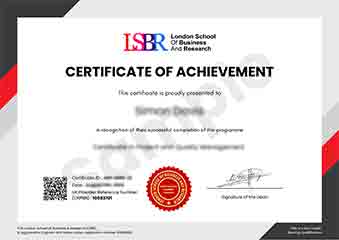
Sample Certificate
Preview the certificate you'll receive upon successful completion of this program.
Get Free Course Info
Enter your details and we'll send you a comprehensive course information pack straight to your inbox.
Employer Sponsored Training
Let your employer invest in your professional development. Request a corporate invoice and get your training funded.
Request Corporate InvoiceWhat People Say About Us
Hear from our students about their experience with the Executive Development Programme in Designing and Implementing High-Performance Clusters at LSBRX - Executive Education.
Sophie Brown
United Kingdom"The course content was incredibly detailed and well-structured, providing a solid foundation in designing and implementing high-performance clusters. I gained valuable practical skills that have already enhanced my ability to optimize cluster performance in real-world scenarios, which is a significant boost for my career in IT."
Jia Li Lim
Singapore"This course has been instrumental in enhancing my understanding of high-performance clusters, making my technical skills more industry-relevant and preparing me for advanced roles in cloud infrastructure. It has directly contributed to my career advancement by equipping me with practical knowledge that I can immediately apply in my projects."
Siti Abdullah
Malaysia"The course structure was meticulously organized, providing a clear pathway from foundational concepts to advanced topics in high-performance clusters, which significantly enhanced my understanding and practical skills in this field. The comprehensive content and real-world applications offered substantial value, equipping me with the knowledge to design and implement more efficient and scalable systems."