
Executive Development Programme in Designing Autonomous Space Probes
This programme equips executives with the strategic insights and technical knowledge to design and lead autonomous space probe initiatives.
Executive Development Programme in Designing Autonomous Space Probes
Programme Overview
The Executive Development Programme in Designing Autonomous Space Probes is tailored for professionals with a background in aerospace engineering, robotics, or related fields who aspire to lead complex projects in autonomous space exploration. This intensive program equips participants with the latest methodologies and technologies in spacecraft automation, including mission planning, spacecraft systems design, artificial intelligence for mission autonomy, and satellite communications. Participants will also gain insights into spacecraft dynamics, navigation, and control systems, as well as the integration of advanced sensors and actuators for mission success.
Key skills and knowledge developed through this program include the ability to design and implement autonomous systems for spacecraft, understand the requirements and constraints of space missions, and apply advanced algorithms for decision-making and navigation. Learners will also enhance their ability to manage interdisciplinary teams, integrate satellite systems, and ensure mission success through rigorous testing and validation. Additionally, participants will be trained in the use of cutting-edge simulation tools and software for mission planning and execution.
The career impact of this program is substantial, as participants will be well-prepared to lead teams in designing and deploying autonomous space probes, contributing to the advancement of space exploration and science. Graduates of this program will be ideally suited for roles in spacecraft design and development, mission planning, and project management in both government agencies and private companies. They will be positioned to drive innovation and lead the next generation of space missions into new frontiers.
What You'll Learn
The Executive Development Programme in Designing Autonomous Space Probes is a cutting-edge initiative designed for mid-to-senior level professionals aiming to advance their careers in space engineering and leadership. This program equips participants with the latest knowledge in autonomous probe design, mission planning, and spacecraft operations. Through a blend of theoretical instruction and hands-on workshops, participants will delve into areas such as spacecraft autonomy, artificial intelligence applications, and advanced materials science, ensuring they are at the forefront of technological innovation.
Upon completion, graduates will be adept at leading interdisciplinary teams, developing mission-critical software, and designing efficient, autonomous space probes. They will be well-prepared to manage complex projects and contribute to groundbreaking missions, both on Earth and beyond. This program opens doors to a wide array of career opportunities, including roles in space exploration agencies, aerospace engineering firms, and private space ventures, where the demand for skilled professionals in autonomous space probe design and operations is rapidly growing.
Programme Highlights
Industry-Aligned Curriculum
Developed with industry leaders for job-ready skills valued by employers worldwide.
Globally Recognised Certificate
Recognised by employers across 180+ countries as a mark of professional excellence.
Flexible Online Learning
Study at your own pace with lifetime access to all course materials and updates.
Instant Access
Start learning immediately — no application process or waiting period required.
Constantly Updated Content
Stay ahead with the latest industry trends, best practices, and emerging insights.
Career Advancement
87% of graduates report measurable career progression within 6 months of completion.
Topics Covered
- 1. Introduction to Space Exploration and Autonomous Probes: Learners will study the history and principles of space exploration and the design of autonomous space probes. They will gain foundational knowledge in spacecraft systems and mission planning.
- 2. Spacecraft Dynamics and Control: This module covers the dynamics and control systems of spacecraft, including attitude determination and control, and orbital mechanics. Learners will develop skills in analyzing and designing control algorithms for spacecraft.
- 3. Robotics and Automation in Space: Learners will explore robotics and automation technologies used in space probes, focusing on robotic arms, rovers, and other autonomous systems. They will gain practical experience in programming and operating robotic systems.
- 4. Sensors and Instrumentation: This module delves into various sensors and instrumentation used in space probes, including cameras, spectrometers, and scientific instruments. Learners will learn to select and integrate sensors for different mission objectives.
- 5. Systems Engineering for Space Probes: Learners will study the systems engineering process specific to space probes, including requirements management, system integration, and testing. They will gain skills in managing complex systems projects.
- 6. Mission Design and Operations: This module focuses on the design and operations of space missions, including trajectory design, communication strategies, and mission planning. Learners will develop skills in planning and executing space missions.
- 7. Advanced Robotics and Artificial Intelligence: Learners will explore advanced robotics and AI technologies, including machine learning and autonomous decision-making systems. They will gain practical experience in integrating AI into space probe operations.
- 8. Space Environment and Data Analysis: This module covers the space environment and its effects on spacecraft, as well as data analysis techniques for space mission data. Learners will learn to analyze and interpret scientific data from space probes.
- 9. Project Management and Leadership in Aerospace: Learners will study project management principles and leadership skills essential for managing space probe development and operations. They will develop skills in leading multidisciplinary teams.
- 10. Future Trends in Autonomous Space Probes: This module explores emerging trends and technologies in autonomous space probes, including new materials, propulsion systems, and mission concepts. Learners will gain insights into future developments in the field.
What You Get When You Enroll
Secure checkout • Instant access • Certificate included
Key Facts
Audience: Engineers, scientists, managers
Prerequisites: Basic engineering knowledge, space exploration interest
Outcomes: Design autonomous probe skills, project management expertise
Ready to get started?
Join thousands of professionals who already took the next step. Enroll now and get instant access.
Enroll Now — $199Why This Course
Enhanced Technical Expertise: Professionals who enroll in the Executive Development Programme in Designing Autonomous Space Probes can expect to deepen their technical knowledge. The curriculum covers critical areas such as spacecraft navigation, autonomous mission planning, and integration of advanced sensors. These skills are invaluable in navigating the complexities of space exploration and developing cutting-edge technology.
Leadership and Strategic Thinking: The program not only focuses on technical skills but also on leadership and strategic thinking. Participants learn how to manage diverse teams, plan long-term projects, and make decisions under uncertainty. These competencies are crucial for leading large-scale space missions and driving innovation in the aerospace industry.
Networking and Global Opportunities: The programme offers extensive networking opportunities with industry leaders, academic experts, and fellow professionals from around the world. These connections can lead to collaborative projects, job offers, and research partnerships. The global exposure also enhances understanding of international space policies and collaboration frameworks, which are increasingly important in the field.
Career Advancement and Innovation: By gaining specialized skills and knowledge, professionals can advance their careers in high-demand roles within space agencies, private space companies, and research institutions. The programme equips individuals with the ability to innovate and develop autonomous space probe designs, contributing to significant advancements in space exploration and technology.
Your Path to Certification
Trusted by Professionals Worldwide
Course Brochure
Download our comprehensive course brochure with all details
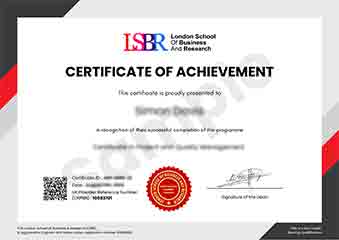
Sample Certificate
Preview the certificate you'll receive upon successful completion of this program.
Get Free Course Info
Enter your details and we'll send you a comprehensive course information pack straight to your inbox.
Employer Sponsored Training
Let your employer invest in your professional development. Request a corporate invoice and get your training funded.
Request Corporate InvoiceWhat People Say About Us
Hear from our students about their experience with the Executive Development Programme in Designing Autonomous Space Probes at LSBRX - Executive Education.
James Thompson
United Kingdom"The course content was incredibly detailed and well-researched, providing a solid foundation in the technical aspects of designing autonomous space probes. I gained valuable practical skills that will undoubtedly enhance my career in aerospace engineering, particularly in understanding the complexities of spacecraft navigation and mission planning."
Jia Li Lim
Singapore"This course has been instrumental in bridging the gap between theoretical knowledge and practical application in space probe design. It has significantly enhanced my ability to tackle complex engineering challenges, making me a more competitive candidate in the aerospace industry."
Sophie Brown
United Kingdom"The course structure was meticulously organized, providing a seamless transition from theoretical concepts to practical applications in designing autonomous space probes, which greatly enhanced my understanding and prepared me for real-world challenges in the field."