
Executive Development Programme in Designing Efficient Fluid Flow Systems
This programme equips executives with strategic insights and technical knowledge to design efficient fluid flow systems, driving innovation and cost savings.
Executive Development Programme in Designing Efficient Fluid Flow Systems
Programme Overview
The Executive Development Programme in Designing Efficient Fluid Flow Systems is tailored for senior engineers, project managers, and executives in the engineering and manufacturing sectors who are responsible for optimizing fluid flow systems. This program aims to equip participants with advanced knowledge and practical skills in analyzing, designing, and managing fluid flow systems to enhance operational efficiency and reduce environmental impacts.
Participants will develop a deep understanding of fluid dynamics, heat transfer, and thermodynamics principles, as well as expertise in state-of-the-art simulation software and optimization tools. They will learn to apply these skills to design innovative fluid flow systems that are both efficient and sustainable. The curriculum also emphasizes leadership and strategic decision-making, enabling participants to lead cross-functional teams and drive organizational change.
The career impact of this program is substantial, as graduates will be well-prepared to lead high-impact projects that improve operational efficiency, reduce costs, and enhance the sustainability of fluid flow systems. Participants will be better equipped to innovate in their roles, make informed decisions, and contribute to the development of sustainable solutions that address contemporary challenges in the industry.
What You'll Learn
The Executive Development Programme in Designing Efficient Fluid Flow Systems is a comprehensive, industry-focused initiative tailored for professionals aiming to enhance their leadership in fluid dynamics. This programme equips participants with advanced knowledge and practical skills in designing efficient and sustainable fluid flow systems, leveraging cutting-edge technologies and methodologies. Key topics include fluid mechanics, thermodynamics, material selection, and digital simulation tools, providing a robust foundation for innovation and problem-solving.
Participants will engage in hands-on projects that simulate real-world challenges, enabling them to apply theoretical knowledge in practical scenarios. Upon completion, graduates will be well-prepared to lead multidisciplinary teams, optimize existing systems, and innovate new solutions in industries such as aerospace, automotive, and renewable energy. The programme also fosters leadership and strategic thinking, enhancing participants' ability to navigate complex organizational environments.
Upon graduation, participants can pursue advanced roles in fluid dynamics research, project management, and technical leadership. They will be equipped to drive organizational change and contribute to the development of sustainable and efficient fluid flow systems, making significant impacts in their respective fields. This programme is ideal for engineers, designers, and managers looking to elevate their expertise and leadership in fluid dynamics and its applications.
Programme Highlights
Industry-Aligned Curriculum
Developed with industry leaders for job-ready skills valued by employers worldwide.
Globally Recognised Certificate
Recognised by employers across 180+ countries as a mark of professional excellence.
Flexible Online Learning
Study at your own pace with lifetime access to all course materials and updates.
Instant Access
Start learning immediately — no application process or waiting period required.
Constantly Updated Content
Stay ahead with the latest industry trends, best practices, and emerging insights.
Career Advancement
87% of graduates report measurable career progression within 6 months of completion.
Topics Covered
- 1. Fundamentals of Fluid Dynamics: Learners will study the basic principles of fluid dynamics, including fluid properties, conservation laws, and flow types. They will gain skills in analyzing and solving simple fluid flow problems using these principles.
- 2. Fluid Flow Measurement Techniques: This module covers various methods for measuring fluid flow rates and pressures. Learners will learn to select and use appropriate instruments and techniques for accurate measurement in different scenarios.
- 3. Computational Fluid Dynamics (CFD) Basics: Introducing the fundamentals of CFD, learners will study how to model and simulate fluid flow using computational tools. They will gain practical skills in setting up and running CFD simulations.
- 4. Heat Transfer Fundamentals: Focusing on the principles of heat transfer, this module will help learners understand conduction, convection, and radiation. They will practice solving heat transfer problems relevant to fluid flow systems.
- 5. Turbulence Modeling and Analysis: Advanced learners will delve into turbulence modeling techniques and their applications in fluid flow systems. They will gain skills in analyzing and predicting turbulent flows using both experimental and modeling approaches.
- 6. Design of Flow Systems: This module covers the design process for efficient fluid flow systems, including system analysis, component selection, and layout optimization. Learners will apply their knowledge to design and optimize real-world fluid systems.
- 7. Energy Efficiency in Fluid Systems: Focusing on energy efficiency, learners will study methods to minimize energy consumption in fluid systems. They will gain skills in evaluating and implementing energy-saving measures.
- 8. Fluid Machinery and Components: This module explores various fluid machinery and components used in efficient fluid flow systems. Learners will learn to analyze and select appropriate machinery based on system requirements.
- 9. Advanced CFD Techniques: Building on CFD basics, learners will explore advanced techniques and tools for more complex fluid flow simulations. They will gain practical skills in handling and interpreting complex CFD results.
- 10. Case Studies and Project Work: In this final module, learners will work on real-world case studies and projects, applying all the knowledge and skills acquired in previous modules. They will learn to integrate various aspects of fluid flow system design and optimization in practical scenarios.
What You Get When You Enroll
Secure checkout • Instant access • Certificate included
Key Facts
Audience: Engineering professionals, managers
Prerequisites: Basic fluid dynamics knowledge
Outcomes: Enhanced system design skills, improved efficiency
Ready to get started?
Join thousands of professionals who already took the next step. Enroll now and get instant access.
Enroll Now — $199Why This Course
Enhanced Technical Proficiency: Professionals who complete an Executive Development Programme in Designing Efficient Fluid Flow Systems can gain advanced knowledge in fluid dynamics, material science, and system optimization. This deepens their technical skills, enabling them to design more efficient and sustainable systems, which is increasingly important in industries such as aerospace, chemical processing, and renewable energy.
Strategic Leadership Skills: The program equips participants with strategic thinking and leadership skills, crucial for managing large-scale projects and overseeing teams. By understanding the broader context of fluid flow systems, leaders can make informed decisions that align with business objectives, enhancing project outcomes and organizational performance.
Innovative Problem-Solving: Through hands-on training and case studies, professionals learn to apply creative problem-solving techniques to complex fluid flow challenges. This not only helps in addressing existing issues but also fosters innovation, crucial for staying ahead in competitive industries. For example, knowledge gained can be used to develop more efficient cooling systems in data centers, reducing energy consumption and costs.
By participating in this program, professionals can significantly boost their career prospects, gain a competitive edge in their field, and contribute more effectively to their organizations.
Your Path to Certification
Trusted by Professionals Worldwide
Course Brochure
Download our comprehensive course brochure with all details
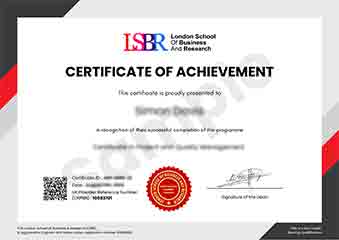
Sample Certificate
Preview the certificate you'll receive upon successful completion of this program.
Get Free Course Info
Enter your details and we'll send you a comprehensive course information pack straight to your inbox.
Employer Sponsored Training
Let your employer invest in your professional development. Request a corporate invoice and get your training funded.
Request Corporate InvoiceWhat People Say About Us
Hear from our students about their experience with the Executive Development Programme in Designing Efficient Fluid Flow Systems at LSBRX - Executive Education.
Charlotte Williams
United Kingdom"The course content is incredibly detailed and well-structured, providing a solid foundation in fluid dynamics that has significantly enhanced my ability to design efficient systems. I've gained practical skills that are directly applicable to real-world challenges, making me more confident in my engineering projects."
James Thompson
United Kingdom"The Executive Development Programme in Designing Efficient Fluid Flow Systems has significantly enhanced my ability to solve complex fluid dynamics problems, making my solutions more efficient and cost-effective. This has not only deepened my technical expertise but also opened up new opportunities for career advancement in my field."
Fatimah Ibrahim
Malaysia"The course structure was meticulously organized, providing a clear path from theoretical foundations to practical applications in fluid flow systems, which significantly enhanced my understanding and prepared me for real-world challenges."