
Executive Development Programme in Designing Intuitive VR Interfaces
This programme equips executives with the skills to design intuitive VR interfaces, enhancing user experience and driving innovation.
Executive Development Programme in Designing Intuitive VR Interfaces
Programme Overview
The Executive Development Programme in Designing Intuitive VR Interfaces is designed for experienced professionals in the fields of design, technology, and media. This program equips participants with the latest methodologies and tools for creating user-centric virtual reality (VR) interfaces. Ideal for those looking to enhance their skills in designing immersive and intuitive VR experiences, the program is also tailored for those aiming to launch new products or services that leverage VR technology.
Participants will develop key skills in user experience (UX) design principles, human-computer interaction (HCI), and user interface (UI) design specific to VR environments. They will learn to create seamless, intuitive interactions, understand the psychological and physiological impacts of VR on users, and master the use of advanced VR development tools and frameworks. The curriculum includes both theoretical and practical components, ensuring that learners can apply their knowledge to real-world projects.
The programme has a significant impact on participants' career trajectories, enabling them to lead innovation in VR design and development. Graduates will be well-positioned to innovate in sectors ranging from gaming and entertainment to healthcare and education, where VR interfaces can significantly enhance user engagement and experience. Whether advancing in their current roles or transitioning to new careers, program alumni will be equipped to drive the future of VR technology and design.
What You'll Learn
The Executive Development Programme in Designing Intuitive VR Interfaces is a transformative initiative designed to equip professionals with the skills needed to design user-friendly virtual reality (VR) interfaces that enhance user experience. This program is ideal for executives and design professionals aiming to stay ahead in the rapidly evolving tech landscape. By delving into the intricacies of VR interface design, participants will learn to create immersive, accessible, and intuitive experiences that meet the diverse needs of users.
Key topics covered include the fundamentals of VR technology, user-centered design principles, interaction design, and accessibility in VR. Participants will also explore advanced techniques such as spatial sound design, haptic feedback, and motion control, ensuring they are well-versed in the latest developments.
Upon completion, graduates will be able to apply their newfound skills to design and implement innovative VR interfaces for various industries, including gaming, education, healthcare, and retail. They will be adept at leveraging data and user feedback to refine their designs, ensuring they meet the highest standards of user satisfaction.
The program opens doors to a???????,????VR????????????????????????????????????????????????????????,????????????????????,??????VR??????????
Programme Highlights
Industry-Aligned Curriculum
Developed with industry leaders for job-ready skills valued by employers worldwide.
Globally Recognised Certificate
Recognised by employers across 180+ countries as a mark of professional excellence.
Flexible Online Learning
Study at your own pace with lifetime access to all course materials and updates.
Instant Access
Start learning immediately — no application process or waiting period required.
Constantly Updated Content
Stay ahead with the latest industry trends, best practices, and emerging insights.
Career Advancement
87% of graduates report measurable career progression within 6 months of completion.
Topics Covered
- 1. Introduction to VR Design: Learners will explore the basics of virtual reality (VR) technology and design principles. They will gain foundational knowledge in VR concepts and design methodologies, preparing them for more advanced topics.
- 2. User Experience (UX) Principles for VR: This module focuses on applying UX principles in the VR context. Learners will understand how to design intuitive and user-friendly VR interfaces, ensuring that interactions are both effective and enjoyable.
- 3. 3D Modeling and Texturing Basics: Learners will learn the fundamentals of creating 3D models and applying textures in VR environments. This includes practical skills in software tools like Blender or Maya, essential for crafting realistic and engaging VR interfaces.
- 4. Interaction Design in VR: This module covers designing interactive elements for VR interfaces. Learners will study how to create natural and intuitive interactions that enhance user engagement and satisfaction.
- 5. Spatial Design and Navigation: Learners will delve into designing spatially aware VR interfaces, focusing on navigation and spatial awareness. They will learn how to create seamless user experiences that feel natural within a virtual environment.
- 6. Accessibility in VR Design: This module explores designing VR interfaces that are accessible to all users, including those with disabilities. Learners will understand the importance of inclusive design and the techniques to achieve it.
- 7. Advanced VR Interaction Techniques: Learners will explore cutting-edge interaction techniques and technologies, such as hand tracking and gaze-based interactions. This module will enhance their ability to create innovative and engaging VR interfaces.
- 8. Prototyping and User Testing in VR: This module focuses on creating prototypes of VR interfaces and conducting user testing. Learners will gain hands-on experience in iterative design processes and continuous improvement.
- 9. Professional VR Interface Development: Learners will work on a comprehensive project developing a professional VR interface. This module covers all aspects of the design process, from concept to implementation.
- 10. Emerging Trends and Future Directions: The final module will cover current trends and future directions in VR interface design. Learners will gain insights into the evolving landscape of VR technology and design, preparing them for future challenges and opportunities.
What You Get When You Enroll
Secure checkout • Instant access • Certificate included
Key Facts
Audience: Designers, developers, product managers
Prerequisites: Basic design and VR knowledge
Outcomes: Master intuitive VR interface design, enhance user experience
Ready to get started?
Join thousands of professionals who already took the next step. Enroll now and get instant access.
Enroll Now — $199Why This Course
Enhanced Competitive Edge: Professionals who complete an Executive Development Programme in Designing Intuitive VR Interfaces gain a unique skill set that is increasingly in demand. This program equips participants with knowledge in designing user-friendly and immersive VR environments, which can significantly enhance their professional profiles and make them more competitive in the job market.
Skill Diversification: The program offers a comprehensive curriculum that covers aspects such as human-computer interaction, D modeling, and VR usability testing. These skills are interdisciplinary, allowing professionals to expand their expertise beyond their current field. For instance, a marketing professional might use VR interface design skills to create engaging customer experiences, while a software engineer can apply them to improve user interaction in complex applications.
Career Advancement Opportunities: By mastering the art of designing intuitive VR interfaces, professionals can open up advanced career paths in tech companies, gaming industries, and emerging VR startups. The skills learned can lead to roles such as VR interface designer, UX/UI specialist, or VR project manager. The program also provides networking opportunities and access to industry leaders, potentially leading to mentorship and career advancement.
Innovative Problem Solving: The programme fosters an environment where professionals learn to think creatively and solve complex problems through innovation. This mindset is crucial in the rapidly evolving VR industry, where continuous learning and adaptation are key. Participants can apply these problem-solving techniques to various aspects of their work, leading to more effective and innovative solutions.
Your Path to Certification
Trusted by Professionals Worldwide
Course Brochure
Download our comprehensive course brochure with all details
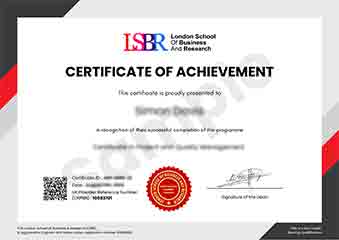
Sample Certificate
Preview the certificate you'll receive upon successful completion of this program.
Get Free Course Info
Enter your details and we'll send you a comprehensive course information pack straight to your inbox.
Employer Sponsored Training
Let your employer invest in your professional development. Request a corporate invoice and get your training funded.
Request Corporate InvoiceWhat People Say About Us
Hear from our students about their experience with the Executive Development Programme in Designing Intuitive VR Interfaces at LSBRX - Executive Education.
James Thompson
United Kingdom"The course provided high-quality content that deeply delved into the nuances of designing intuitive VR interfaces, equipping me with practical skills that have significantly enhanced my ability to create user-friendly virtual environments. I've already seen career benefits, as my recent project at work received positive feedback for its intuitive design, thanks to the knowledge gained from this program."
Wei Ming Tan
Singapore"This course has been incredibly valuable in bridging the gap between theoretical knowledge and practical application in VR interface design. It has not only enhanced my technical skills but also provided me with a competitive edge in the job market, opening up new opportunities for career advancement."
Ryan MacLeod
Canada"The course structure was meticulously organized, providing a clear path from foundational concepts to advanced topics in VR interface design, which greatly enhanced my understanding and practical skills. The content was highly comprehensive, with real-world applications that directly contributed to my professional growth in the field."