
Executive Development Programme in Developing Consistent Grading Practices
This programme equips executives with tools and strategies to establish and maintain consistent grading practices across an organization, enhancing fairness and accuracy.
Executive Development Programme in Developing Consistent Grading Practices
Programme Overview
The Executive Development Programme in Developing Consistent Grading Practices is designed for educational leaders, including principals, department heads, and instructional coaches, who are committed to enhancing the quality and fairness of their grading systems. This program equips participants with the skills to implement robust, consistent, and transparent grading practices that support student learning and teacher effectiveness.
Key skills and knowledge developed through this program include the ability to design clear and aligned rubrics, understand the impact of grading practices on student motivation and academic outcomes, and effectively communicate grading policies and practices to all stakeholders. Participants will also learn to analyze and address common grading issues, implement data-driven decision-making, and foster a collaborative environment for continuous improvement in grading.
The career impact of this program is significant, as participants will be better equipped to lead their teams in creating a more equitable and effective grading system. This not only enhances student success but also boosts teacher morale and professional development. Graduates of this program will be well-prepared to advocate for best practices in grading and to contribute to the development of policies that support a more inclusive and supportive educational environment.
What You'll Learn
The Executive Development Programme in Developing Consistent Grading Practices is a transformative initiative designed for educators and administrators committed to enhancing academic standards and ensuring fairness in assessment. This program equips participants with the tools and strategies to establish and maintain consistent grading practices across diverse learning environments. Through a blend of interactive workshops, case studies, and real-world application, participants explore the psychological and pedagogical implications of grading practices, learn to develop clear rubrics, and understand the importance of transparent communication with students and parents.
Upon completion, graduates will be able to implement standardized grading policies that promote equity, foster a positive learning environment, and support students' academic growth. The skills gained are directly applicable in educational settings, from classrooms to administrative roles. Graduates are well-prepared to lead initiatives that improve academic integrity and student success, paving the way for rewarding careers in education leadership, curriculum development, and educational policy.
The program is ideal for educators seeking to refine their assessment techniques, administrators aiming to enhance institutional standards, and professionals in related fields who wish to contribute to a more equitable educational landscape. By participating, individuals can significantly impact the quality of education and become catalysts for systemic change in their communities.
Programme Highlights
Industry-Aligned Curriculum
Developed with industry leaders for job-ready skills valued by employers worldwide.
Globally Recognised Certificate
Recognised by employers across 180+ countries as a mark of professional excellence.
Flexible Online Learning
Study at your own pace with lifetime access to all course materials and updates.
Instant Access
Start learning immediately — no application process or waiting period required.
Constantly Updated Content
Stay ahead with the latest industry trends, best practices, and emerging insights.
Career Advancement
87% of graduates report measurable career progression within 6 months of completion.
Topics Covered
- 1. Introduction to Grading Practices: Learners will understand the importance of consistent grading and explore foundational concepts such as rubrics, standards, and fairness. They will gain the ability to create basic grading criteria and assess their alignment with course objectives.
- 2. Understanding Grading Theories and Models: This module delves into various grading theories and models, including criterion-referenced and norm-referenced grading. Learners will analyze how different theories influence grading practices and develop a deeper understanding of the implications for fairness and equity.
- 3. Developing and Implementing Rubrics: Learners will create detailed rubrics for various assessment types, focusing on clarity, specificity, and objectivity. They will practice using rubrics to grade assignments and receive feedback on how to enhance rubric effectiveness.
- 4. Standard Setting and Calibration: This module covers the process of setting standards and calibrating scores across different evaluators. Learners will engage in activities to ensure consistency and reliability in grading, and they will apply statistical methods to improve grading accuracy.
- 5. Addressing Bias in Grading: This module focuses on identifying and mitigating biases in grading practices. Learners will explore unconscious biases and develop strategies to ensure fairness and equity in the grading process.
- 6. Technology in Grading: Learners will explore how technology can support consistent grading, including the use of digital tools for assessment and feedback. They will practice implementing technology in their grading processes to enhance efficiency and accuracy.
- 7. Legal and Ethical Considerations in Grading: This module covers legal and ethical aspects of grading, including privacy, confidentiality, and the impact of grading practices on students’ rights and well-being. Learners will develop a legal and ethical grading policy for their institution.
- 8. Continuous Improvement in Grading: Learners will learn how to evaluate their grading practices continuously and make data-driven decisions to improve their effectiveness. They will practice using feedback and assessment data to refine their grading processes.
- 9. Case Studies in Grading: This module includes real-world case studies of grading practices in various educational settings. Learners will analyze these cases to gain insights into best practices and challenges in maintaining consistent grading.
- 10. Leadership in Grading Practices: This final module focuses on leadership roles in promoting consistent grading practices across an organization. Learners will develop strategies to influence and support their colleagues in adopting best practices in grading.
What You Get When You Enroll
Secure checkout • Instant access • Certificate included
Key Facts
Audience: Educators, school administrators
Prerequisites: Basic teaching experience, grading policies knowledge
Outcomes: Consistent, fair grading, enhanced student assessment
Ready to get started?
Join thousands of professionals who already took the next step. Enroll now and get instant access.
Enroll Now — $199Why This Course
Enhance Consistency and Reliability: Participating in an Executive Development Programme focused on developing consistent grading practices can significantly improve an individual's ability to maintain uniformity in evaluations. This is crucial in educational institutions or human resource departments, where consistent standards ensure fairness and objectivity in performance reviews and promotions.
Equip with Advanced Assessment Techniques: The programme equips professionals with advanced assessment techniques and tools, enabling them to design and implement fair and effective grading systems. This not only enhances the quality of evaluations but also boosts employee or student confidence, as they receive clear, constructive feedback.
Foster Leadership and Management Skills: Through this programme, professionals can develop essential leadership and management skills, including effective communication and conflict resolution. These skills are vital for overseeing teams and ensuring that grading practices are adhered to consistently across different departments or faculties.
Promote Objectivity and Transparency: By mastering consistent grading practices, professionals can promote a culture of objectivity and transparency within their organizations. This leads to more trust among employees or students, as they understand the criteria and processes involved in evaluations, ultimately fostering a more collaborative and productive environment.
Your Path to Certification
Trusted by Professionals Worldwide
Course Brochure
Download our comprehensive course brochure with all details
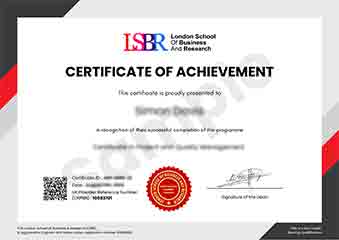
Sample Certificate
Preview the certificate you'll receive upon successful completion of this program.
Get Free Course Info
Enter your details and we'll send you a comprehensive course information pack straight to your inbox.
Employer Sponsored Training
Let your employer invest in your professional development. Request a corporate invoice and get your training funded.
Request Corporate InvoiceWhat People Say About Us
Hear from our students about their experience with the Executive Development Programme in Developing Consistent Grading Practices at LSBRX - Executive Education.
Charlotte Williams
United Kingdom"The course provided comprehensive insights into creating fair and consistent grading practices, equipping me with practical tools to implement in my role. It significantly enhanced my ability to evaluate student performance effectively, which I believe will greatly benefit my career advancement."
Madison Davis
United States"The Executive Development Programme in Developing Consistent Grading Practices has been incredibly valuable, equipping me with the tools to implement fair and consistent grading methods, which has significantly enhanced my credibility as a manager and opened up new opportunities for career advancement in my organization."
Ashley Rodriguez
United States"The course structure was well-organized, providing a clear path for developing consistent grading practices that I can directly apply in my professional setting. The comprehensive content covered various aspects of grading, enhancing my understanding and ability to create fair and effective assessment methods."