
Executive Development Programme in Developing Evidence-Based Care Protocols
This programme develops executives' skills in creating and implementing evidence-based care protocols to enhance patient outcomes and healthcare efficiency.
Executive Development Programme in Developing Evidence-Based Care Protocols
Programme Overview
The Executive Development Programme in Developing Evidence-Based Care Protocols is designed for healthcare executives, clinical leaders, and advanced practice nurses committed to advancing patient care through the integration of the latest research and clinical evidence. This program combines interdisciplinary training with practical application, equipping participants with the skills and knowledge necessary to lead the development and implementation of evidence-based care protocols that enhance patient outcomes and optimize clinical operations.
Participants will gain expertise in conducting systematic reviews, understanding the principles of evidence-based practice, and applying robust methodologies to translate research findings into actionable care protocols. They will also learn to manage change effectively, foster interprofessional collaboration, and leverage technology to support evidence-based decision-making. Through case studies, interactive workshops, and peer-to-peer learning, learners will develop a comprehensive toolkit for leading high-impact healthcare initiatives.
This program significantly enhances career prospects by positioning participants as leaders in evidence-based practice and innovation. Graduates are well-prepared to take on leadership roles that require a deep understanding of how to integrate research into practice, improve patient care, and drive organizational change. The skills gained are crucial for advancing one’s career in healthcare administration, clinical leadership, and research, contributing to the broader goal of improving patient care and outcomes in healthcare settings.
What You'll Learn
The Executive Development Programme in Developing Evidence-Based Care Protocols is a transformative initiative designed to equip healthcare leaders with the skills and knowledge necessary to enhance patient care through evidence-based practices. This program is invaluable for professionals seeking to bridge the gap between clinical research and real-world healthcare delivery, ensuring that treatments and protocols are grounded in robust evidence.
Key topics include the latest in clinical research methodologies, the interpretation and application of evidence in practice, and the integration of technology in healthcare. Participants will also delve into patient-centered care, ethics in research and practice, and the development of effective communication strategies to facilitate collaboration among healthcare teams.
Graduates of this program are well-prepared to lead the development and implementation of evidence-based care protocols, driving improvements in patient outcomes and operational efficiency. They will be adept at leveraging research findings to inform clinical decision-making, and will be equipped to navigate the complex landscape of healthcare policy and regulation.
This program opens doors to a wide range of career opportunities, including executive roles in healthcare organizations, leadership positions in research institutions, and advisory roles for policy-making bodies. Graduates can also pursue specialized roles such as lead clinical researcher, program director, or quality improvement officer, contributing to the continuous advancement of healthcare services.
Programme Highlights
Industry-Aligned Curriculum
Developed with industry leaders for job-ready skills valued by employers worldwide.
Globally Recognised Certificate
Recognised by employers across 180+ countries as a mark of professional excellence.
Flexible Online Learning
Study at your own pace with lifetime access to all course materials and updates.
Instant Access
Start learning immediately — no application process or waiting period required.
Constantly Updated Content
Stay ahead with the latest industry trends, best practices, and emerging insights.
Career Advancement
87% of graduates report measurable career progression within 6 months of completion.
Topics Covered
- 1. Foundations of Evidence-Based Practice: Learners will study the principles of evidence-based practice, including the importance of systematic reviews, meta-analyses, and critical appraisal skills. They will gain the ability to critically evaluate research studies and apply best evidence to clinical practice.
- 2. Developing Care Protocols: This module focuses on the process of developing evidence-based care protocols. Learners will understand how to translate research findings into practical care guidelines, ensuring patient safety and effective care delivery.
- 3. Advanced Statistical Analysis: Learners will delve into advanced statistical methods used in healthcare research, including regression analysis, survival analysis, and multivariate analysis. They will learn to interpret complex statistical outputs and integrate these findings into their work.
- 4. Quality Improvement in Healthcare: This module covers methodologies for implementing quality improvement initiatives based on evidence. Learners will gain skills in process mapping, root cause analysis, and the use of Lean and Six Sigma tools to enhance care protocols.
- 5. Patient Engagement and Shared Decision-Making: Learners will explore strategies for involving patients in their care decisions and the use of shared decision-making tools. They will learn to communicate effectively with patients and their families, ensuring that care protocols are aligned with patient preferences and values.
- 6. Interprofessional Collaboration: This module focuses on fostering collaboration among healthcare professionals from different disciplines. Learners will understand the importance of interdisciplinary teamwork and develop skills in effective communication and collaboration.
- 7. Implementing Change in Healthcare Systems: Learners will study strategies for implementing evidence-based changes in healthcare systems, including change management theories and techniques for overcoming resistance to change. They will learn to design and lead successful change initiatives.
- 8. Legal and Ethical Considerations in Evidence-Based Care: This module covers the legal and ethical implications of evidence-based care, including issues related to patient confidentiality, informed consent, and research ethics. Learners will gain a deep understanding of the ethical principles guiding evidence-based practice.
- 9. Health Economics and Resource Allocation: Learners will explore the principles of health economics and resource allocation in healthcare settings. They will learn to assess the cost-effectiveness of different care protocols and make informed decisions about resource allocation.
- 10. Leadership in Evidence-Based Practice: This module focuses on developing leadership skills for evidence-based practice. Learners will learn to lead change, inspire teams, and influence decision-making processes within healthcare organizations. They will gain practical skills in strategic planning and leadership.
What You Get When You Enroll
Secure checkout • Instant access • Certificate included
Key Facts
Audience: Healthcare professionals, managers
Prerequisites: Basic medical knowledge, + years experience
Outcomes: Evidence-based protocols, improved care quality
Ready to get started?
Join thousands of professionals who already took the next step. Enroll now and get instant access.
Enroll Now — $199Why This Course
Enhance Evidence-Based Practice: Participants in the Executive Development Programme in Developing Evidence-Based Care Protocols learn how to apply the latest research and clinical evidence to improve patient outcomes. This not only elevates their professional practice but also contributes to a more effective healthcare system.
Leadership in Quality Improvement: The programme equips professionals with the skills to lead quality improvement initiatives, fostering a culture of continuous learning and innovation. This is crucial for advancing healthcare standards and driving positive change in patient care.
Interdisciplinary Collaboration: By fostering collaboration among healthcare professionals from various backgrounds, the programme enhances team dynamics and communication. This interdisciplinary approach is vital for developing comprehensive and effective care protocols that consider multiple perspectives and expertise.
Advanced Clinical Knowledge: Through this programme, professionals gain in-depth knowledge in evidence-based care, which they can apply to their specific fields. This deeper understanding can lead to more personalized and effective treatment plans, ultimately benefiting patient care and outcomes.
Your Path to Certification
Trusted by Professionals Worldwide
Course Brochure
Download our comprehensive course brochure with all details
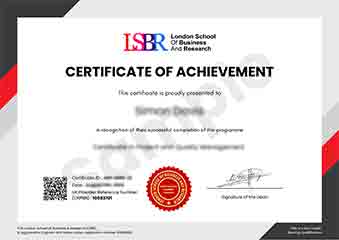
Sample Certificate
Preview the certificate you'll receive upon successful completion of this program.
Get Free Course Info
Enter your details and we'll send you a comprehensive course information pack straight to your inbox.
Employer Sponsored Training
Let your employer invest in your professional development. Request a corporate invoice and get your training funded.
Request Corporate InvoiceWhat People Say About Us
Hear from our students about their experience with the Executive Development Programme in Developing Evidence-Based Care Protocols at LSBRX - Executive Education.
Charlotte Williams
United Kingdom"The course provided high-quality, evidence-based materials that significantly enhanced my ability to develop effective care protocols. I gained practical skills that are directly applicable in my role, making me more confident in implementing evidence-based practices in my workplace."
Wei Ming Tan
Singapore"This course has been instrumental in bridging the gap between theoretical knowledge and practical application in healthcare. It has equipped me with the skills to develop evidence-based care protocols, making my contributions to the industry more impactful and aligned with current best practices."
Isabella Dubois
Canada"The course is meticulously structured, offering a clear pathway to understanding and developing evidence-based care protocols, which has significantly enhanced my ability to apply theoretical knowledge in practical healthcare settings."