
Executive Development Programme in Drone Collision Avoidance and Navigation
This programme equips executives with advanced knowledge in drone collision avoidance and navigation, enhancing safety and operational efficiency.
Executive Development Programme in Drone Collision Avoidance and Navigation
Programme Overview
The Executive Development Programme in Drone Collision Avoidance and Navigation is designed for mid-to-senior level professionals in the aviation, aerospace, and technology sectors who seek to enhance their expertise in drone technology, particularly in the areas of collision avoidance and advanced navigation. The programme offers a comprehensive curriculum that includes cutting-edge research, practical applications, and industry best practices, ensuring participants are well-equipped to lead and innovate in this rapidly evolving field.
Participants will develop a deep understanding of drone collision avoidance systems, including sensor technologies, algorithms, and computational methods for real-time decision-making. They will also gain proficiency in advanced navigation techniques such as GPS integration, inertial navigation systems, and autonomous flight planning. Through hands-on training and case studies, learners will apply their knowledge to complex scenarios, ensuring they can implement effective solutions in real-world environments.
This programme will significantly enhance participants' career prospects by positioning them as leaders in drone technology innovation. Upon completion, learners will be better prepared to tackle the challenges of drone integration into the national airspace, enhance operational efficiency, and contribute to the development of safer and more sophisticated drone systems. The programme equips professionals with the necessary skills to lead teams, develop strategic initiatives, and drive technological advancements in drone collision avoidance and navigation.
What You'll Learn
The Executive Development Programme in Drone Collision Avoidance and Navigation is a comprehensive, cutting-edge initiative designed to equip industry leaders and professionals with the latest knowledge and skills in drone safety and operation. This programme is particularly valuable for those working in industries such as logistics, agriculture, aerial photography, and emergency services, where drones play a critical role.
Key topics include advanced collision avoidance systems, drone navigation techniques, regulatory compliance, and artificial intelligence applications in drone technology. Participants will engage in hands-on workshops, simulations, and real-world case studies, ensuring they are well-prepared to address complex challenges in drone operations.
Upon completion, graduates will be able to implement advanced collision avoidance protocols, optimize drone routes for efficiency and safety, and ensure compliance with local and international regulations. This programme not only enhances technical skills but also fosters a deeper understanding of the ethical and legal considerations in drone usage.
Career opportunities are vast, including roles such as drone safety engineers, navigation specialists, and drone operation managers. Graduates will be well-equipped to lead innovation in drone technology, ensuring safer and more efficient operations across various industries.
Programme Highlights
Industry-Aligned Curriculum
Developed with industry leaders for job-ready skills valued by employers worldwide.
Globally Recognised Certificate
Recognised by employers across 180+ countries as a mark of professional excellence.
Flexible Online Learning
Study at your own pace with lifetime access to all course materials and updates.
Instant Access
Start learning immediately — no application process or waiting period required.
Constantly Updated Content
Stay ahead with the latest industry trends, best practices, and emerging insights.
Career Advancement
87% of graduates report measurable career progression within 6 months of completion.
Topics Covered
- 1. Introduction to Drone Technology and Collision Avoidance: Learners will study the basics of drone technology, including components and systems, and explore key concepts in drone collision avoidance. They will gain foundational knowledge to understand how drones navigate and avoid collisions.
- 2. Principles of Aerial Navigation: This module covers the principles of aerial navigation, including navigation systems, GPS, and inertial navigation. Learners will gain understanding of how drones determine their position and navigate through space.
- 3. Advanced Sensor Technologies for Drones: Learners will delve into advanced sensor technologies used in drones, such as LIDAR, sonar, and radar, and their applications in collision avoidance. Practical skills in configuring and using these sensors will be developed.
- 4. Machine Learning for Drone Decision-Making: This module introduces machine learning concepts and their application in drone decision-making processes, focusing on collision avoidance. Learners will develop skills in designing and implementing machine learning models for drones.
- 5. Simulation and Modeling in Drone Navigation: Using specialized software, learners will create and analyze simulations of drone flight paths and collision scenarios. They will learn to develop models for predicting drone behavior and optimizing navigation routes.
- 6. Real-World Case Studies in Drone Navigation: Case studies of real-world applications of drone navigation and collision avoidance will be examined. Learners will analyze these cases to understand best practices and challenges in implementing drone navigation systems.
- 7. Advanced Programming for Drone Control: This module focuses on advanced programming techniques for drone control, including real-time control systems and autonomous flight. Learners will gain skills in writing efficient and reliable drone control software.
- 8. Legal and Ethical Considerations in Drone Operations: Learners will explore the legal and ethical frameworks governing drone operations, including regulations, privacy concerns, and safety standards. They will gain understanding of the responsibilities and best practices in operating drones.
- 9. Integration of Drone Systems in Complex Environments: This module covers the challenges of integrating drone systems into complex environments, such as urban areas or natural landscapes, and the strategies for overcoming these challenges. Practical skills in system integration will be developed.
- 10. Future Trends in Drone Technology and Navigation: Learners will examine emerging trends and future developments in drone technology and navigation, including new sensor technologies, autonomous systems, and advancements in AI. They will gain insight into the direction of the field and potential career opportunities.
What You Get When You Enroll
Secure checkout • Instant access • Certificate included
Key Facts
Audience: Drone operators, aerospace engineers
Prerequisites: Basic flying knowledge, technical background
Outcomes: Enhanced collision avoidance skills, improved navigation proficiency
Ready to get started?
Join thousands of professionals who already took the next step. Enroll now and get instant access.
Enroll Now — $199Why This Course
Enhanced Career Opportunities: The Executive Development Programme in Drone Collision Avoidance and Navigation offers professionals a unique advantage by equipping them with cutting-edge skills in drone technology. This specialization is in high demand as the drone industry rapidly expands into various sectors, including logistics, agriculture, and surveillance. Graduates can secure roles as drone system operators, navigators, or collision avoidance specialists, leading to higher earning potential and career advancement.
Innovative Skill Set: The programme focuses on developing expertise in drone collision avoidance systems, which are critical for ensuring safe and efficient drone operations. By mastering these systems, professionals can design, implement, and maintain drone navigation protocols that prevent mid-air collisions. These skills are not only valuable in the current market but also prepare individuals for future innovations in drone technology.
Industry Relevance and Networking: Participating in this programme provides professionals with direct access to industry-leading experts and cutting-edge research. The curriculum is designed in collaboration with leading drone manufacturers and operators, ensuring that the content is up-to-date and relevant. Networking with peers and mentors can lead to collaboration opportunities and job referrals, enhancing career prospects significantly.
Your Path to Certification
Trusted by Professionals Worldwide
Course Brochure
Download our comprehensive course brochure with all details
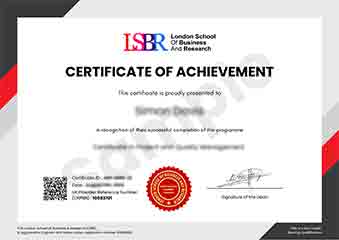
Sample Certificate
Preview the certificate you'll receive upon successful completion of this program.
Get Free Course Info
Enter your details and we'll send you a comprehensive course information pack straight to your inbox.
Employer Sponsored Training
Let your employer invest in your professional development. Request a corporate invoice and get your training funded.
Request Corporate InvoiceWhat People Say About Us
Hear from our students about their experience with the Executive Development Programme in Drone Collision Avoidance and Navigation at LSBRX - Executive Education.
James Thompson
United Kingdom"The course content was exceptionally detailed and well-structured, providing a comprehensive understanding of drone collision avoidance and navigation techniques. I gained significant practical skills that are directly applicable to real-world scenarios, enhancing my ability to handle complex navigation challenges effectively."
Siti Abdullah
Malaysia"This course has been incredibly relevant to my career in aviation technology. It not only deepened my understanding of drone navigation but also equipped me with practical skills to enhance collision avoidance, making me a more valuable asset in my organization."
Hans Weber
Germany"The course structure was well-organized, providing a clear path from basic concepts to advanced strategies in drone navigation and collision avoidance, which significantly enhanced my understanding and practical skills for real-world applications."