
Executive Development Programme in Ecological Weed Management Systems
This programme equips executives with strategic insights and practical skills in sustainable weed management, enhancing ecological balance and business efficiency.
Executive Development Programme in Ecological Weed Management Systems
Programme Overview
The Executive Development Programme in Ecological Weed Management Systems is designed for senior professionals, managers, and executives in the agricultural, horticultural, and environmental sectors who are committed to sustainable practices and the advancement of ecological weed management. This program aims to provide participants with a comprehensive understanding of ecological principles, integrated pest management (IPM) strategies, and innovative technologies that support sustainable weed control. Through a combination of lectures, workshops, case studies, and practical sessions, participants will delve into topics such as biological control, cultural practices, and the use of non-chemical herbicides.
Participants will develop key skills in designing and implementing ecological weed management strategies, evaluating the environmental impact of different weed control methods, and fostering collaborative relationships with stakeholders. They will also gain insights into regulatory frameworks and market trends in sustainable agriculture, enabling them to lead their organizations towards more responsible and sustainable practices. This program will equip leaders with the knowledge and tools necessary to manage weeds ecologically, reduce reliance on chemical inputs, and contribute to broader sustainability goals in their respective industries.
What You'll Learn
The Executive Development Programme in Ecological Weed Management Systems is designed to equip professionals with cutting-edge knowledge and practical skills in sustainable weed control. This comprehensive programme integrates advanced ecological principles with innovative management strategies, offering a unique blend of theory and application. Participants will explore the latest research in biological, mechanical, and chemical methods, as well as the integration of these techniques with ecological principles to minimize environmental impact.
Key topics include the biology of weeds, sustainable weed control methods, integrated pest management, and the development of ecological weed management plans. The programme emphasizes hands-on learning through field workshops and case studies, ensuring that participants can apply their knowledge effectively in real-world scenarios. Upon completion, graduates will be well-prepared to lead initiatives that promote sustainable agricultural practices, enhancing biodiversity and reducing the reliance on chemical inputs.
This programme opens doors to diverse career opportunities in agriculture, horticulture, environmental consulting, and sustainable development. Graduates can serve as leaders in promoting ecological weed management, contributing to the development of sustainable practices that protect the environment while ensuring productive agricultural yields. By fostering a deep understanding of ecological principles and practical management skills, the programme prepares individuals to make meaningful contributions to the field of sustainable agriculture.
Programme Highlights
Industry-Aligned Curriculum
Developed with industry leaders for job-ready skills valued by employers worldwide.
Globally Recognised Certificate
Recognised by employers across 180+ countries as a mark of professional excellence.
Flexible Online Learning
Study at your own pace with lifetime access to all course materials and updates.
Instant Access
Start learning immediately — no application process or waiting period required.
Constantly Updated Content
Stay ahead with the latest industry trends, best practices, and emerging insights.
Career Advancement
87% of graduates report measurable career progression within 6 months of completion.
Topics Covered
- 1. Introduction to Ecological Weed Management Systems: Learners will be introduced to the basic principles of ecological weed management and its importance in sustainable agriculture. They will gain an understanding of foundational concepts such as the ecology of weeds and the impact of weeds on crop productivity.
- 2. Integrated Weed Management Strategies: This module covers the integration of various management strategies including cultural, mechanical, biological, and chemical methods. Learners will learn how to develop comprehensive weed management plans that minimize environmental impact.
- 3. Ecological Principles in Weed Management: Learners will study ecological principles that underpin sustainable weed management, including biodiversity, competition, and natural control mechanisms. Practical skills include assessing the ecological impact of different weed control methods.
- 4. Soil Health and Weed Management: This module focuses on the relationship between soil health and weed management. Learners will explore how soil management practices can influence weed populations and learn techniques to improve soil health.
- 5. Sustainable Crop Rotation and Weed Control: Learners will study the role of crop rotations in managing weed populations sustainably. They will gain skills in designing effective crop rotation systems that reduce weed pressure and enhance soil fertility.
- 6. Biological Control of Weeds: This module delves into the use of biological control agents for weed management. Learners will learn about the selection, release, and monitoring of biological control agents to manage weed populations.
- 7. Chemical Weed Control and Integrated Pest Management: Learners will examine the role of chemicals in weed control within the context of integrated pest management. They will develop skills in selecting the appropriate herbicides and applying them safely and effectively.
- 8. Advanced Techniques in Weed Monitoring and Assessment: This module covers advanced methods for monitoring and assessing weed populations. Learners will gain skills in using both traditional and modern techniques to evaluate the effectiveness of weed management strategies.
- 9. Policy and Regulation in Weed Management: Learners will explore the role of policy and regulation in ecological weed management. They will learn about current policies and regulations and how to effectively communicate their importance to stakeholders.
- 10. Case Studies in Ecological Weed Management: This module presents real-world case studies of successful ecological weed management programs. Learners will analyze these cases to understand best practices and develop their own strategies for implementation.
What You Get When You Enroll
Secure checkout • Instant access • Certificate included
Key Facts
Audience: Professionals in agriculture, forestry, environmental science
Prerequisites: Basic understanding of plant science, agriculture
Outcomes: Expertise in ecological weed management, sustainable practices implementation
Ready to get started?
Join thousands of professionals who already took the next step. Enroll now and get instant access.
Enroll Now — $199Why This Course
Enhance Professional Competence: Professionals enrolled in the Executive Development Programme in Ecological Weed Management Systems gain advanced knowledge in sustainable weed control methods. This not only aligns with growing industry needs for eco-friendly practices but also positions them as leaders in adopting and implementing these strategies, thereby enhancing their professional standing.
Boost Career Opportunities: As companies increasingly seek to reduce their environmental footprint, professionals with expertise in ecological weed management are in high demand. This program equips participants with the skills needed to design and manage sustainable weed control programs, opening doors to new roles such as sustainability managers or ecological consultants.
Develop Strategic Thinking: The program focuses on ecological principles and management strategies, fostering a deeper understanding of how to balance agricultural productivity with environmental conservation. Participants learn to develop and implement comprehensive weed management plans that consider long-term ecological impacts, a skill critical for strategic decision-making in agriculture and horticulture industries.
Foster Innovation: Encouraging innovation is a key component of the program. Professionals learn to integrate modern technologies and methods into traditional weed management practices, promoting sustainable development. This innovative approach can lead to the development of new methodologies and solutions, contributing to the advancement of the field and boosting career prospects in research and development roles.
Your Path to Certification
Trusted by Professionals Worldwide
Course Brochure
Download our comprehensive course brochure with all details
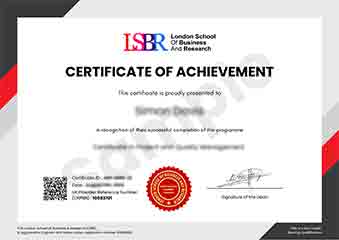
Sample Certificate
Preview the certificate you'll receive upon successful completion of this program.
Get Free Course Info
Enter your details and we'll send you a comprehensive course information pack straight to your inbox.
Employer Sponsored Training
Let your employer invest in your professional development. Request a corporate invoice and get your training funded.
Request Corporate InvoiceWhat People Say About Us
Hear from our students about their experience with the Executive Development Programme in Ecological Weed Management Systems at LSBRX - Executive Education.
James Thompson
United Kingdom"The course content was incredibly comprehensive, covering the latest research and practical applications in ecological weed management. Gaining hands-on skills in developing sustainable weed control strategies has significantly enhanced my career prospects in agricultural management."
Rahul Singh
India"The Executive Development Programme in Ecological Weed Management Systems has significantly enhanced my understanding of sustainable practices, making me more competitive in the job market. This course has equipped me with practical tools and knowledge that I can directly apply to improve our farm's efficiency and environmental impact."
Muhammad Hassan
Malaysia"The course structure was well-organized, providing a comprehensive overview of ecological weed management systems that seamlessly bridged theoretical knowledge with practical applications, enhancing my understanding and professional growth significantly."