
Executive Development Programme in Economic Policy Evaluation: Methods and Practice
Master emerging economic policy evaluation: methods and practice trends and applications. Position yourself at the forefront of industry evolution.
Executive Development Programme in Economic Policy Evaluation: Methods and Practice
Programme Overview
The Executive Development Programme in Economic Policy Evaluation: Methods and Practice is designed for senior policymakers, economists, and professionals in related fields seeking to enhance their analytical and strategic capabilities. This program equips participants with advanced methodologies for assessing the impact of economic policies, including econometric analysis, cost-benefit analysis, and impact evaluation techniques. Participants will engage in real-world case studies and interactive workshops led by expert faculty, ensuring a comprehensive understanding of both theoretical and practical aspects of policy evaluation.
Through this program, learners will develop essential skills such as critical thinking, data analysis, and policy evaluation, enabling them to design, implement, and evaluate economic policies effectively. They will also gain proficiency in using state-of-the-art software tools for data analysis and modeling, and learn to communicate findings to diverse stakeholders. These skills are crucial for making informed policy decisions and improving the outcomes of economic interventions.
The career impact of this program is substantial, as graduates will be better positioned to lead and influence economic policy development in their organizations and broader sectors. They will be able to contribute to evidence-based policy-making, drive innovation, and enhance the effectiveness of public and private sector initiatives. Graduates often take on more advanced roles in policy analysis, economic research, and leadership positions within government agencies, international organizations, and think tanks.
What You'll Learn
The Executive Development Programme in Economic Policy Evaluation: Methods and Practice is designed to equip senior professionals and emerging leaders with advanced skills in evaluating and implementing economic policies. This program offers a comprehensive curriculum that delves into the latest econometric methods, policy analysis frameworks, and real-world case studies from global economic landscapes. Participants will learn to critically assess the impact of fiscal and monetary policies, understand the intricacies of regulatory frameworks, and apply cutting-edge analytical tools to forecast economic trends.
By the end of the program, graduates will be adept at conducting rigorous policy evaluations, designing effective economic interventions, and communicating findings to diverse stakeholders. They will be well-prepared to lead cross-functional teams, drive evidence-based policy decisions, and contribute to strategic planning initiatives in both public and private sectors.
This program opens doors to a wide array of career opportunities, including roles in government agencies, international organizations, think tanks, consulting firms, and multinational corporations. Graduates can pursue careers as policy analysts, economists, or strategic planners, leveraging their expertise to shape policy outcomes that foster economic growth and stability.
Programme Highlights
Industry-Aligned Curriculum
Developed with industry leaders for job-ready skills valued by employers worldwide.
Globally Recognised Certificate
Recognised by employers across 180+ countries as a mark of professional excellence.
Flexible Online Learning
Study at your own pace with lifetime access to all course materials and updates.
Instant Access
Start learning immediately — no application process or waiting period required.
Constantly Updated Content
Stay ahead with the latest industry trends, best practices, and emerging insights.
Career Advancement
87% of graduates report measurable career progression within 6 months of completion.
Topics Covered
- 1. Introduction to Economic Policy Evaluation: Learners will be introduced to the fundamental concepts of economic policy evaluation, including the importance of evidence-based policy making and the role of evaluation in informing policy decisions. They will gain foundational knowledge of how to design, implement, and interpret policy evaluations.
- 2. Quantitative Data Analysis for Policy Evaluation: This module covers essential statistical and econometric techniques for analyzing data relevant to economic policy evaluation. Learners will gain practical skills in using software tools for data analysis and interpreting results in the context of policy evaluation.
- 3. Qualitative Research Methods in Policy Evaluation: Learners will explore qualitative research methods and their application in policy evaluation, including case studies, interviews, and focus groups. They will develop skills in collecting, analyzing, and synthesizing qualitative data to inform policy decisions.
- 4. Cost-Benefit Analysis for Policy Evaluation: This module focuses on the principles and techniques of cost-benefit analysis (CBA) in the context of economic policy evaluation. Learners will learn how to conduct CBA and interpret its results to support decision-making.
- 5. Impact Evaluation Methods: This module introduces various impact evaluation methods, including experimental and quasi-experimental designs. Learners will learn how to apply these methods to assess the causal impact of policies and programs.
- 6. Policy Modeling and Simulation: Learners will be introduced to economic and econometric modeling techniques used in policy evaluation. They will gain hands-on experience in building and using models to forecast policy outcomes and evaluate policy scenarios.
- 7. Policy Implementation and Monitoring: This module covers the practical aspects of policy implementation and monitoring, including how to design and implement monitoring systems and how to use monitoring data to inform policy adjustments.
- 8. Policy Communication and Stakeholder Engagement: Learners will learn how to communicate policy evaluation findings effectively to various stakeholders, including policymakers, the media, and the public. They will develop skills in stakeholder engagement and advocacy.
- 9. Case Studies in Policy Evaluation: This module provides in-depth case studies of real-world policy evaluations from different sectors and regions. Learners will analyze the methods, findings, and implications of these evaluations.
- 10. Advanced Topics in Policy Evaluation: This module explores advanced topics in policy evaluation, such as the evaluation of multi-level governance structures, the use of big data in policy evaluation, and the integration of policy evaluation into policy cycles. Learners will deepen their understanding of the complexities and challenges in policy evaluation.
What You Get When You Enroll
Secure checkout • Instant access • Certificate included
Key Facts
Target professionals in policy analysis
No specific prerequisites required
Enhances skills in policy evaluation methods
Provides practical experience in analysis
Builds capacity for evidence-based policy-making
Ready to get started?
Join thousands of professionals who already took the next step. Enroll now and get instant access.
Enroll Now — $199Why This Course
Enhance Analytical Skills: This program provides a comprehensive understanding of economic policy evaluation methodologies, equipping professionals with advanced analytical skills. Participants learn to assess the impact of policies on various economic indicators, which is crucial for making informed strategic decisions.
Strategic Decision-Making: By mastering both quantitative and qualitative analysis techniques, professionals can better evaluate the effectiveness of existing policies and predict the outcomes of new initiatives. This skill is invaluable in roles that require strategic planning and policy development.
Improved Communication: The program emphasizes the importance of clear communication of complex economic data and findings. This enhances professionals' ability to present policies and research to stakeholders, including policymakers, investors, and the general public, thereby increasing the impact of their work.
Networking Opportunities: Engaging in such a program offers a platform to connect with industry leaders and peers, facilitating knowledge exchange and potential collaborations. These connections can open doors to new opportunities and advancements in one's career.
Your Path to Certification
Trusted by Professionals Worldwide
Course Brochure
Download our comprehensive course brochure with all details
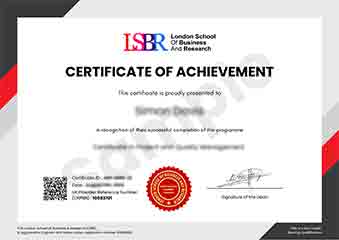
Sample Certificate
Preview the certificate you'll receive upon successful completion of this program.
Get Free Course Info
Enter your details and we'll send you a comprehensive course information pack straight to your inbox.
Employer Sponsored Training
Let your employer invest in your professional development. Request a corporate invoice and get your training funded.
Request Corporate InvoiceWhat People Say About Us
Hear from our students about their experience with the Executive Development Programme in Economic Policy Evaluation: Methods and Practice at LSBRX - Executive Education.
James Thompson
United Kingdom"The course provided a robust foundation in economic policy evaluation methods, equipping me with practical skills to analyze and implement policies effectively. It significantly enhanced my ability to contribute meaningfully to economic development projects in my career."
Sophie Brown
United Kingdom"The Executive Development Programme in Economic Policy Evaluation has significantly enhanced my analytical skills and provided me with practical tools to evaluate economic policies effectively. This has not only made me more competitive in my current role but also opened up new opportunities for career advancement in the field of public policy."
Emma Tremblay
Canada"The course structure was meticulously organized, providing a clear path from theoretical concepts to practical applications, which significantly enhanced my understanding of economic policy evaluation. It offered a wealth of knowledge that has greatly benefited my professional growth by equipping me with the tools to analyze and evaluate economic policies effectively in real-world scenarios."