
Executive Development Programme in Educational Robotics: Designing for Accessibility
This programme equips educators with skills to design accessible educational robotics, enhancing inclusivity and learning outcomes for all students.
Executive Development Programme in Educational Robotics: Designing for Accessibility
Programme Overview
The Executive Development Programme in Educational Robotics: Designing for Accessibility is tailored for educators, education leaders, and industry professionals seeking to integrate accessible and inclusive educational robotics into their curricula. The programme focuses on the latest advancements in accessible robotics technologies, the pedagogical frameworks for teaching these technologies, and the integration of assistive technologies to support diverse learners. Participants will explore the design of educational robots that cater to students with various learning needs, including visual, auditory, and physical disabilities.
Participants will develop a comprehensive understanding of accessible robotics principles, including design thinking, user-centered design, and universal design for learning. They will gain hands-on experience with a range of accessible robotics tools and platforms, learning how to adapt these technologies to meet the needs of diverse learners. Key learning outcomes include the ability to create inclusive lesson plans, implement assistive technologies, and foster an environment where all students can engage with and benefit from robotics education.
This programme significantly impacts careers by equipping participants with the skills and knowledge to lead innovation in accessible education. Graduates will be well-prepared to design, implement, and evaluate accessible robotics programmes, contributing to the broader goal of making technology education inclusive. The competencies acquired will enhance their professional profiles, opening up opportunities for leadership roles in educational institution innovation, policy development, and community outreach initiatives.
What You'll Learn
The Executive Development Programme in Educational Robotics: Designing for Accessibility is a comprehensive initiative designed for industry leaders, educators, and professionals committed to advancing the field of educational robotics. This program equips participants with the knowledge and skills necessary to design and implement accessible educational robotics programs that cater to diverse learning needs.
Key topics include the principles of universal design for learning, the integration of assistive technologies, and the development of inclusive curricula. Participants explore the latest advancements in robotics and learn how to leverage these technologies to create engaging, accessible learning experiences. The program also delves into the psychological and behavioral benefits of robotics for learners with special needs, fostering an environment where every student can thrive.
Upon completion, graduates are well-prepared to lead initiatives that enhance accessibility in educational robotics. They can develop and implement strategies to create equitable learning environments, train educators on inclusive teaching methods, and advocate for policy changes that support accessibility in technology education. Graduates have the opportunity to advance into leadership roles in educational institutions, technology companies, and non-profit organizations dedicated to inclusive education.
The program's unique blend of theoretical knowledge and practical application ensures that participants are not only informed but also capable of making a significant impact in their communities. By fostering an inclusive approach to educational robotics, this program empowers change-makers to shape the future of technology education for all learners.
Programme Highlights
Industry-Aligned Curriculum
Developed with industry leaders for job-ready skills valued by employers worldwide.
Globally Recognised Certificate
Recognised by employers across 180+ countries as a mark of professional excellence.
Flexible Online Learning
Study at your own pace with lifetime access to all course materials and updates.
Instant Access
Start learning immediately — no application process or waiting period required.
Constantly Updated Content
Stay ahead with the latest industry trends, best practices, and emerging insights.
Career Advancement
87% of graduates report measurable career progression within 6 months of completion.
Topics Covered
- 1. Introduction to Educational Robotics: Learners will explore the basics of robotics, including types of robots, key components, and programming languages. They will gain foundational knowledge necessary for designing educational robotics projects.
- 2. Accessibility Fundamentals: Learners will study principles of universal design and accessibility, focusing on how to make educational robotics accessible to all learners, including those with disabilities.
- 3. Designing for Inclusive Education: Learners will learn to assess the needs of diverse learners and design educational robotics activities that are inclusive and adaptive to different learning styles.
- 4. Introduction to Programming for Robotics: Learners will gain hands-on experience with basic programming languages used in robotics, such as Python, and learn how to control robotic movements and behaviors.
- 5. Accessibility Technologies in Robotics: Learners will explore assistive technologies that can be integrated into educational robotics projects to enhance accessibility for learners with various disabilities.
- 6. Universal Design for Learning (UDL) in Robotics: Learners will apply UDL principles to create educational robotics activities that engage and support a wide range of learners, including those with diverse abilities.
- 7. Advanced Programming Techniques: Learners will delve into more sophisticated programming techniques and strategies for controlling complex robotic systems, including sensors, actuators, and machine learning.
- 8. Accessibility Testing and Evaluation: Learners will learn methods for testing and evaluating the accessibility of educational robotics projects, ensuring they meet the needs of all learners.
- 9. Case Studies in Accessibility: Learners will analyze real-world examples of educational robotics projects that successfully incorporate accessibility features, providing insights into effective design practices.
- 10. Implementing and Scaling Accessible Robotics Programs: Learners will develop strategies for implementing accessible robotics programs in educational settings and scaling these programs to reach a broader audience.
What You Get When You Enroll
Secure checkout • Instant access • Certificate included
Key Facts
Audience: Educators, industry professionals
Prerequisites: Basic understanding of robotics
Outcomes: Enhanced accessibility knowledge, innovative teaching strategies
Ready to get started?
Join thousands of professionals who already took the next step. Enroll now and get instant access.
Enroll Now — $199Why This Course
Enhanced Technological Proficiency: Participating in the 'Executive Development Programme in Educational Robotics: Designing for Accessibility' will significantly enhance professionals' skills in robotics and technology. This program equips participants with the latest knowledge in educational robotics, including the ability to design accessible and inclusive learning tools, which is crucial in today's tech-driven educational landscape.
Innovative Problem-Solving Skills: The program focuses on fostering innovative approaches to problem-solving, particularly in the context of making educational robotics accessible to diverse learners. This not only enriches professionals' skill set but also prepares them to tackle real-world challenges more effectively, enhancing their value in the workplace.
Leadership and Team Collaboration: The curriculum includes modules that emphasize leadership and team collaboration, essential for project management and innovation. These skills are vital in driving initiatives that require cross-functional collaboration and leadership, making professionals more effective in their roles and better positioned for leadership opportunities.
Stay Ahead in the Competitive Job Market: As educational robotics continues to grow, professionals who possess specialized knowledge in this area are in high demand. This program offers a unique opportunity to acquire cutting-edge skills that can distinguish candidates in the job market, opening up new career opportunities and increasing their earning potential.
Your Path to Certification
Trusted by Professionals Worldwide
Course Brochure
Download our comprehensive course brochure with all details
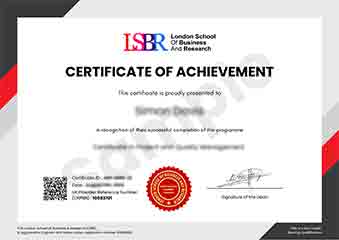
Sample Certificate
Preview the certificate you'll receive upon successful completion of this program.
Get Free Course Info
Enter your details and we'll send you a comprehensive course information pack straight to your inbox.
Employer Sponsored Training
Let your employer invest in your professional development. Request a corporate invoice and get your training funded.
Request Corporate InvoiceWhat People Say About Us
Hear from our students about their experience with the Executive Development Programme in Educational Robotics: Designing for Accessibility at LSBRX - Executive Education.
Oliver Davies
United Kingdom"The course provided an in-depth look at integrating accessibility into educational robotics, which was both challenging and incredibly rewarding. I gained practical skills that I can directly apply to designing more inclusive educational technologies, which I believe will open up new career opportunities in the field."
Siti Abdullah
Malaysia"This course has been instrumental in bridging the gap between theoretical knowledge and practical application in educational robotics, making me more competitive in the tech industry. It has not only enhanced my technical skills but also provided me with a deeper understanding of how to design accessible solutions that cater to diverse learning needs."
Brandon Wilson
United States"The course structure was meticulously organized, providing a seamless transition from theoretical concepts to practical applications in educational robotics, which significantly enhanced my understanding and appreciation of designing accessible technologies for diverse learners."