
Executive Development Programme in Emergency Response Plan Implementation
This programme equips executives with strategic skills for effective emergency response plan implementation, enhancing organizational resilience and safety.
Executive Development Programme in Emergency Response Plan Implementation
Programme Overview
The Executive Development Programme in Emergency Response Plan Implementation is tailored for senior executives, managers, and professionals in sectors such as healthcare, public safety, and emergency management. This program is designed to enhance leadership capabilities and strategic planning skills, focusing on the development of robust emergency response plans that can be effectively implemented during critical situations.
Participants will develop key competencies including risk assessment, crisis management, strategic communication, and resource allocation under pressure. They will learn to design, implement, and continuously improve emergency response strategies, ensuring that organizations are well-prepared to handle unforeseen events and maintain operational continuity. The curriculum is enriched with real-world case studies, interactive simulations, and collaborative workshops, providing hands-on experience in managing emergencies.
The programme significantly impacts career progression by equipping executives with the necessary skills to lead effectively during crises, thereby enhancing their strategic value to organizations. Graduates will be better positioned to take on leadership roles in emergency management, ensuring they can make informed decisions and implement effective strategies to protect lives and assets during emergencies.
What You'll Learn
The Executive Development Programme in Emergency Response Plan Implementation is a transformative initiative designed for executives and leaders in organizations across sectors, from healthcare to technology. This program equips participants with the strategic skills necessary to develop and implement robust emergency response plans, ensuring organizations are prepared for unforeseen disruptions.
Key topics include risk assessment methodologies, strategic planning for crisis management, effective communication strategies, and leadership under pressure. Participants engage in hands-on workshops, case studies, and simulations to apply theoretical knowledge in real-world scenarios. The program emphasizes collaboration, innovation, and ethical considerations in emergency management.
Graduates are well-prepared to lead emergency response efforts, enhance organizational resilience, and protect stakeholders. They can apply these skills to improve existing emergency plans, develop new strategies, and ensure compliance with regulatory standards. The program opens doors to career opportunities in emergency management, strategic planning, public relations, and risk assessment. Graduates often take on leadership roles in crisis management, policy development, and organizational change management.
Programme Highlights
Industry-Aligned Curriculum
Developed with industry leaders for job-ready skills valued by employers worldwide.
Globally Recognised Certificate
Recognised by employers across 180+ countries as a mark of professional excellence.
Flexible Online Learning
Study at your own pace with lifetime access to all course materials and updates.
Instant Access
Start learning immediately — no application process or waiting period required.
Constantly Updated Content
Stay ahead with the latest industry trends, best practices, and emerging insights.
Career Advancement
87% of graduates report measurable career progression within 6 months of completion.
Topics Covered
- 1. Introduction to Emergency Response Planning: Learners will understand the importance of emergency response planning and the foundational concepts of risk assessment, hazard identification, and stakeholder analysis. They will gain the ability to develop a basic emergency response plan.
- 2. Legal and Regulatory Framework: This module covers the legal and regulatory requirements for emergency response planning, including compliance with national and international standards. Learners will learn how to ensure their plans meet legal requirements.
- 3. Risk Management and Mitigation Strategies: Learners will study risk management principles and techniques to identify, assess, and mitigate potential risks. They will develop strategies to reduce the impact of emergencies on organizations and communities.
- 4. Incident Command System (ICS) Principles: This module introduces the Incident Command System, focusing on its structure, roles, and functions. Learners will practice applying ICS principles in simulated scenarios to enhance their leadership and coordination skills.
- 5. Crisis Communication and Public Information: Learners will explore the principles of effective crisis communication and public information management. They will develop skills in crafting messages, managing media relations, and maintaining public trust during emergencies.
- 6. Training and Exercises for Emergency Response: This module covers the planning, design, and implementation of training and exercises to test and improve emergency response capabilities. Learners will learn how to develop and conduct effective training and exercise programs.
- 7. Resource Management and Coordination: Learners will study the management and coordination of resources during emergencies, including personnel, equipment, and supplies. They will gain practical skills in resource allocation and management.
- 8. Advanced Risk Assessment Techniques: This module delves into advanced risk assessment methodologies, including quantitative and qualitative analysis, to provide a deeper understanding of potential risks and vulnerabilities. Learners will apply these techniques to real-world scenarios.
- 9. Post-Event Analysis and Continuous Improvement: Learners will learn how to conduct comprehensive post-event analyses to identify lessons learned and areas for improvement. They will develop skills in implementing changes to enhance future emergency response plans.
- 10. Global Best Practices and Case Studies: This module examines global best practices and case studies in emergency response planning. Learners will analyze successful strategies and lessons from various organizational contexts to inform their own planning efforts.
What You Get When You Enroll
Secure checkout • Instant access • Certificate included
Key Facts
Audience: Emergency response managers, policymakers
Prerequisites: Basic knowledge of emergency management
Outcomes: Enhanced leadership, improved plan implementation skills
Ready to get started?
Join thousands of professionals who already took the next step. Enroll now and get instant access.
Enroll Now — $199Why This Course
Enhanced Leadership Skills: Participating in an Executive Development Programme in Emergency Response Plan Implementation equips professionals with advanced leadership skills. These skills are crucial for managing crises effectively, guiding teams through critical situations, and ensuring organizational stability. For instance, the programme might include modules on strategic decision-making under pressure, which can significantly enhance one's ability to lead during unexpected challenges.
Improved Crisis Management: The programme focuses on the practical aspects of implementing emergency response plans, thereby improving one's crisis management capabilities. Participants learn to develop, test, and refine emergency protocols, ensuring they are robust and effective. This can lead to better preparedness and quicker recovery during actual emergencies, reducing potential damage and downtime.
Networking Opportunities: Engaging in such a programme provides professionals with networking opportunities with industry leaders and experts in emergency response. These connections can be invaluable for career advancement, sharing best practices, and staying updated with the latest trends and technologies in disaster preparedness and management. Networking events and peer interactions are integral parts of these programmes, fostering a community of like-minded professionals dedicated to improving emergency response strategies.
Your Path to Certification
Trusted by Professionals Worldwide
Course Brochure
Download our comprehensive course brochure with all details
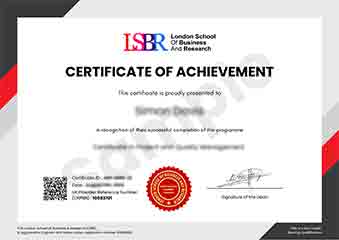
Sample Certificate
Preview the certificate you'll receive upon successful completion of this program.
Get Free Course Info
Enter your details and we'll send you a comprehensive course information pack straight to your inbox.
Employer Sponsored Training
Let your employer invest in your professional development. Request a corporate invoice and get your training funded.
Request Corporate InvoiceWhat People Say About Us
Hear from our students about their experience with the Executive Development Programme in Emergency Response Plan Implementation at LSBRX - Executive Education.
Charlotte Williams
United Kingdom"The course content was incredibly detailed and well-researched, providing a solid foundation in emergency response planning that has already proven invaluable in my role. I've gained practical skills that I can directly apply to enhance our organization's preparedness, which is a huge career advantage."
Liam O'Connor
Australia"The Executive Development Programme in Emergency Response Plan Implementation has been incredibly practical, directly enhancing my ability to handle real-world crises more effectively. This course has not only equipped me with the latest industry standards but also provided me with the confidence to lead emergency response teams, significantly advancing my career in the field."
Sophie Brown
United Kingdom"The course structure was meticulously organized, providing a clear pathway for understanding and implementing emergency response plans, which significantly enhanced my knowledge and preparedness for real-world scenarios. It offered a wealth of practical insights that have already proven invaluable in my professional growth."