
Executive Development Programme in Ethical Data Practices for AI Projects
Master core ethical data practices for ai projects competencies with hands-on training. Achieve professional excellence step by step.
Executive Development Programme in Ethical Data Practices for AI Projects
Programme Overview
The Executive Development Programme in Ethical Data Practices for AI Projects is designed for senior executives, data scientists, and business leaders who are responsible for shaping the strategic direction of AI initiatives within their organizations. This program equips participants with a comprehensive understanding of ethical considerations in data practices and AI project management, fostering a culture of responsibility and integrity in the development and deployment of AI technologies.
Participants will develop key skills and knowledge in ethical data management, including data governance, privacy protection, bias mitigation, and fairness in AI systems. They will learn to apply ethical frameworks to data-driven decision-making, ensuring that AI projects comply with regulatory requirements and ethical standards. Additionally, the program emphasizes the importance of transparent and accountable practices to build trust with stakeholders and the public.
This executive program has a significant impact on career advancement and organizational impact. Graduates will be better positioned to lead ethical AI initiatives, drive innovation while maintaining high ethical standards, and contribute to the development of policies and practices that promote responsible AI use. This not only enhances their professional credibility and leadership capabilities but also supports the long-term success and reputation of their organizations in the AI landscape.
What You'll Learn
Transform your leadership in AI and data practices with our Executive Development Programme in Ethical Data Practices for AI Projects. This comprehensive program is designed to equip senior executives with the skills necessary to navigate the complex ethical challenges of AI development and deployment. It delves into key areas such as data privacy, bias reduction, transparency, and accountability, ensuring you understand the ethical implications of AI technologies.
Participants will engage in hands-on workshops, case studies, and real-world simulations to apply best practices in ethical data handling. You will learn to develop policies and frameworks that foster trust and compliance, and grow your ability to lead cross-functional teams in addressing ethical issues. The program also covers the integration of ethical considerations into business strategies, enhancing your organization's reputation and competitiveness.
Graduates of this program return to their organizations with the confidence and expertise to implement ethical data practices, drive innovation responsibly, and prepare for future regulatory changes. This program opens doors to leadership roles in AI ethics, data governance, and compliance, as well as opportunities to innovate and lead ethical initiatives across industries. Join us to shape a future where technology serves society ethically and responsibly.
Programme Highlights
Industry-Aligned Curriculum
Developed with industry leaders for job-ready skills valued by employers worldwide.
Globally Recognised Certificate
Recognised by employers across 180+ countries as a mark of professional excellence.
Flexible Online Learning
Study at your own pace with lifetime access to all course materials and updates.
Instant Access
Start learning immediately — no application process or waiting period required.
Constantly Updated Content
Stay ahead with the latest industry trends, best practices, and emerging insights.
Career Advancement
87% of graduates report measurable career progression within 6 months of completion.
Topics Covered
- 1. Introduction to Ethical Data Practices: Learners will understand the importance of ethical data practices in AI projects and explore foundational concepts such as data privacy, bias, and transparency. They will gain skills in recognizing ethical issues and the ability to articulate the role of ethics in AI.
- 2. Data Privacy and Security: This module covers the legal and ethical considerations of data privacy and security in AI projects. Learners will study data protection regulations, encryption techniques, and anonymization methods to ensure secure and ethical data handling.
- 3. Bias and Fairness in AI: Focusing on the identification and mitigation of biases in AI systems, learners will study various types of biases and their impact. Practical skills in developing fair and unbiased AI models will be developed.
- 4. Transparency and Explainability: This module delves into the importance of transparency and explainability in AI systems. Learners will learn how to interpret and communicate the decisions made by AI models to stakeholders.
- 5. Privacy-Preserving Techniques: Exploring advanced techniques for preserving privacy, including differential privacy and federated learning, learners will gain skills in designing and implementing privacy-preserving AI solutions.
- 6. Responsible AI Governance: This module covers the establishment and maintenance of ethical governance frameworks for AI projects. Learners will learn how to set up a governance structure that ensures compliance with ethical standards and regulatory requirements.
- 7. Case Studies in Ethical AI: Through real-world case studies, learners will analyze ethical dilemmas in AI projects and understand how organizations address these issues. This module enhances critical thinking and problem-solving skills in ethical contexts.
- 8. Advanced Topics in AI Ethics: Covering emerging topics in AI ethics such as AI in healthcare, autonomous vehicles, and AI’s impact on society, learners will expand their knowledge and prepare for future ethical challenges in AI.
- 9. Developing Ethical AI Leaders: This module focuses on the skills and mindset needed to lead ethical AI initiatives. Learners will learn how to foster a culture of ethical AI and inspire others to adopt ethical practices.
- 10. Continuous Learning in AI Ethics: Encouraging ongoing learning and adaptation to new ethical challenges, learners will develop strategies for staying current with ethical standards and best practices in AI. This module promotes lifelong learning in the field of ethical AI.
What You Get When You Enroll
Secure checkout • Instant access • Certificate included
Key Facts
Executives leading AI initiatives
No technical background required
Understand ethical data principles
Implement responsible AI strategies
Enhance organizational ethical standards
Ready to get started?
Join thousands of professionals who already took the next step. Enroll now and get instant access.
Enroll Now — $199Why This Course
Enhance Ethical Leadership: Participating in an Executive Development Programme in Ethical Data Practices for AI Projects equips professionals with the knowledge and tools to lead with ethical integrity. This is crucial as AI projects increasingly impact societal values and individual lives. Leaders trained in this program are better equipped to make informed decisions that align with ethical standards, ensuring projects are not only innovative but also responsible.
Stay Ahead of Regulatory Changes: The landscape of data privacy and ethical AI is rapidly evolving. This program keeps professionals updated on current and emerging regulatory requirements, such as GDPR and CCPA. By staying ahead of these changes, participants can ensure their projects comply with legal standards, reducing the risk of costly penalties and reputational damage.
Foster Trust and Transparency: An ethical approach to data practices builds trust among stakeholders, including customers, employees, and regulatory bodies. The program focuses on fostering transparency, which is essential for maintaining a positive public image. By integrating ethical considerations into AI projects, professionals can enhance their ability to communicate the value and benefits of their work, thereby building a strong and loyal customer base.
Develop Advanced Analytical Skills: The programme goes beyond ethical considerations to include advanced analytical skills necessary for effective data management. Participants learn to critically evaluate data sources, ensure data quality, and apply ethical principles in data analysis and AI model development. These skills are crucial for making informed decisions that not only benefit the business but also society at large.
Your Path to Certification
Trusted by Professionals Worldwide
Course Brochure
Download our comprehensive course brochure with all details
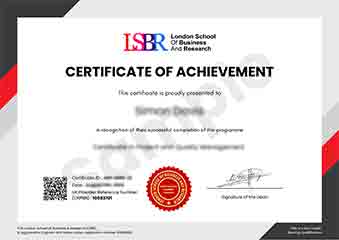
Sample Certificate
Preview the certificate you'll receive upon successful completion of this program.
Get Free Course Info
Enter your details and we'll send you a comprehensive course information pack straight to your inbox.
Employer Sponsored Training
Let your employer invest in your professional development. Request a corporate invoice and get your training funded.
Request Corporate InvoiceWhat People Say About Us
Hear from our students about their experience with the Executive Development Programme in Ethical Data Practices for AI Projects at LSBRX - Executive Education.
Sophie Brown
United Kingdom"The course provided deep insights into ethical data practices, equipping me with practical skills to ensure responsible AI project development. It significantly enhanced my ability to navigate complex ethical dilemmas in data science, offering clear pathways for career advancement in the tech industry."
Arjun Patel
India"This course has significantly enhanced my understanding of ethical data practices in AI, making my projects more robust and aligned with industry standards. It has opened up new career opportunities in ethical AI roles and has equipped me with practical skills to address real-world challenges effectively."
Sophie Brown
United Kingdom"The course structure was meticulously organized, providing a clear pathway for understanding complex ethical data practices in AI projects, which significantly enhanced my knowledge and prepared me for real-world challenges. It offered a comprehensive overview that bridged theoretical concepts with practical applications, fostering professional growth in a rapidly evolving field."