
Executive Development Programme in Evaluating Physical Security Barriers
This programme enhances leaders' ability to evaluate and optimize physical security barriers, ensuring robust protection and compliance.
Executive Development Programme in Evaluating Physical Security Barriers
Programme Overview
The Executive Development Programme in Evaluating Physical Security Barriers is designed for executive-level managers and professionals in security, facility management, and related fields who are responsible for assessing and enhancing the physical security posture of their organizations. This comprehensive programme equips participants with the knowledge and skills to evaluate, design, and implement effective physical security measures that protect against a range of threats, including intrusions, vandalism, and natural disasters. Through a blend of theoretical learning and hands-on workshops, participants will gain expertise in risk assessment, site security planning, and the selection and deployment of appropriate security technologies and personnel.
Key skills and knowledge that learners will develop include the ability to conduct thorough vulnerability assessments, understand the principles of risk management, and integrate security measures with other aspects of corporate security. Participants will also learn to apply best practices in physical security design, including the selection of appropriate fencing, access control systems, surveillance technology, and lighting. By mastering these skills, learners will be able to enhance the overall security posture of their organizations, reduce vulnerabilities, and ensure compliance with regulatory standards.
The impact on careers is significant as participants will be better positioned to lead security initiatives, influence organizational strategies, and contribute to the safety and security of their operations. This programme not only enhances professional credentials but also provides a robust framework for decision-making in security management, thereby opening up advanced opportunities in leadership roles within the security and facility management industries.
What You'll Learn
The Executive Development Programme in Evaluating Physical Security Barriers is designed for professionals seeking to enhance their skills in assessing and improving security measures. This comprehensive program equips participants with the knowledge and tools necessary to evaluate physical security barriers, ensuring they are effective, compliant, and cost-efficient. Key topics include risk assessment, threat analysis, technology integration, and regulatory compliance. Participants learn to conduct thorough audits of existing security systems and develop strategies for optimizing their performance.
Upon completion, graduates will be adept at identifying vulnerabilities, recommending improvements, and implementing best practices in physical security. They can apply these skills in various sectors, including government, corporate security, and private consulting. Graduates often transition into roles such as security managers, risk analysts, and facility security directors, where they can lead security operations and drive organizational security strategies. The program’s practical focus ensures that participants are well-prepared to make immediate, impactful contributions to their organizations.
Programme Highlights
Industry-Aligned Curriculum
Developed with industry leaders for job-ready skills valued by employers worldwide.
Globally Recognised Certificate
Recognised by employers across 180+ countries as a mark of professional excellence.
Flexible Online Learning
Study at your own pace with lifetime access to all course materials and updates.
Instant Access
Start learning immediately — no application process or waiting period required.
Constantly Updated Content
Stay ahead with the latest industry trends, best practices, and emerging insights.
Career Advancement
87% of graduates report measurable career progression within 6 months of completion.
Topics Covered
- 1. Introduction to Physical Security Barriers: Learners will study the fundamental concepts of physical security barriers, including types, importance, and basic principles. They will gain an understanding of how physical barriers can be designed to protect assets and individuals.
- 2. Risk Assessment in Physical Security: This module covers the process of conducting risk assessments for physical security barriers, identifying vulnerabilities, and prioritizing security measures. Learners will develop the skills to evaluate risks and implement effective security strategies.
- 3. Design and Implementation of Access Control Systems: Focused on the design and implementation of access control systems, including locks, keys, and electronic access systems. Learners will learn how to select appropriate technologies and design secure access control solutions.
- 4. Perimeter Security and Intrusion Detection: Discusses perimeter security measures and intrusion detection systems. Learners will understand the importance of perimeter security and how to integrate advanced detection systems to enhance security.
- 5. Physical Security Barriers for Critical Infrastructure: Specializes in the protection of critical infrastructure through the use of physical security barriers. Learners will explore the unique challenges and requirements of securing critical facilities.
- 6. Advanced Physical Security Technologies: Explores emerging technologies in physical security, including biometrics, smart sensors, and video analytics. Learners will learn how to apply these technologies to improve security measures.
- 7. Legal and Regulatory Compliance in Physical Security: Covers legal and regulatory frameworks related to physical security, including compliance requirements and best practices. Learners will understand the legal implications of physical security measures and how to ensure compliance.
- 8. Crisis Management and Security Drills: Focuses on crisis management and the preparation of security drills. Learners will learn how to develop and execute effective security drills and manage security during crises.
- 9. Leadership and Decision-Making in Physical Security: Addresses leadership and decision-making skills essential for managing physical security barriers. Learners will develop the ability to make informed decisions and lead teams effectively.
- 10. Case Studies in Physical Security: Analyzes real-world case studies to illustrate the application of physical security principles and technologies. Learners will gain insights into practical solutions and best practices from various industry contexts.
What You Get When You Enroll
Secure checkout • Instant access • Certificate included
Key Facts
Audience: Security managers, facility managers
Prerequisites: Basic knowledge of security systems
Outcomes: Improved analysis of physical barriers, enhanced security strategies
Ready to get started?
Join thousands of professionals who already took the next step. Enroll now and get instant access.
Enroll Now — $199Why This Course
Enhance Strategic Decision-Making: Participating in an Executive Development Programme in Evaluating Physical Security Barriers equips professionals with advanced analytical skills to assess and improve security measures. This knowledge helps in making informed, strategic decisions that can prevent security breaches and reduce risks, contributing to the overall safety and efficiency of the organization.
Boost Leadership Competencies: The programme focuses on leadership and management skills, enabling professionals to lead security teams more effectively. By understanding the technical aspects of physical security, leaders can better collaborate with IT and other departments, fostering a cohesive security strategy that aligns with business objectives.
Foster Professional Networking: Engaging in such a programme provides professionals with opportunities to network with industry experts and peers. These connections can lead to new job opportunities, collaborations, and insights into emerging security trends, which are crucial for career advancement and staying ahead in the competitive security field.
Strengthen Risk Management Skills: The programme teaches professionals how to evaluate and mitigate risks associated with physical security. This skill set is invaluable for identifying vulnerabilities and developing robust security policies that protect organisations from potential threats, thereby ensuring compliance with regulatory standards and enhancing the organisation’s reputation.
Your Path to Certification
Trusted by Professionals Worldwide
Course Brochure
Download our comprehensive course brochure with all details
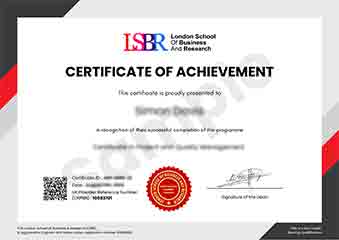
Sample Certificate
Preview the certificate you'll receive upon successful completion of this program.
Get Free Course Info
Enter your details and we'll send you a comprehensive course information pack straight to your inbox.
Employer Sponsored Training
Let your employer invest in your professional development. Request a corporate invoice and get your training funded.
Request Corporate InvoiceWhat People Say About Us
Hear from our students about their experience with the Executive Development Programme in Evaluating Physical Security Barriers at LSBRX - Executive Education.
Oliver Davies
United Kingdom"The course content was incredibly detailed and well-researched, providing a solid foundation in evaluating physical security barriers. Gaining practical skills to assess and improve security measures has been invaluable for my career, offering immediate applicability in real-world scenarios."
Ryan MacLeod
Canada"The Executive Development Programme in Evaluating Physical Security Barriers has significantly enhanced my ability to assess and improve security measures in my organization, making my role more impactful and aligning closely with industry standards. This course has not only deepened my technical knowledge but also provided practical tools that I can immediately apply to enhance our physical security protocols, leading to tangible improvements in our security posture."
Brandon Wilson
United States"The course structure is well-organized, providing a comprehensive overview of physical security barriers that directly translates into practical applications, enhancing my ability to evaluate and improve security measures in real-world scenarios."