
Executive Development Programme in Feedback Principles for Remote Work Environments
This programme equips executives with essential feedback principles to enhance remote team performance and foster effective communication in distributed work environments.
Executive Development Programme in Feedback Principles for Remote Work Environments
Programme Overview
The Executive Development Programme in Feedback Principles for Remote Work Environments is designed for senior managers, team leaders, and executives in organizations that have adopted or are transitioning to remote work models. This program focuses on the critical aspects of providing effective feedback in a digital context, emphasizing the importance of clear communication, emotional intelligence, and technological proficiency. Participants will learn how to adapt traditional feedback methods to the nuances of remote interactions, ensuring that they can maintain team cohesion and performance despite physical distance.
Learners in this program will develop key skills and knowledge that are essential for thriving in remote work environments. They will master the art of delivering constructive feedback that is both timely and relevant, leveraging digital tools and platforms to enhance communication and engagement. The curriculum covers the use of various digital communication channels, the importance of setting clear expectations, and strategies for building trust and rapport remotely. Additionally, participants will gain insights into psychological safety and how to foster a positive remote work culture.
The career impact of this program is significant, as it equips executives with the necessary tools to lead their teams effectively in a remote setting. By improving the quality and efficiency of feedback, participants can enhance team performance, boost employee satisfaction, and drive organizational success. This program not only prepares leaders to navigate the challenges of remote work but also positions them to capitalize on the opportunities it presents, ultimately contributing to a more productive and harmonious remote workforce.
What You'll Learn
Transform your leadership capabilities with the 'Executive Development Programme in Feedback Principles for Remote Work Environments.' This cutting-edge program equips executives with the essential skills to foster productive, inclusive, and high-performing remote teams. By delving into the nuances of effective feedback in virtual settings, participants will learn to leverage technology and communication strategies that enhance collaboration and motivation among remote workers.
Key topics include the psychology of feedback in digital contexts, best practices for remote team communication, and techniques for building trust and accountability. Graduates will apply these skills to create robust feedback cultures, optimize remote work processes, and drive innovation in their organizations.
This program opens doors to advanced leadership roles and opportunities in remote-first companies, global tech firms, and consultancies specializing in digital transformation. Ideal for executives looking to navigate the complexities of leading in a virtual world, this program ensures you stay ahead in today’s dynamic business landscape.
Programme Highlights
Industry-Aligned Curriculum
Developed with industry leaders for job-ready skills valued by employers worldwide.
Globally Recognised Certificate
Recognised by employers across 180+ countries as a mark of professional excellence.
Flexible Online Learning
Study at your own pace with lifetime access to all course materials and updates.
Instant Access
Start learning immediately — no application process or waiting period required.
Constantly Updated Content
Stay ahead with the latest industry trends, best practices, and emerging insights.
Career Advancement
87% of graduates report measurable career progression within 6 months of completion.
Topics Covered
- 1. Introduction to Feedback Principles: Learners will study the fundamentals of feedback, including its importance in remote work environments, and explore the different types of feedback. They will gain foundational skills in recognizing and delivering feedback effectively.
- 2. Remote Work Dynamics and Feedback: This module delves into the unique challenges of feedback in remote settings and how to adapt communication strategies. Learners will understand the impact of technology on feedback delivery and gain skills in using digital tools for effective feedback.
- 3. Feedback Delivery Techniques: Learners will master various techniques for delivering feedback in a remote context, including written, audio, and video methods. They will practice crafting feedback that is clear, constructive, and actionable.
- 4. Receiving and Processing Feedback: This module focuses on the recipient’s perspective, teaching learners how to receive feedback gracefully and use it for personal and professional growth. Practical skills include active listening and reflection.
- 5. Feedback Culture and Organizational Impact: Learners will investigate how a culture of feedback can be fostered in remote teams and the broader organizational impact of such a culture. They will learn how to implement feedback initiatives that enhance team performance and morale.
- 6. Advanced Feedback Strategies: Building on foundational skills, this module covers advanced strategies for complex feedback situations, such as delivering critical feedback remotely and handling sensitive topics. Practical exercises include role-playing and scenario analysis.
- 7. Technology Tools for Feedback: This module explores various digital tools and platforms designed for feedback in remote environments. Learners will learn to select and use appropriate tools to facilitate effective feedback sessions.
- 8. Feedback in Cross-Cultural Settings: Learners will understand the role of cultural differences in feedback interactions and develop strategies for delivering and receiving feedback in diverse, cross-cultural teams.
- 9. Feedback Loop and Continuous Improvement: This module teaches learners how to create and maintain a continuous feedback loop within remote teams. They will learn to integrate feedback mechanisms into daily operations and track progress over time.
- 10. Leadership and Feedback: Learners will explore the role of leaders in promoting a feedback culture and will gain skills in leading feedback sessions. They will develop strategies for empowering team members to give and receive feedback effectively.
What You Get When You Enroll
Secure checkout • Instant access • Certificate included
Key Facts
Audience: Managers, supervisors, HR professionals
Prerequisites: Basic understanding of feedback principles
Outcomes: Enhanced skills in remote feedback, improved team engagement
Ready to get started?
Join thousands of professionals who already took the next step. Enroll now and get instant access.
Enroll Now — $199Why This Course
Enhance Communication Skills: The Executive Development Programme in Feedback Principles for Remote Work Environments provides professionals with advanced tools to communicate effectively in a digital space. This includes mastering techniques to give and receive constructive feedback, which is crucial for maintaining productivity and morale among remote teams. By improving these skills, participants can foster a more collaborative and supportive work environment, leading to increased job satisfaction and better project outcomes.
Adapt to Remote Work Dynamics: The programme equips professionals with strategies to adapt to the unique challenges of remote work. This includes learning how to provide timely and relevant feedback in real-time virtual meetings, which is essential for managing remote teams effectively. Participants will gain insights into how to use technology to enhance communication and collaboration, making them more adept at navigating the complexities of remote work environments.
Develop Emotional Intelligence: A key component of the programme focuses on developing emotional intelligence, particularly in the context of remote work relationships. By learning to understand and manage their own emotions and those of their colleagues, professionals can build stronger, more resilient relationships. This emotional intelligence is vital for resolving conflicts, motivating team members, and navigating the nuances of virtual interactions, thereby enhancing overall team performance and cohesion.
Your Path to Certification
Trusted by Professionals Worldwide
Course Brochure
Download our comprehensive course brochure with all details
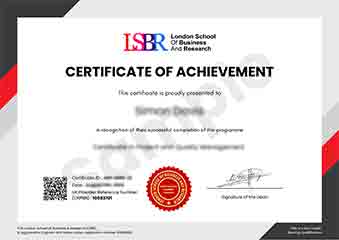
Sample Certificate
Preview the certificate you'll receive upon successful completion of this program.
Get Free Course Info
Enter your details and we'll send you a comprehensive course information pack straight to your inbox.
Employer Sponsored Training
Let your employer invest in your professional development. Request a corporate invoice and get your training funded.
Request Corporate InvoiceWhat People Say About Us
Hear from our students about their experience with the Executive Development Programme in Feedback Principles for Remote Work Environments at LSBRX - Executive Education.
Oliver Davies
United Kingdom"The course provided high-quality content that deeply explored feedback principles in remote settings, equipping me with practical skills to enhance communication and collaboration among distributed teams. Gaining insights into effective remote feedback strategies has significantly boosted my career prospects in managing remote workforces."
Arjun Patel
India"This course has been incredibly valuable in enhancing my ability to provide constructive feedback in a remote setting, which has directly improved my team's performance and my own leadership skills. It has opened up new opportunities for career advancement by equipping me with the tools to manage remote teams more effectively."
Klaus Mueller
Germany"The course structure was well-organized, providing a clear pathway for understanding feedback principles in remote work settings. The content was both comprehensive and practical, offering numerous real-world applications that significantly enhanced my professional growth."