
Executive Development Programme in Fraud Pattern Recognition and Analysis
This programme equips executives with advanced skills in fraud pattern recognition and analysis, enhancing decision-making and risk management capabilities.
Executive Development Programme in Fraud Pattern Recognition and Analysis
Programme Overview
The Executive Development Programme in Fraud Pattern Recognition and Analysis is a comprehensive, month initiative designed for high-potential executives and professionals in the financial, operational, and compliance domains who seek to enhance their analytical and strategic capabilities in combating fraud. This program integrates advanced methodologies in data analytics, machine learning, and risk management to provide a robust framework for recognizing and analyzing fraudulent patterns. Participants will engage in case studies, real-world simulations, and expert-led workshops that cover the latest trends in fraud detection and prevention.
Participants will develop a deep understanding of various fraud types, including financial fraud, identity theft, and cybercrime, and learn to apply sophisticated analytical tools and techniques to identify and mitigate risks. They will also gain expertise in using predictive models and artificial intelligence to forecast fraudulent activities and improve decision-making processes. The program emphasizes the importance of ethical considerations in fraud detection, ensuring that learners are prepared to handle complex scenarios responsibly.
The programme has a profound impact on career advancement, equipping participants with the knowledge and skills necessary to lead fraud prevention initiatives, enhance organizational resilience, and contribute to the development of robust risk management strategies. Graduates of this programme are well-prepared to assume leadership roles in fraud intelligence, cybersecurity, and risk analysis, driving innovation and excellence in their respective fields.
What You'll Learn
The Executive Development Programme in Fraud Pattern Recognition and Analysis is designed for senior executives and professionals seeking to enhance their analytical skills in detecting and combating financial fraud. This comprehensive program combines cutting-edge methodologies with real-world case studies to provide a deep understanding of fraud patterns and their recognition. Participants will learn advanced techniques in data analysis, machine learning, and digital forensics, equipping them with the skills to identify emerging fraud trends and mitigate risks effectively.
Key topics include the latest in fraud detection technologies, ethical hacking methodologies, and the integration of artificial intelligence in fraud prevention strategies. Graduates will apply these skills to develop robust fraud prevention frameworks, enhance cybersecurity measures, and improve regulatory compliance within their organizations. By the end of the program, participants will be well-versed in the latest fraud analytics tools and will be able to lead anti-fraud initiatives confidently.
This program opens doors to diverse career opportunities, including roles such as Chief Information Security Officer, Fraud Analyst, and Chief Risk Officer. Graduates will be prepared to navigate complex organizational challenges, leveraging their expertise to protect against financial losses and uphold ethical standards. Join this transformative program and become a leader in the fight against financial fraud.
Programme Highlights
Industry-Aligned Curriculum
Developed with industry leaders for job-ready skills valued by employers worldwide.
Globally Recognised Certificate
Recognised by employers across 180+ countries as a mark of professional excellence.
Flexible Online Learning
Study at your own pace with lifetime access to all course materials and updates.
Instant Access
Start learning immediately — no application process or waiting period required.
Constantly Updated Content
Stay ahead with the latest industry trends, best practices, and emerging insights.
Career Advancement
87% of graduates report measurable career progression within 6 months of completion.
Topics Covered
- 1. Introduction to Fraud Patterns and Recognition: Learners will study the basic concepts of fraud, types of fraud, and common fraud patterns. They will gain foundational knowledge on how to recognize and identify fraudulent activities.
- 2. Data Handling and Preprocessing Techniques: This module covers essential data handling techniques including data cleaning, normalization, and transformation. Learners will learn how to preprocess data effectively for analysis.
- 3. Statistical Methods in Fraud Detection: Learners will explore statistical methods used in fraud detection such as anomaly detection, regression models, and hypothesis testing. Practical skills in applying statistical models to detect fraud will be developed.
- 4. Machine Learning Fundamentals for Fraud Analytics: This module introduces machine learning algorithms and their application in fraud analytics. Learners will gain knowledge in supervised and unsupervised learning techniques.
- 5. Advanced Machine Learning Models for Fraud: Building on the basics, this module delves into advanced machine learning models like neural networks, decision trees, and ensemble methods. Practical implementation and evaluation of these models will be covered.
- 6. Behavioral Analytics in Fraud Prevention: Learners will study behavioral analytics techniques to predict and prevent fraud. The module covers behavior modeling, transaction monitoring, and real-time fraud detection.
- 7. Fraud Pattern Recognition Using Big Data Technologies: This module focuses on using big data technologies to identify complex fraud patterns. Learners will learn about big data tools and techniques specifically suited for fraud analysis.
- 8. Compliance and Ethical Considerations in Fraud Analysis: The module explores compliance and ethical issues in fraud analysis. Learners will understand the legal and ethical implications and develop a framework for ethical decision-making.
- 9. Case Studies and Real-World Applications: Through detailed case studies, learners will apply their knowledge to real-world fraud scenarios. They will analyze case studies to understand different fraud patterns and the effectiveness of various detection methods.
- 10. Strategic Planning for Fraud Prevention: In this final module, learners will learn how to develop strategic plans to prevent fraud. They will gain skills in risk assessment, policy development, and continuous improvement in fraud prevention strategies.
What You Get When You Enroll
Secure checkout • Instant access • Certificate included
Key Facts
Audience: Mid-level to senior executives
Prerequisites: Basic knowledge of fraud
Outcomes: Enhanced fraud detection skills, improved strategic planning
Ready to get started?
Join thousands of professionals who already took the next step. Enroll now and get instant access.
Enroll Now — $199Why This Course
Enhanced Skill Set: Participating in an Executive Development Programme in Fraud Pattern Recognition and Analysis equips professionals with advanced analytical tools and methodologies for identifying and mitigating financial fraud. This skill set is highly valued, especially in roles that require deep understanding of financial systems and regulatory compliance.
Career Advancement: The programme offers tailored training that can accelerate career progression, particularly for those aiming for leadership roles in fraud management. By gaining insights into the latest technological advancements and regulatory changes, professionals can effectively lead fraud prevention and detection strategies in their organizations.
Interdisciplinary Knowledge: The programme integrates knowledge from various disciplines such as data science, cybersecurity, and financial analysis. This interdisciplinary approach not only broadens the professional’s skill set but also enhances their ability to tackle complex fraud scenarios that require a holistic understanding of business operations and cybersecurity measures.
Networking Opportunities: Engaging with industry experts and peers through the programme provides valuable networking opportunities. These connections can lead to collaborative projects, mentorship, and access to the latest industry trends and best practices, significantly impacting career growth and professional reputation.
Your Path to Certification
Trusted by Professionals Worldwide
Course Brochure
Download our comprehensive course brochure with all details
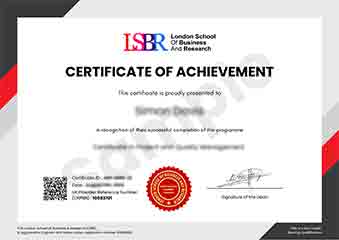
Sample Certificate
Preview the certificate you'll receive upon successful completion of this program.
Get Free Course Info
Enter your details and we'll send you a comprehensive course information pack straight to your inbox.
Employer Sponsored Training
Let your employer invest in your professional development. Request a corporate invoice and get your training funded.
Request Corporate InvoiceWhat People Say About Us
Hear from our students about their experience with the Executive Development Programme in Fraud Pattern Recognition and Analysis at LSBRX - Executive Education.
Charlotte Williams
United Kingdom"The course provided in-depth material on fraud patterns, enhancing my ability to recognize and analyze them effectively. Gaining these practical skills has significantly boosted my confidence in handling real-world fraud cases and opened up new career opportunities in the field."
Sophie Brown
United Kingdom"The Executive Development Programme in Fraud Pattern Recognition and Analysis has significantly enhanced my ability to detect and prevent fraud, making me a more valuable asset in my organization. The practical applications taught in the course have directly contributed to my career advancement by equipping me with the latest tools and techniques in the field."
Jack Thompson
Australia"The course structure was meticulously organized, providing a clear path from foundational concepts to advanced techniques in fraud pattern recognition, which greatly enhanced my understanding and practical skills. The comprehensive content and real-world applications have significantly broadened my perspective on how to identify and prevent fraud, making me more confident in my professional capabilities."