
Executive Development Programme in Geriatric Symptom Management
This programme equips executives with advanced skills in managing geriatric symptoms, enhancing patient care and quality of life.
Executive Development Programme in Geriatric Symptom Management
Programme Overview
The Executive Development Programme in Geriatric Symptom Management is designed for healthcare professionals, including doctors, nurses, and pharmacists, who are committed to enhancing their expertise in managing the complex symptoms faced by elderly patients. This program focuses on advanced knowledge in geriatric care, including pharmacological and non-pharmacological interventions, patient-centered care approaches, and the latest research in geriatric symptom management. Participants will explore the unique physiological and psychological changes in the elderly population and learn to apply evidence-based practices to improve patient outcomes and quality of life.
Key skills and knowledge developed through this program include advanced assessment techniques, effective communication strategies, and the integration of interdisciplinary approaches to patient care. Learners will gain proficiency in managing common geriatric symptoms such as pain, depression, and cognitive impairment, with a focus on both pharmacological and non-pharmacological strategies. They will also enhance their ability to lead and manage multidisciplinary teams, ensuring comprehensive and compassionate care for aging populations.
The career impact of this program is substantial, as participants will be better equipped to lead initiatives in geriatric care, develop innovative symptom management protocols, and contribute to the advancement of geriatric healthcare practices. Graduates of this program are well-prepared to take on leadership roles in clinical settings, academic institutions, and policy development, significantly enhancing their professional profiles and contributions to the field of geriatric care.
What You'll Learn
The Executive Development Programme in Geriatric Symptom Management is a comprehensive, month initiative designed to equip healthcare executives with the knowledge and skills essential for addressing the complex health needs of an aging population. This program is a collaboration between leading healthcare institutions and expert faculty, offering a unique blend of theoretical and practical learning.
Key topics include advanced symptom management strategies, geriatric assessment techniques, interdisciplinary team collaboration, and the latest in geriatric research and policy. Participants will also engage in case studies, real-world simulations, and workshops led by industry leaders, ensuring a hands-on learning experience.
Upon completion, graduates will be well-prepared to lead and manage healthcare teams in providing effective, patient-centered care. They will be equipped to implement evidence-based practices, enhance patient outcomes, and drive innovative solutions in geriatric care. This program opens doors to leadership roles in hospitals, long-term care facilities, and healthcare policy organizations.
This specialized training is invaluable for healthcare professionals seeking to advance their careers and make a significant impact in the field of geriatric care. Graduates are poised to lead with confidence and innovation, shaping the future of elderly care and improving the lives of countless individuals.
Programme Highlights
Industry-Aligned Curriculum
Developed with industry leaders for job-ready skills valued by employers worldwide.
Globally Recognised Certificate
Recognised by employers across 180+ countries as a mark of professional excellence.
Flexible Online Learning
Study at your own pace with lifetime access to all course materials and updates.
Instant Access
Start learning immediately — no application process or waiting period required.
Constantly Updated Content
Stay ahead with the latest industry trends, best practices, and emerging insights.
Career Advancement
87% of graduates report measurable career progression within 6 months of completion.
Topics Covered
- 1. Fundamentals of Geriatric Symptom Management: Learners will study the basic principles of geriatric care and the common physiological changes associated with aging. They will gain foundational knowledge in recognizing and managing common symptoms in older adults.
- 2. Assessment and Diagnosis in Geriatrics: This module will cover the systematic approach to assessing and diagnosing various symptoms in older adults. Learners will develop skills in conducting thorough assessments and differentiating between age-related changes and pathological conditions.
- 3. Pharmacological Interventions for Geriatric Symptoms: Learners will explore the use of pharmacological treatments for managing geriatric symptoms. They will gain expertise in selecting appropriate medications, understanding drug interactions, and monitoring for side effects.
- 4. Non-Pharmacological Interventions in Geriatrics: This module focuses on alternative and complementary therapies for managing geriatric symptoms. Learners will learn about physical, occupational, and speech therapies, as well as psychological interventions.
- 5. Pain Management in Older Adults: Learners will study the multifaceted nature of pain in older adults, including its psychological, social, and physical aspects. They will develop skills in pain assessment and treatment planning, considering the unique needs of the elderly population.
- 6. Palliative and End-of-Life Care: This module covers the principles and practices of palliative care, focusing on symptom management, communication, and quality of life for older adults nearing the end of life.
- 7. Cognitive and Behavioral Symptoms in Geriatrics: Learners will examine the assessment and management of cognitive and behavioral symptoms commonly seen in older adults, such as dementia and depression. They will gain skills in recognizing these symptoms and implementing appropriate interventions.
- 8. Geriatric Emergency Care: This module will prepare learners to manage acute medical emergencies in older adults, covering topics such as falls, delirium, and acute exacerbations of chronic conditions.
- 9. Technology in Geriatric Symptom Management: Learners will explore the use of technology in managing geriatric symptoms, including telehealth, wearable devices, and digital health tools. They will learn how to integrate these technologies into care plans effectively.
- 10. Leadership and Advocacy in Geriatric Care: This module will focus on developing leadership skills and advocating for older adults in healthcare settings. Learners will learn how to lead teams, manage resources, and influence policies that impact geriatric care.
What You Get When You Enroll
Secure checkout • Instant access • Certificate included
Key Facts
Audience: Healthcare professionals, nurses, social workers
Prerequisites: Basic healthcare knowledge, relevant experience
Outcomes: Improved skills in symptom management, enhanced patient care, better communication
Ready to get started?
Join thousands of professionals who already took the next step. Enroll now and get instant access.
Enroll Now — $199Why This Course
Enhance Clinical Expertise: The Executive Development Programme in Geriatric Symptom Management equips professionals with advanced knowledge in managing complex symptoms associated with aging, such as pain, cognitive decline, and chronic diseases. This deepens their clinical skills, making them better equipped to handle the unique challenges faced by elderly patients.
Expand Leadership Abilities: The programme focuses on developing leadership skills, enabling professionals to take on more responsibilities and guide teams in geriatric care settings. Participants learn to implement evidence-based practices and innovative strategies, fostering a culture of quality care and continuous improvement.
Build Interdisciplinary Collaboration: By bringing together professionals from various disciplines, the programme fosters a collaborative environment. This enhances professionals' ability to work effectively with multidisciplinary teams, ensuring comprehensive care for geriatric patients. It also prepares them to navigate complex healthcare systems and advocate for patient-centered care.
Address Societal Demands: With an aging population, there is a growing need for skilled professionals in geriatric care. The programme aligns with this demand, preparing professionals to meet the increasing healthcare needs of older adults. This not only enhances their employability but also contributes to the field by addressing societal challenges related to aging.
Your Path to Certification
Trusted by Professionals Worldwide
Course Brochure
Download our comprehensive course brochure with all details
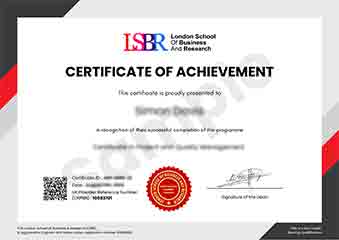
Sample Certificate
Preview the certificate you'll receive upon successful completion of this program.
Get Free Course Info
Enter your details and we'll send you a comprehensive course information pack straight to your inbox.
Employer Sponsored Training
Let your employer invest in your professional development. Request a corporate invoice and get your training funded.
Request Corporate InvoiceWhat People Say About Us
Hear from our students about their experience with the Executive Development Programme in Geriatric Symptom Management at LSBRX - Executive Education.
Oliver Davies
United Kingdom"The course content was incredibly comprehensive, covering a wide range of geriatric symptoms and their management strategies. Gaining these practical skills has significantly enhanced my ability to provide effective care, which I believe will greatly benefit my career in healthcare."
Ruby McKenzie
Australia"The Executive Development Programme in Geriatric Symptom Management has significantly enhanced my ability to address complex patient needs, making me more valuable in my role. The practical applications taught in the course have directly improved patient outcomes and opened up new career opportunities in specialized geriatric care."
Siti Abdullah
Malaysia"The course structure was well-organized, providing a clear path from foundational knowledge to advanced strategies in geriatric symptom management, which greatly enhanced my understanding and prepared me for real-world challenges."