
Executive Development Programme in Hardware-Software Co-Design for Efficient Systems
This programme equips executives with strategic insights into hardware-software co-design, enhancing system efficiency and innovation.
Executive Development Programme in Hardware-Software Co-Design for Efficient Systems
Programme Overview
The Executive Development Programme in Hardware-Software Co-Design for Efficient Systems is tailored for senior professionals in the semiconductor, electronics, and technology sectors who seek to enhance their expertise in the co-design of hardware and software to optimize system efficiency. This program integrates advanced theoretical knowledge with practical, hands-on experience, equipping participants with the critical skills needed to lead and innovate in complex, technology-driven environments.
Participants will develop a deep understanding of hardware-software co-design methodologies, including the use of System-on-Chip (SoC) architectures, embedded systems, and real-time operating systems. They will also master optimization techniques for power, performance, and area, as well as learn to leverage advanced tools and simulations for system validation and verification. Furthermore, the program emphasizes the integration of machine learning and artificial intelligence into system design, enabling participants to design and develop more intelligent and efficient systems.
The programme will significantly impact participants' careers by providing them with the strategic and technical knowledge to lead innovation in hardware-software co-design. Graduates will be well-equipped to drive efficiency and performance improvements in their organizations, contributing to the development of cutting-edge technologies and products. This program also fosters a network of industry leaders, offering participants opportunities for collaboration and mentorship, thereby enhancing their professional growth and market competitiveness.
What You'll Learn
The Executive Development Programme in Hardware-Software Co-Design for Efficient Systems is a cutting-edge initiative designed for professionals aiming to lead the next wave of technological innovation. This program equips participants with the latest knowledge in hardware-software co-design, a critical skill for developing efficient and high-performing systems. Key topics include advanced design methodologies, optimization techniques, and the latest tools and frameworks for system-level analysis.
Graduates of this program will be well-prepared to apply their skills in real-world scenarios, collaborating across disciplines to create innovative solutions for complex problems. They will be able to optimize system performance, reduce power consumption, and enhance security and reliability. The program’s practical approach ensures that participants can immediately contribute to their organizations, driving efficiency and innovation.
Career opportunities span various sectors, including semiconductor design, embedded systems, and cybersecurity. Graduates can pursue roles such as hardware-software architects, system engineers, and research scientists. With the increasing demand for efficient and secure systems, the skills gained from this program are highly valued, positioning participants for leadership positions in tech companies, startups, and research institutions.
Programme Highlights
Industry-Aligned Curriculum
Developed with industry leaders for job-ready skills valued by employers worldwide.
Globally Recognised Certificate
Recognised by employers across 180+ countries as a mark of professional excellence.
Flexible Online Learning
Study at your own pace with lifetime access to all course materials and updates.
Instant Access
Start learning immediately — no application process or waiting period required.
Constantly Updated Content
Stay ahead with the latest industry trends, best practices, and emerging insights.
Career Advancement
87% of graduates report measurable career progression within 6 months of completion.
Topics Covered
- 1. Introduction to Hardware-Software Co-Design: Learners will study the fundamental concepts of hardware-software co-design and its importance in efficient system development. They will gain foundational knowledge to understand how hardware and software interact to optimize system performance.
- 2. Systems Architecture and Design Principles: This module covers the key principles of systems architecture and design, enabling learners to create efficient and scalable hardware-software systems. Practical skills include designing architecture diagrams and evaluating system performance based on design choices.
- 3. Digital Logic and Circuit Design: Learners will explore digital logic and circuit design fundamentals, including Boolean algebra and combinational/logical circuits. They will gain hands-on experience in designing and simulating digital circuits using hardware description languages.
- 4. Computer Organization and Architecture: This module delves into computer organization and architecture, focusing on CPU design, memory systems, and input/output operations. Learners will develop the ability to analyze and optimize system architectures for performance and efficiency.
- 5. Embedded Systems Programming: Learners will study programming techniques for embedded systems, including real-time operating systems and low-level programming. Practical skills include developing and debugging embedded system applications and understanding system constraints and limitations.
- 6. Advanced Algorithm Design for Efficient Systems: This module focuses on advanced algorithm design principles and their application in hardware-software co-design. Learners will gain skills in designing algorithms that optimize for both time and space, considering hardware constraints and software efficiency.
- 7. Performance Analysis and Optimization: Learners will learn methods for analyzing and optimizing system performance, including profiling tools and techniques for identifying bottlenecks. Practical skills include using performance analysis tools to enhance system efficiency and scalability.
- 8. Case Studies in Hardware-Software Co-Design: This module examines real-world case studies of successful hardware-software co-design projects. Learners will analyze these cases to understand best practices and the challenges faced in practical implementation.
- 9. Emerging Trends in Hardware-Software Co-Design: This module covers current and emerging trends in hardware-software co-design, including the latest technologies and methodologies. Learners will gain insights into future developments and their potential impact on system design.
- 10. Final Project: Hardware-Software Co-Design Project: In this capstone project, learners will apply their knowledge and skills to complete a hardware-software co-design project from concept to implementation. They will demonstrate their ability to integrate hardware and software components to create an efficient system.
What You Get When You Enroll
Secure checkout • Instant access • Certificate included
Key Facts
Audience: Engineers, managers, tech leaders
Prerequisites: Basic hardware-software knowledge
Outcomes: Enhanced co-design skills, efficient system development
Ready to get started?
Join thousands of professionals who already took the next step. Enroll now and get instant access.
Enroll Now — $199Why This Course
Enhanced Specialization: The Executive Development Programme in Hardware-Software Co-Design equips professionals with a deep understanding of how to optimize system performance through the integration of hardware and software. This specialization is crucial in today's technology-driven industries, enabling participants to lead projects that require a seamless blend of hardware and software solutions.
Career Advancement: By mastering co-design principles, professionals can take on more complex roles and responsibilities. The programme not only enhances technical skills but also boosts leadership capabilities, making candidates more appealing to senior positions. Companies often value individuals who can bridge the gap between hardware and software, driving innovation and efficiency.
Innovative Problem-Solving: This programme fosters an innovative mindset, teaching participants to think beyond traditional boundaries. They learn to approach problems from a holistic perspective, considering both hardware and software aspects simultaneously. This skill is invaluable in developing cutting-edge technologies and devising efficient solutions for complex challenges.
Networking Opportunities: The programme offers a platform for professionals to connect with industry leaders, experts, and peers. These networks can be instrumental in career growth, providing opportunities for mentorship, collaboration, and job openings. The programme’s emphasis on practical applications and real-world scenarios ensures that participants leave with not just knowledge, but also a robust professional network.
Your Path to Certification
Trusted by Professionals Worldwide
Course Brochure
Download our comprehensive course brochure with all details
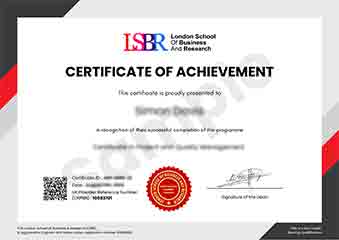
Sample Certificate
Preview the certificate you'll receive upon successful completion of this program.
Get Free Course Info
Enter your details and we'll send you a comprehensive course information pack straight to your inbox.
Employer Sponsored Training
Let your employer invest in your professional development. Request a corporate invoice and get your training funded.
Request Corporate InvoiceWhat People Say About Us
Hear from our students about their experience with the Executive Development Programme in Hardware-Software Co-Design for Efficient Systems at LSBRX - Executive Education.
Charlotte Williams
United Kingdom"The course content was incredibly detailed and well-structured, providing a deep understanding of hardware-software co-design principles that have directly enhanced my ability to optimize system performance. Gaining hands-on experience with real-world case studies has been invaluable, offering practical skills that are immediately applicable in my field."
Mei Ling Wong
Singapore"This course has been instrumental in bridging the gap between hardware and software, equipping me with the skills to design more efficient systems that are in high demand in the tech industry. It has not only enhanced my technical knowledge but also opened up new career opportunities in hardware-software co-design roles."
Fatimah Ibrahim
Malaysia"The course structure is meticulously organized, providing a seamless transition from theoretical concepts to practical applications, which significantly enhances understanding and retention. It offers a wealth of knowledge that bridges the gap between hardware and software, equipping students with the skills needed for efficient system design in the real world."