
Executive Development Programme in Heat Transfer Modes in Engineering
This programme enhances executive expertise in heat transfer modes, optimizing engineering processes and boosting efficiency.
Executive Development Programme in Heat Transfer Modes in Engineering
Programme Overview
The Executive Development Programme in Heat Transfer Modes in Engineering is tailored for mid-to-senior level engineers and technical managers in industries such as aerospace, automotive, and energy, who seek to deepen their understanding of heat transfer principles and their practical applications. This program focuses on advanced heat transfer modes, including conduction, convection, and radiation, and their integration in complex engineering systems. Participants will explore heat exchangers, thermal management strategies, and the latest numerical simulation techniques, equipping them with the knowledge to optimize thermal performance and enhance system efficiency.
The programme aims to develop a robust set of skills in heat transfer analysis, including the ability to model and simulate heat transfer processes, interpret thermal data, and apply advanced thermal management techniques. Learners will gain proficiency in using industry-standard software for heat transfer analysis and will learn to design and implement innovative solutions to thermal challenges. Upon completion, participants will be well-equipped to lead projects that require advanced thermal engineering expertise and will contribute significantly to the development of more efficient and sustainable engineering systems.
By participating in this programme, professionals can expect to advance their careers in several ways. They will be better positioned to take on leadership roles in thermal engineering, contribute to the development of new technologies, and enhance their ability to manage complex thermal challenges in their organizations. The programme not only fosters technical expertise but also enhances leadership and strategic thinking, enabling participants to drive innovation and improve operational efficiency in their respective fields.
What You'll Learn
The Executive Development Programme in Heat Transfer Modes in Engineering is a comprehensive, industry-focused initiative designed to elevate the professional expertise of experienced engineers and managers. This program delves into the advanced principles of heat transfer, including conduction, convection, and radiation, equipping participants with a deep understanding of their practical applications in various engineering disciplines.
Key topics include thermodynamics, heat exchanger design, and the optimization of energy systems. Participants will engage in hands-on workshops and real-world case studies, enabling them to apply theoretical knowledge to solve complex engineering challenges. The curriculum is structured to foster critical thinking and innovation, encouraging proactive problem-solving in diverse engineering contexts.
Graduates of this program are well-prepared to lead heat transfer-related projects, optimize industrial processes, and enhance energy efficiency in their organizations. They gain the skills to innovate and drive technological advancements, contributing to sustainable and efficient engineering practices. Career opportunities are abundant, ranging from research and development to engineering management and consulting. This program is ideal for professionals aiming to advance their careers in engineering, particularly those focused on thermal systems and energy management.
Programme Highlights
Industry-Aligned Curriculum
Developed with industry leaders for job-ready skills valued by employers worldwide.
Globally Recognised Certificate
Recognised by employers across 180+ countries as a mark of professional excellence.
Flexible Online Learning
Study at your own pace with lifetime access to all course materials and updates.
Instant Access
Start learning immediately — no application process or waiting period required.
Constantly Updated Content
Stay ahead with the latest industry trends, best practices, and emerging insights.
Career Advancement
87% of graduates report measurable career progression within 6 months of completion.
Topics Covered
- 1. Fundamentals of Heat Transfer: Learners will study the basic principles of heat transfer, including conduction, convection, and radiation. They will gain foundational knowledge to understand the mechanisms through which heat is transferred in various engineering systems.
- 2. Conduction in Solids: This module covers the detailed analysis of heat conduction in solid materials, including the derivation and application of Fourier's law. Learners will develop skills in solving problems related to steady-state and transient conduction.
- 3. Convection Heat Transfer: Learners will explore the mechanisms of convective heat transfer, focusing on forced and natural convection. They will learn to use empirical correlations and computational tools to predict heat transfer coefficients in practical engineering scenarios.
- 4. Heat Exchanger Design: This module delves into the design and performance analysis of heat exchangers. Learners will apply heat transfer principles to optimize heat exchanger configurations and sizes for efficient energy transfer.
- 5. Radiation Heat Transfer: Learners will study the principles of radiative heat transfer, including the Stefan-Boltzmann law and the concept of emissivity. They will gain skills in analyzing thermal radiation in enclosed and open systems.
- 6. Advanced Heat Transfer in Turbulent Flows: This module focuses on the behavior of heat transfer in turbulent flows, covering turbulence models and their application in predicting heat transfer rates.
- 7. Heat Transfer in Boiling and Condensation: Learners will investigate the mechanisms of heat transfer during boiling and condensation processes, including the effects of nucleate boiling and film condensation. They will develop skills in analyzing and optimizing heat transfer in these critical processes.
- 8. Numerical Simulation of Heat Transfer: This module introduces learners to the use of numerical methods and software tools for simulating complex heat transfer problems. They will learn to set up and solve heat transfer simulations for real-world engineering applications.
- 9. Heat Transfer in Combustion Processes: Learners will study the role of heat transfer in combustion systems, including flame radiation and heat transfer in combustion chambers. They will gain knowledge in optimizing combustion processes for efficiency and safety.
- 10. Advanced Topics in Heat Transfer: This module explores advanced topics such as microscale and nanoscale heat transfer, phase change materials, and heat pipe technology. Learners will delve into cutting-edge research and practical applications in these areas.
What You Get When You Enroll
Secure checkout • Instant access • Certificate included
Key Facts
Audience: Engineers, engineering managers
Prerequisites: Basic engineering knowledge
Outcomes: Understand heat transfer modes, enhance problem-solving skills
Ready to get started?
Join thousands of professionals who already took the next step. Enroll now and get instant access.
Enroll Now — $199Why This Course
Enhanced Problem-Solving Skills: Professionals enrolled in an Executive Development Programme in Heat Transfer Modes in Engineering can significantly enhance their analytical capabilities. This program equips participants with a deeper understanding of heat transfer principles and practical application techniques, enabling them to solve complex engineering problems more effectively. For instance, knowledge of conduction, convection, and radiation can be crucial in optimizing industrial processes and improving product design.
Improved Decision-Making: By gaining expert insights and methodologies in heat transfer, professionals can make data-driven decisions in their roles. This program often includes case studies and real-world applications that help participants understand how to apply heat transfer concepts to address specific industry challenges. This skill is particularly valuable in industries such as aerospace, automotive, and electronics, where heat management is critical.
Career Advancement Opportunities: Pursuing an executive development program in heat transfer can open up new career avenues. Participants often gain the credibility and knowledge needed to take on leadership roles that require a strong technical background. For example, understanding heat transfer can be essential for roles in project management, research and development, or technical sales, where expertise in engineering principles is highly valued.
Your Path to Certification
Trusted by Professionals Worldwide
Course Brochure
Download our comprehensive course brochure with all details
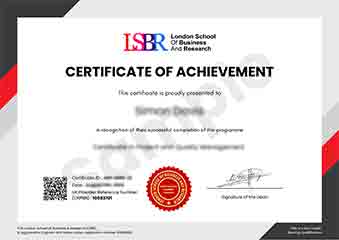
Sample Certificate
Preview the certificate you'll receive upon successful completion of this program.
Get Free Course Info
Enter your details and we'll send you a comprehensive course information pack straight to your inbox.
Employer Sponsored Training
Let your employer invest in your professional development. Request a corporate invoice and get your training funded.
Request Corporate InvoiceWhat People Say About Us
Hear from our students about their experience with the Executive Development Programme in Heat Transfer Modes in Engineering at LSBRX - Executive Education.
Oliver Davies
United Kingdom"The course content was incredibly thorough, covering heat transfer modes in engineering with real-world applications that significantly enhanced my understanding and practical skills. It provided valuable insights that are directly applicable to improving efficiency in industrial processes, which I believe will be beneficial for my career advancement."
Priya Sharma
India"This course has significantly enhanced my understanding of heat transfer modes, making me more competitive in the engineering job market. The practical applications discussed have directly contributed to my career advancement by allowing me to solve complex engineering problems more effectively."
Ashley Rodriguez
United States"The course structure was well-organized, providing a clear progression from fundamental concepts to advanced topics in heat transfer modes, which greatly enhanced my understanding and application of the material in real-world engineering scenarios. It offered a wealth of knowledge that has significantly contributed to my professional growth in the field."