
Executive Development Programme in High-Performance Computing for Data Scientists
This program equips data scientists with advanced HPC skills, enhancing computational efficiency and driving innovative research outcomes.
Executive Development Programme in High-Performance Computing for Data Scientists
Programme Overview
The Executive Development Programme in High-Performance Computing for Data Scientists is designed for experienced data scientists, IT managers, and senior professionals in the tech industry who aim to enhance their expertise in high-performance computing (HPC) and its applications in data science. This programme equips participants with the advanced knowledge and practical skills necessary to leverage HPC technologies for complex data analysis, machine learning, and predictive modeling.
Participants will develop a deep understanding of HPC architectures, parallel computing frameworks, and advanced data processing techniques. They will learn to optimize data workflows for faster and more efficient processing, and gain hands-on experience with cutting-edge HPC tools and software. Through interactive sessions, real-world case studies, and collaborative projects, learners will enhance their ability to architect, implement, and manage high-performance computing solutions in their organizations.
The programme has a significant impact on career advancement. Graduates will be well-positioned to lead HPC initiatives, optimize data science projects, and innovate in their fields. They will acquire the expertise needed to drive technical excellence, foster data-driven decision-making, and contribute to the development of high-performance computing strategies that can transform business operations and enhance competitive advantage.
What You'll Learn
The Executive Development Programme in High-Performance Computing for Data Scientists is a transformative opportunity designed to enhance the skills of professionals in the data science and high-performance computing (HPC) domains. This program equips participants with advanced knowledge in the latest HPC technologies, parallel processing techniques, and machine learning algorithms, enabling them to solve complex data challenges more efficiently. Through hands-on workshops, case studies, and collaboration with industry leaders, participants delve into topics such as cloud computing, big data analytics, and high-throughput computing.
Graduates of this program are well-prepared to lead projects that require robust computational resources and innovative data analysis methods. They can apply their skills in sectors ranging from healthcare to finance, where they will develop predictive models, optimize algorithms, and drive business insights. The program also prepares participants for leadership roles, fostering the ability to manage large-scale data projects, mentor teams, and innovate within the evolving landscape of HPC.
Upon completion, graduates will be positioned to advance their careers in roles such as HPC Data Scientist, Data Science Manager, or Technical Director in HPC. They will also be eligible for further specialization in niche areas like genomics, climate modeling, or financial forecasting, where high-performance computing plays a critical role. This program is not just about acquiring new skills; it's about transforming how data is processed and insights are derived, making it an invaluable asset for leaders in the data science field.
Programme Highlights
Industry-Aligned Curriculum
Developed with industry leaders for job-ready skills valued by employers worldwide.
Globally Recognised Certificate
Recognised by employers across 180+ countries as a mark of professional excellence.
Flexible Online Learning
Study at your own pace with lifetime access to all course materials and updates.
Instant Access
Start learning immediately — no application process or waiting period required.
Constantly Updated Content
Stay ahead with the latest industry trends, best practices, and emerging insights.
Career Advancement
87% of graduates report measurable career progression within 6 months of completion.
Topics Covered
- 1. Introduction to High-Performance Computing (HPC): Learners will understand the basics of HPC, including its architecture, benefits, and applications in data science. They will gain practical skills in setting up HPC environments and basic workflow management.
- 2. Parallel Computing Fundamentals: This module covers key concepts of parallel computing, such as parallel algorithms and distributed memory models. Learners will develop skills in writing parallel programs and optimizing code for HPC systems.
- 3. Scalability and Performance Optimization: Learners will explore techniques for scaling HPC applications and optimizing performance. Practical skills include profiling and tuning code, and understanding the impact of various HPC resources on performance.
- 4. Cloud Computing for HPC: This module introduces cloud-based HPC services and frameworks. Learners will gain hands-on experience with deploying and managing HPC workloads in cloud environments, focusing on resource allocation and cost management.
- 5. Advanced Data Processing with HPC: Learners will study advanced data processing techniques using HPC, including big data analytics and machine learning. They will develop skills in implementing complex data processing pipelines and managing large datasets efficiently.
- 6. High-Performance Data Storage and Management: This module covers strategies for efficient data storage and management in HPC environments. Learners will learn about distributed file systems, data compression techniques, and best practices for data management in HPC scenarios.
- 7. Machine Learning on HPC: Learners will delve into the use of HPC for training and deploying machine learning models. Practical skills include setting up HPC environments for machine learning, optimizing model training processes, and deploying models at scale.
- 8. Case Studies in HPC Applications: This module presents real-world applications of HPC in data science, such as genomics, climate modeling, and financial forecasting. Learners will analyze case studies and gain insights into practical challenges and solutions in these domains.
- 9. Leadership and Management in HPC: This module focuses on leadership and management skills relevant to HPC projects. Learners will develop skills in project management, team leadership, and communication in the context of HPC initiatives.
- 10. Future Trends in HPC: The final module explores emerging trends and future directions in HPC, such as quantum computing, exascale computing, and AI integration. Learners will gain an understanding of how these technologies are shaping the future of HPC and its applications in data science.
What You Get When You Enroll
Secure checkout • Instant access • Certificate included
Key Facts
Audience: Data scientists, IT managers
Prerequisites: Basic computing skills, programming experience
Outcomes: Enhanced HPC knowledge, improved project management skills
Ready to get started?
Join thousands of professionals who already took the next step. Enroll now and get instant access.
Enroll Now — $199Why This Course
Enhance Career Competitiveness: This program equips data scientists with advanced knowledge in high-performance computing (HPC), enabling them to handle large-scale data efficiently. By mastering parallel computing and distributed systems, professionals can significantly improve their ability to process, analyze, and visualize complex data sets, making them highly sought after in tech-driven industries.
Boost Research and Development Capabilities: Participants gain hands-on experience with state-of-the-art HPC technologies, which are crucial for developing cutting-edge solutions in fields such as artificial intelligence, machine learning, and big data analytics. This experiential learning fosters innovation and prepares professionals to tackle complex problems in their research or industry roles.
Strengthen Problem-Solving Skills: The program includes rigorous problem-solving exercises that require the application of HPC principles to real-world scenarios. This not only enhances technical proficiency but also sharpens analytical and critical thinking abilities, essential for addressing challenging issues in data science and technology.
Your Path to Certification
Trusted by Professionals Worldwide
Course Brochure
Download our comprehensive course brochure with all details
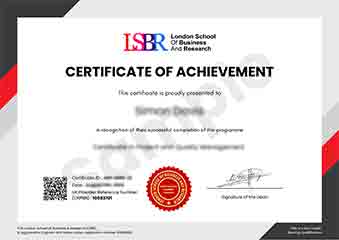
Sample Certificate
Preview the certificate you'll receive upon successful completion of this program.
Get Free Course Info
Enter your details and we'll send you a comprehensive course information pack straight to your inbox.
Employer Sponsored Training
Let your employer invest in your professional development. Request a corporate invoice and get your training funded.
Request Corporate InvoiceWhat People Say About Us
Hear from our students about their experience with the Executive Development Programme in High-Performance Computing for Data Scientists at LSBRX - Executive Education.
Sophie Brown
United Kingdom"The course content was incredibly comprehensive, providing deep insights into high-performance computing that significantly enhanced my ability to handle large-scale data analysis tasks. I gained practical skills that have already proven invaluable in my current role, boosting my confidence and opening up new avenues for project development."
Ashley Rodriguez
United States"This course has significantly enhanced my ability to apply high-performance computing techniques in real-world data science projects, making my solutions more efficient and scalable. It has opened up new opportunities in my career, allowing me to take on more complex challenges and contribute more effectively to my team's goals."
Anna Schmidt
Germany"The course structure was meticulously organized, providing a seamless transition from foundational concepts to advanced topics in high-performance computing, which greatly enhanced my understanding and practical skills in data science. The comprehensive content and real-world applications have been instrumental in my professional growth, equipping me with the knowledge to tackle complex data challenges more effectively."